In today’s fast-paced digital world, text messaging slang evolves constantly. Short forms, acronyms, and abbreviations help people communicate faster and more casually online. One abbreviation that often confuses people is “DR” in text messages.
You may have seen someone write “I’m going DR for a while,” or “DR today, talk later.” If you’re unsure what it means, you’re not alone.
The meaning of DR in text messages can vary depending on the context, platform, and conversation style. In most cases, it represents a shortened phrase used for convenience, but sometimes it may refer to different concepts in online culture.
In this comprehensive guide, we’ll explore:
- The main meanings of DR in texting
- Where the abbreviation comes from
- How people use it in conversations
- Examples of DR in real messages
- Alternative slang and abbreviations
- Common misunderstandings
- Frequently asked questions
By the end of this article, you’ll clearly understand what DR means in text messages and how to interpret it correctly.
What Does DR Mean in Text Messages?
The most common meaning of DR in text messages is:
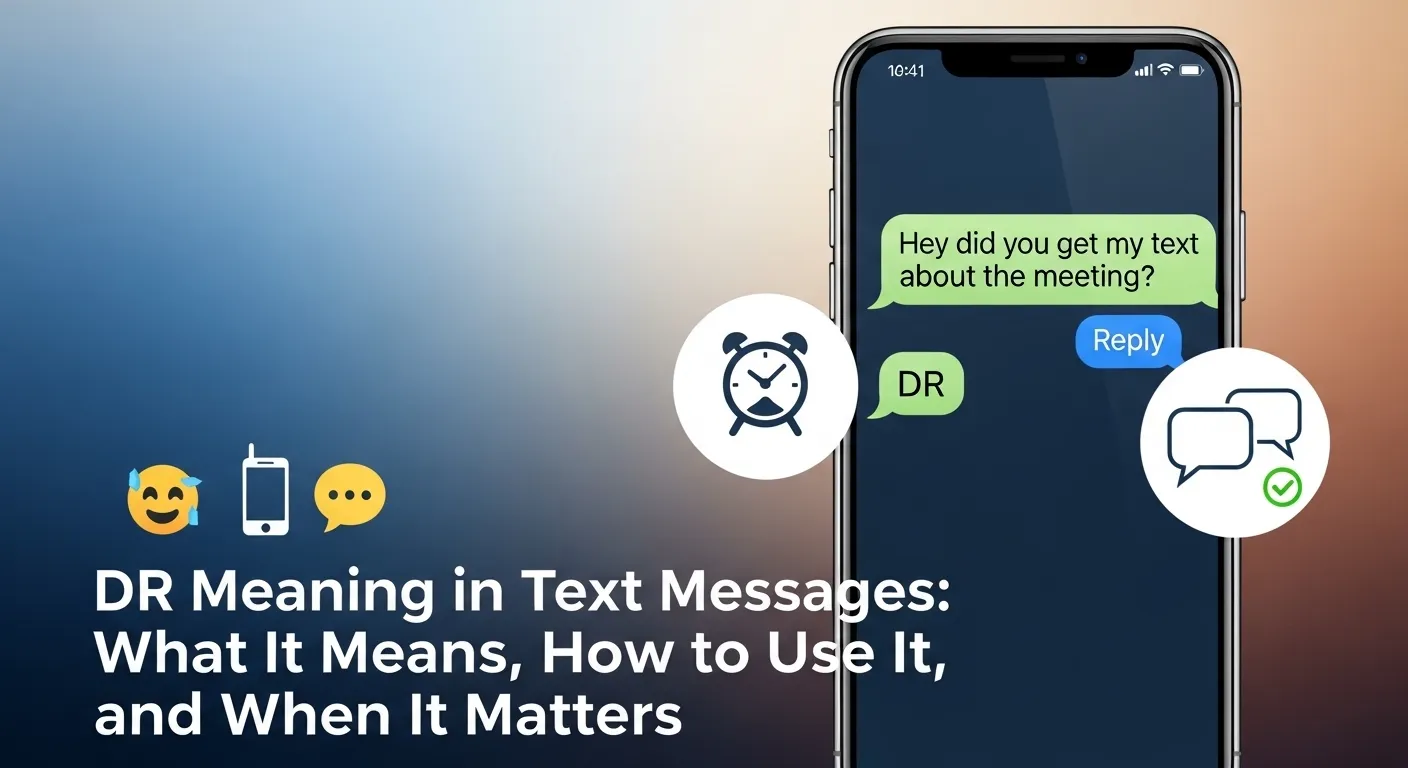
DR = “Didn’t Respond” or “Didn’t Reply.”
It is typically used when someone wants to explain why they didn’t answer a message earlier.
Example
- “Sorry, I was busy earlier, DR.”
- “My phone died so DR.”
In these cases, DR explains a delay in responding.
However, like many internet abbreviations, DR can have multiple meanings depending on the conversation.
Other Possible Meanings of DR in Texting
While “Didn’t Respond” is common, DR can also mean other things in digital conversations.
Here are some alternative interpretations.
| Abbreviation | Meaning | Example |
|---|---|---|
| DR | Didn’t Respond | “I saw your message but DR earlier.” |
| DR | Doctor | “Going to DR appointment today.” |
| DR | Dead Right | “You’re DR about that!” |
| DR | Dear | “Goodnight DR ❤️” |
Because context matters, the surrounding message usually clarifies which meaning is intended.
Why People Use DR in Text Messages
Texting culture values speed and simplicity. Abbreviations like DR exist because they save time and effort when typing.
Here are a few reasons people use DR:
1. Faster Communication
Typing “DR” is quicker than writing “didn’t respond.”
2. Casual Messaging Style
Many online chats use relaxed, shorthand language.
Examples include:
- LOL
- BRB
- TBH
- IDK
DR fits naturally within this texting style.
3. Mobile Typing Convenience
Since many people text on smartphones, short abbreviations make conversations smoother.
Examples of DR in Real Text Conversations
Understanding abbreviations becomes easier when you see realistic examples.
Example 1: Explaining a Delay
Person A:
“Did you see my message yesterday?”
Person B:
“Yeah sorry DR, I was working all day.”
Example 2: Apologizing for Not Replying
Friend:
“You disappeared last night lol.”
You:
“Sorry DR, I fell asleep.”
Example 3: Doctor Appointment Context
Message:
“Can’t talk right now, DR appointment.”
In this case, DR clearly means “doctor.”
How to Tell Which Meaning of DR Is Intended
Because DR has multiple meanings, context is extremely important.
Here are some quick ways to interpret it correctly.
Look at the Conversation Topic
If the discussion is about health, DR probably means doctor.
Example:
- “Seeing the DR tomorrow.”
Check the Sentence Structure
If someone explains why they didn’t answer, DR likely means didn’t respond.
Example:
- “Sorry DR earlier.”
Consider the Tone
If the message sounds affectionate:
- “Goodnight DR ❤️”
It might mean “dear.”
The Evolution of Texting Abbreviations
To fully understand DR meaning in text, it helps to know how internet slang evolved.
Early Internet Chat (1990s)
People used short forms due to slow typing and limited character counts.
Examples included:
- BRB – Be Right Back
- AFK – Away From Keyboard
- LOL – Laugh Out Loud
SMS Era (2000s)
Text messages were limited to 160 characters, encouraging even more abbreviations.
Examples:
- TTYL – Talk To You Later
- OMG – Oh My God
- IDK – I Don’t Know
Modern Messaging Apps
Apps like:
- Messenger
- Snapchat
still encourage short, casual communication, so abbreviations like DR remain popular.
Common Situations Where DR Is Used
People typically use DR in a few specific scenarios.
1. Explaining Silence
If someone didn’t reply earlier, they may use DR.
Example:
- “I saw your message but DR earlier.”
2. Casual Apologies
DR can soften an apology.
Example:
- “My bad, DR earlier.”
3. Scheduling or Appointments
When referring to a doctor visit.
Example:
- “Running late because of DR.”
4. Friendly or Romantic Messages
Sometimes used as “dear.”
Example:
- “Miss you DR.”
Misunderstandings About DR in Texting
Because abbreviations can be confusing, DR sometimes leads to misinterpretations.
Confusion #1: Thinking It Always Means Doctor
Many people assume DR always refers to medical professionals.
But in texting, it often means “didn’t respond.”
Confusion #2: Assuming It Is a Typo
Some readers think DR is simply a typing mistake.
However, it’s actually intentional shorthand.
Confusion #3: Mixing It With “TL;DR”
Another common abbreviation is TL;DR.
This means:
“Too Long; Didn’t Read.”
It’s used when summarizing long content.
Example:
- “TL;DR – The meeting is cancelled.”
Related Text Abbreviations Similar to DR
If you’re learning texting slang, you might also encounter these abbreviations.
| Abbreviation | Meaning |
|---|---|
| BRB | Be Right Back |
| TBH | To Be Honest |
| IDK | I Don’t Know |
| IMO | In My Opinion |
| TTYL | Talk To You Later |
| SMH | Shaking My Head |
| FYI | For Your Information |
These abbreviations help keep conversations quick and informal.
When You Should (and Shouldn’t) Use DR
Like most internet slang, DR works best in casual settings.
Good Situations
- Messaging friends
- Social media chats
- Informal conversations
- Group chats
Example:
- “Sorry DR earlier!”
Situations to Avoid
In professional communication, abbreviations may look unprofessional or unclear.
Avoid DR in:
- Work emails
- Business chats
- Formal communication
- Academic writing
Instead, write the full phrase.
Example:
- “Sorry for the delayed response.”
How Gen Z and Millennials Use DR
Different generations adopt texting slang differently.
Gen Z
Younger users tend to:
- Use shorter abbreviations
- Mix slang with emojis
- Write quick, informal messages
Example:
- “DR lol I was sleeping 😅”
Millennials
Millennials often:
- Use classic texting abbreviations
- Prefer slightly clearer messages
Example:
- “Sorry, DR earlier.”
Tips for Understanding Text Message Slang
If you frequently see abbreviations like DR, these tips can help.
1. Look at Context
The surrounding conversation reveals the meaning.
2. Ask the Sender
If you’re unsure, simply ask.
Example:
- “What does DR mean?”
3. Use Online Slang Dictionaries
Many websites track new internet slang terms.
4. Learn Common Acronyms
Knowing popular abbreviations makes texting easier.
Frequently Asked Questions (FAQs)
1. What does DR stand for in texting?
In most cases, DR means “Didn’t Respond” or “Didn’t Reply.”
It is used to explain why someone did not answer a message earlier.
2. Does DR always mean doctor?
No. Although DR can mean doctor, in casual texting it more often refers to “didn’t respond.”
3. Is DR considered internet slang?
Yes. DR is part of modern texting slang and digital shorthand used in informal conversations.
4. Is DR commonly used on social media?
Yes. You may see DR used on platforms like:
- Instagram DMs
- Snapchat
- Discord
5. Is DR rude in text messages?
No. DR is usually neutral. It simply explains that someone didn’t reply earlier.
6. Can DR mean something different in other contexts?
Yes. Depending on the context, DR can mean:
- Doctor
- Dear
- Dead Right
7. Should I use DR in professional messages?
No. It’s better to avoid abbreviations in professional communication and write the full phrase.
Final Thoughts: Understanding DR Meaning in Text Messages
The meaning of DR in text messages may seem confusing at first, but once you understand the context, it becomes simple.
Here are the key takeaways:
- DR usually means “Didn’t Respond” or “Didn’t Reply.”
- It can also mean doctor, dear, or dead right depending on the situation.
- Context and tone help determine the correct meaning.
- It’s commonly used in casual texting and social media chats.
- Avoid using it in professional or formal communication.
As digital language continues to evolve, abbreviations like DR help people communicate faster and more casually.