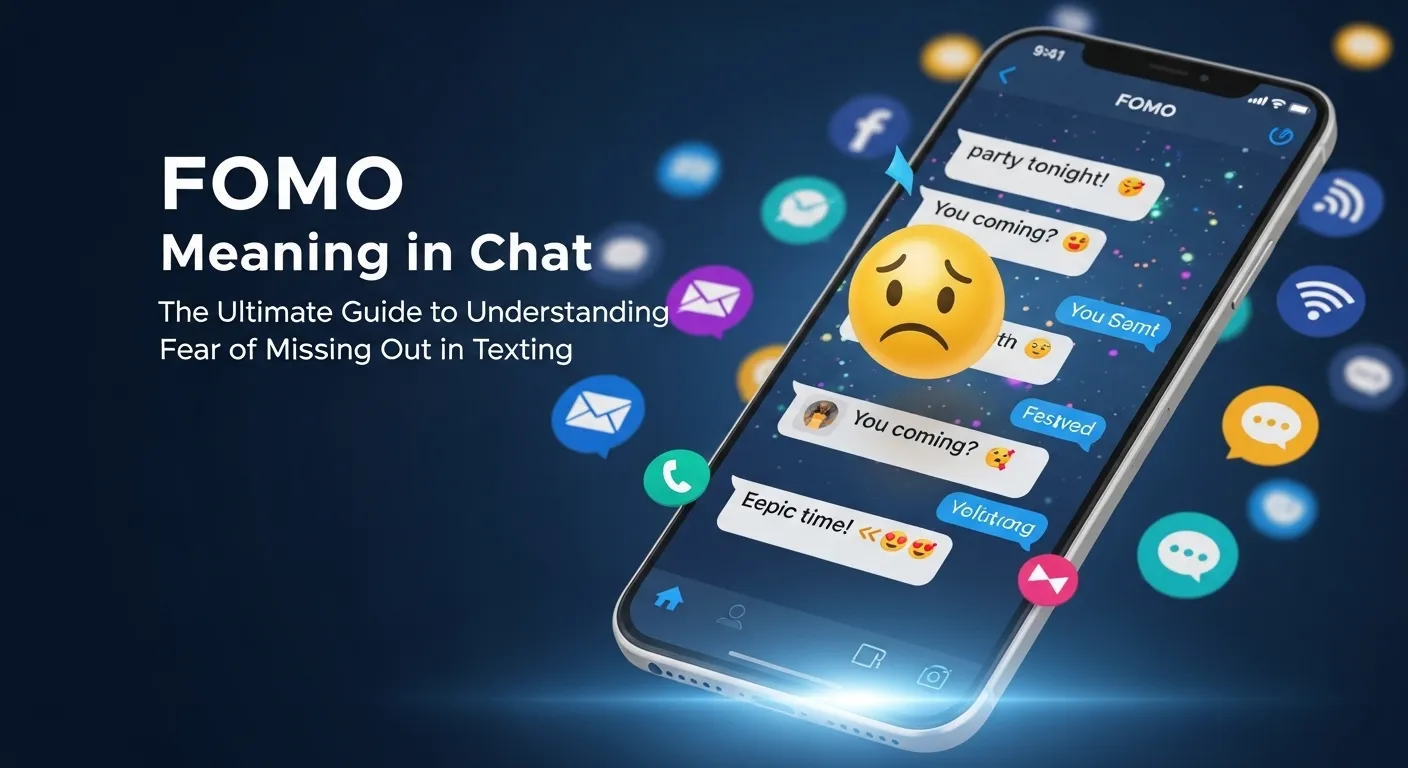
In today’s fast-paced digital world, staying connected is easier than ever—but it also comes with its own challenges. One of the most common feelings people experience while chatting online is FOMO (Fear of Missing Out). Whether you’re scrolling through social media, reading group messages, or seeing your friends hanging out without you, FOMO in chat can have a real emotional impact.
This comprehensive guide will break down the meaning of FOMO in chat, where it comes from, how it’s used in texting, and how you can deal with it effectively. Let’s dive in.
What Does FOMO Mean in Chat?
FOMO stands for “Fear of Missing Out.” In chat and texting, it refers to the anxiety or feeling that others are having fun, sharing experiences, or discussing something important without you.
Simple Definition:
FOMO in chat is the feeling of being left out when you see messages, conversations, or activities happening without your participation.
Why FOMO Matters in Modern Communication
With group chats, social media apps, and constant notifications, people are more connected than ever. However, this constant connection can lead to:
- Feeling excluded from conversations
- Anxiety about not responding quickly
- Pressure to stay online
- Overthinking messages or silence
FOMO in chat isn’t just slang—it reflects real emotional experiences.
Origins of FOMO
The term FOMO became popular in the early 2000s but exploded with the rise of:
- Social media platforms
- Messaging apps like WhatsApp and Messenger
- Online communities and group chats
Originally used in social contexts (like parties or events), it now applies heavily to digital communication.
How FOMO Is Used in Chat (With Examples)
People use FOMO in texting to express feelings or describe situations. Here are some common examples:
1. Expressing Regret
- “You guys went out without me? I’ve got serious FOMO 😭”
- “Seeing your pics is giving me FOMO!”
2. Wanting to Join In
- “What are you all talking about? I don’t want FOMO 😅”
- “Add me to the group chat, I hate FOMO!”
3. Reaction to Updates
- “Stop posting stories, my FOMO is killing me!”
- “I should’ve come… now I have FOMO.”
Common Situations Where FOMO Happens in Chat
1. Group Chats
- Conversations happening when you’re offline
- Inside jokes you don’t understand
2. Social Media Integration
- Friends sharing plans or photos
- Seeing events you weren’t invited to
3. Fast Conversations
- Messages piling up quickly
- Feeling pressured to keep up
4. Exclusive Discussions
- Private chats or sub-groups
- Conversations you’re not included in
Psychological Impact of FOMO in Chat
FOMO isn’t just casual—it can affect mental well-being.
Emotional Effects:
- Anxiety
- Loneliness
- Low self-esteem
- Overthinking
Behavioral Effects:
- Constantly checking phone
- Fear of missing messages
- Difficulty focusing offline
FOMO vs. JOMO: Understanding the Difference
| Term | Meaning | Feeling |
|---|---|---|
| FOMO | Fear of Missing Out | Anxiety, stress |
| JOMO | Joy of Missing Out | Peace, contentment |
What is JOMO?
JOMO is the opposite of FOMO—it’s enjoying your own time without worrying about what others are doing.
Why FOMO Is So Common in Chatting
1. Instant Communication
Messages are delivered instantly, creating urgency.
2. Social Comparison
People compare their lives to others’ highlights.
3. Fear of Exclusion
Nobody likes feeling left out.
4. Notification Culture
Constant alerts make you feel like you might miss something important.
Signs You’re Experiencing FOMO in Chat
You might have FOMO if you:
- Check your phone every few minutes
- Feel anxious when you see unread messages
- Get upset when not included in chats
- Overthink others’ conversations
- Feel pressured to respond instantly
How to Deal with FOMO in Chat
Managing FOMO is important for mental well-being. Here are practical strategies:
1. Limit Notifications
- Turn off non-essential alerts
- Check messages at set times
2. Focus on Real-Life Moments
- Be present in your own activities
- Value offline experiences
3. Avoid Overthinking
- Not every message is important
- Conversations don’t always require your input
4. Practice Digital Detox
- Take breaks from chat apps
- Reduce screen time
5. Embrace JOMO
- Enjoy your own space
- Understand it’s okay to miss out sometimes
FOMO in Chat vs. Social Media FOMO
While similar, there are subtle differences:
| Aspect | Chat FOMO | Social Media FOMO |
|---|---|---|
| Source | Messages, group chats | Posts, stories |
| Speed | Fast, real-time | Slower updates |
| Pressure | Immediate response | Passive viewing |
| Impact | More personal | More comparison-based |
Common Misconceptions About FOMO in Chat
1. “Everyone Experiences FOMO Equally”
Not true—some people are more sensitive to it than others.
2. “FOMO Means You’re Weak”
FOMO is a natural emotional response, not a flaw.
3. “You Must Always Stay Connected”
Constant connection isn’t healthy or necessary.
Related Slang Terms You Should Know
Understanding similar slang helps you navigate chats better:
- OMO – Only Missing Out
- YOLO – You Only Live Once
- JOMO – Joy of Missing Out
- LMK – Let Me Know
- BRB – Be Right Back
Real-Life Example of FOMO in Chat
Imagine this:
You wake up and see 150 unread messages in your group chat. Everyone is laughing about something, sharing memes, and talking about a plan they made last night.
Your reaction:
- “What did I miss?”
- “Why wasn’t I included?”
- “I feel left out…”
That feeling? That’s FOMO in action.
How FOMO Affects Different Age Groups
Teenagers
- Highly active in group chats
- More sensitive to social inclusion
Young Adults
- Balancing work and social life
- Fear of missing networking or events
Adults
- Less intense but still present
- Often related to social circles or work chats
Tips to Use FOMO Positively
Believe it or not, FOMO can be beneficial when managed well.
Turn FOMO into Motivation
- Try new activities
- Stay socially active
Stay Connected Mindfully
- Engage in meaningful conversations
- Avoid unnecessary chats
Frequently Asked Questions (FAQs)
1. What does FOMO mean in texting?
FOMO means Fear of Missing Out. It describes the anxiety of missing conversations, events, or updates in chats.
2. Is FOMO in chat normal?
Yes, it’s very common—especially with constant digital communication and social interaction online.
3. How do I stop feeling FOMO in group chats?
You can reduce FOMO by limiting notifications, focusing on real life, and reminding yourself that not every message matters.
4. Is FOMO a mental health issue?
FOMO itself isn’t a disorder, but it can contribute to anxiety or stress if it becomes excessive.
5. What is the opposite of FOMO?
The opposite is JOMO (Joy of Missing Out), which means enjoying your time without worrying about others.
6. Why do I feel anxious when I miss messages?
It’s usually due to fear of exclusion, curiosity, or social pressure to stay updated.
7. Can FOMO affect relationships?
Yes, it can lead to misunderstandings, overthinking, or feeling left out in friendships or groups.
Conclusion
FOMO in chat is more than just a trendy slang term—it reflects a very real emotional experience in today’s digital age. While it’s natural to feel left out sometimes, constantly chasing every message or conversation can lead to stress and burnout.
Key Takeaways:
- FOMO means Fear of Missing Out, especially in chats and messaging apps
- It’s common but manageable
- Overuse of chat apps can increase anxiety
- Practicing JOMO can improve your mental well-being
Actionable Tips:
- Set boundaries with your phone
- Don’t feel pressured to reply instantly
- Focus on meaningful interactions
- Remember: it’s okay to miss out sometimes
At the end of the day, real connection isn’t about being present in every chat—it’s about being present in the moments that truly matter.