In today’s fast-paced digital world, short forms and abbreviations dominate how we communicate. One of the most commonly used—and often misunderstood—responses is simply “K.” But what does it actually mean?
Understanding the “K meaning in text” is important because it can completely change the tone of a conversation. A single letter can signal agreement, annoyance, indifference, or even passive aggression depending on context.
In this guide, we’ll break down everything you need to know about “K” in texting, including its meanings, variations, examples, and how to respond appropriately.
📌 What Does “K” Mean in Text?
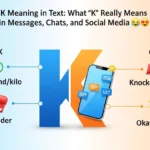
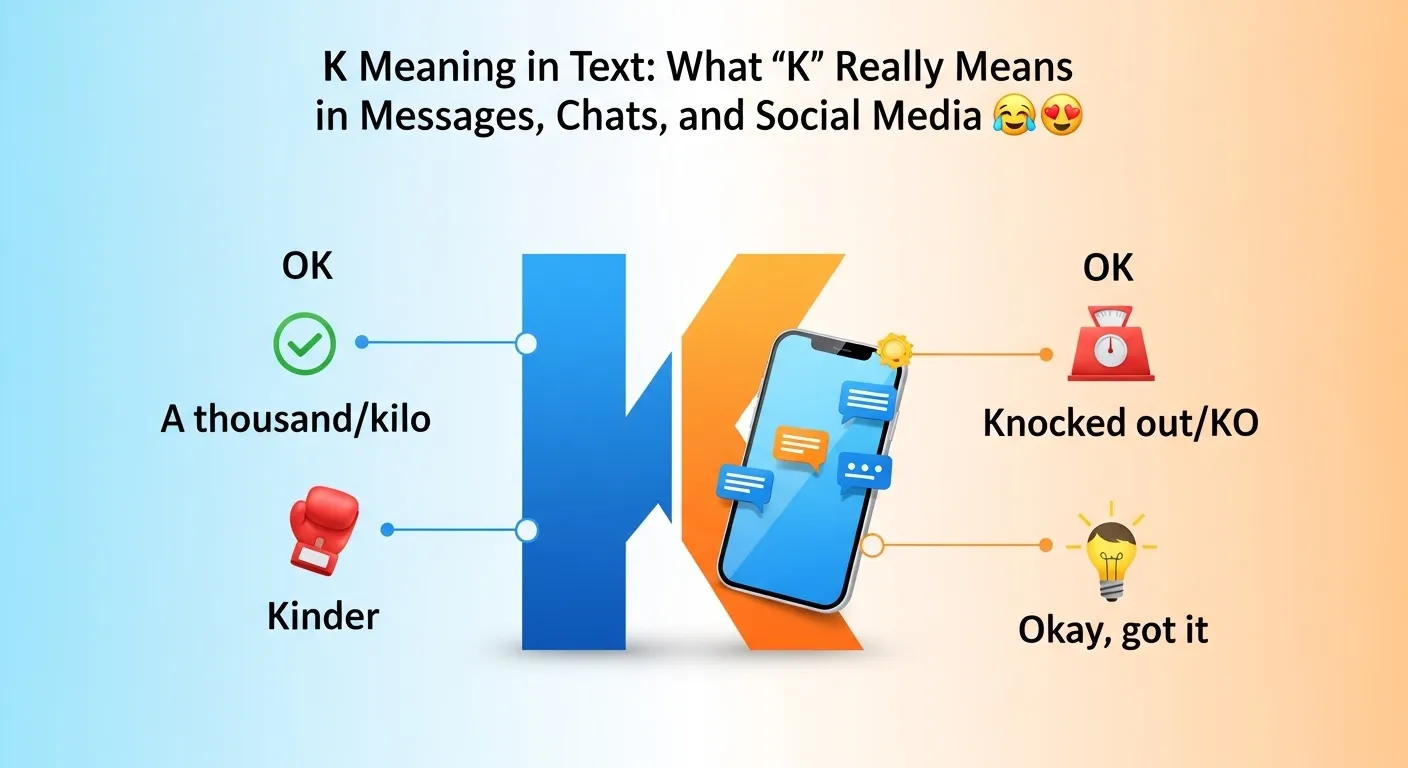
At its core, “K” is a shortened version of “OK” or “Okay.”
It is commonly used in:
- Text messages
- Social media chats (WhatsApp, Instagram, Snapchat)
- Online conversations
- Gaming chats
✔️ Basic Meaning:
“K” = Okay / Got it / Understood
However, the real meaning depends heavily on tone, context, and relationship between the people chatting.
🧠 The Different Meanings of “K” in Texting
While “K” seems simple, it can carry multiple meanings. Let’s explore them:
1. 👍 Simple Acknowledgment
Sometimes, “K” is just a quick confirmation.
Example:
- Person A: “I’ll meet you at 5 PM.”
- Person B: “K”
👉 Meaning: Got it. No issues.
2. 😐 Neutral or Dry Response
“K” can feel a bit cold or emotionless compared to “Okay” or “Sure.”
Example:
- “Thanks for helping me.”
- “K”
👉 Meaning: Acknowledged, but not very enthusiastic.
3. 😒 Annoyance or Frustration
In some contexts, “K” can come off as passive-aggressive.
Example:
- “Why didn’t you reply earlier?”
- “K”
👉 Meaning: I’m annoyed or don’t want to continue this conversation.
4. 🚫 Conversation Ender
Sometimes, “K” signals that someone wants to stop talking.
Example:
- Long explanation message
- Reply: “K”
👉 Meaning: Conversation over.
5. ⏱️ Quick Reply (Busy Mode)
People often use “K” when they’re busy and don’t have time to type.
👉 Meaning: Acknowledged quickly, will respond later.
🆚 “K” vs “OK” vs “Okay” vs “Kk”
Here’s how “K” compares to other similar responses:
| Expression | Tone | Meaning |
|---|---|---|
| K | Cold / Short | Basic acknowledgment, sometimes rude |
| OK | Neutral | Standard agreement |
| Okay | Friendly | Polite and clear |
| Kk | Casual / Friendly | Light and less harsh than “K” |
| Okie / Oki | Cute / Playful | Informal and warm |
👉 Pro Tip: If you want to avoid sounding rude, use “Okay” or “Kk” instead of just “K.”
📱 When Is It Okay to Use “K”?
Using “K” isn’t always bad—it depends on the situation.
✔️ Appropriate Situations:
- Quick confirmations
- Casual chats with close friends
- When you’re busy
- Responding to simple instructions
❌ Avoid Using “K” When:
- Someone is emotional or serious
- In professional conversations
- When clarity is needed
- In arguments (can escalate tension)
💬 Real-Life Examples of “K” in Conversations
Example 1: Friendly Chat
- Friend: “Let’s grab food tonight!”
- You: “K 👍”
👉 Meaning: Agreeing casually
Example 2: Passive-Aggressive Tone
- Partner: “You forgot again.”
- You: “K”
👉 Meaning: Defensive or dismissive
Example 3: Work Context (Not Ideal)
- Boss: “Send me the report ASAP.”
- You: “K”
👉 Might seem unprofessional or disrespectful
😬 Why “K” Can Be Misunderstood
The biggest issue with “K” is lack of emotion and clarity.
Reasons for Misinterpretation:
- No emojis or tone indicators
- Extremely short response
- Depends on relationship dynamics
- Cultural differences in texting
👉 What feels normal to one person may seem rude to another.
🔄 Alternatives to “K” (Better Texting Options)
If you want to sound clearer or friendlier, try these:
👍 Friendly Alternatives:
- “Okay!”
- “Got it 😊”
- “Sure thing!”
- “No problem”
- “Sounds good”
💼 Professional Alternatives:
- “Understood”
- “Noted”
- “I’ll take care of it”
- “Thank you for the update”
😄 Casual Alternatives:
- “Kk”
- “Okie”
- “Yep”
- “Cool”
📊 Is “K” Rude? The Truth Explained
👉 Short Answer: It can be—depending on context.
When It Feels Rude:
- During arguments
- When someone sends a long message
- In emotional conversations
When It’s Not Rude:
- Quick replies
- Close friendships
- Informal chats
👉 Rule of Thumb: If you wouldn’t say it face-to-face, avoid texting it.
🧾 The Evolution of “K” in Digital Communication
“K” became popular with:
- Early SMS texting (character limits)
- Instant messaging platforms (AOL, MSN)
- Social media apps
People shortened “OK” to “K” to:
- Save time
- Reduce typing effort
- Keep conversations fast
Now, it’s a widely recognized texting shorthand, but also one of the most debated in terms of tone.
⚠️ Common Misconceptions About “K”
❌ Myth 1: “K” Always Means Angry
✔️ Truth: Not always—it can just mean “okay.”
❌ Myth 2: “K” Is Always Rude
✔️ Truth: Depends on tone and context.
❌ Myth 3: Everyone Uses “K” the Same Way
✔️ Truth: Meaning varies by person, culture, and situation.
💡 Tips for Using “K” the Right Way
Want to avoid misunderstandings? Follow these tips:
- Use “K” only in casual conversations
- Add emojis to soften tone 😊
- Avoid using it in serious discussions
- Consider the other person’s feelings
- When in doubt, type a full response
❓ FAQs About “K Meaning in Text”
1. Is “K” rude in texting?
It can be perceived as rude if used in serious or emotional conversations, but it’s not always rude.
2. What does “K” mean from a girl or a guy?
It means the same thing—“okay”—but tone depends on context and mood, not gender.
3. Why do people reply with just “K”?
Usually because they’re busy, want to keep things short, or don’t want to continue the conversation.
4. Is “K” passive-aggressive?
Sometimes, yes—especially during disagreements or tense conversations.
5. What is better than saying “K”?
Using “Okay,” “Got it,” or “Sure” is clearer and friendlier.
6. What does “Kk” mean?
“Kk” is a softer, more friendly version of “K,” often used in casual chats.
7. Should I reply to “K”?
Yes, but it depends on context. If it feels like a conversation ender, you may not need to continue.
🏁 Conclusion: Understanding the Power of a Single Letter
The “K meaning in text” may seem simple, but it carries a surprising amount of emotional weight. From quick acknowledgment to subtle annoyance, this one-letter reply can shape how your message is received.
🔑 Key Takeaways:
- “K” means okay, but tone depends on context
- It can feel cold or dismissive in some situations
- Best used in casual and quick conversations
- Use alternatives when clarity or warmth matters
👉 Final Tip: When texting, clarity beats brevity. If there’s any chance your message could be misunderstood, take the extra second to type a more complete response.