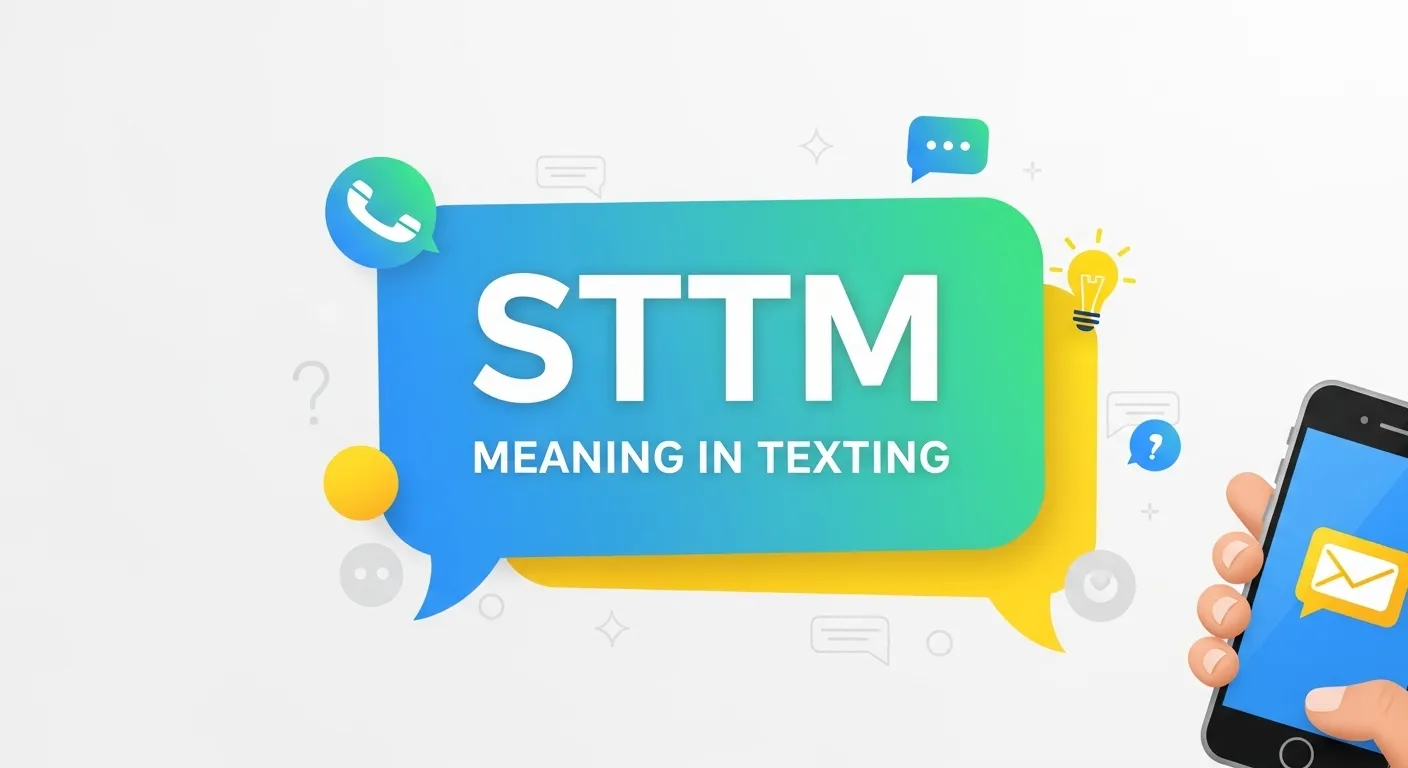
In today’s fast-paced digital world, texting slang is constantly evolving. From acronyms to abbreviations, people use short forms to communicate quickly and efficiently. One such term that often leaves people confused is STTM.
If you’ve ever received a message with “STTM” and wondered what it means, you’re not alone. Understanding modern texting slang like this can help you stay relevant, avoid misunderstandings, and communicate more effectively online.
In this comprehensive guide, we’ll break down the STTM meaning in texting, explore how it’s used, share real-life examples, and even look at similar slang terms you should know.
What Does STTM Mean in Texting?
The acronym STTM most commonly stands for:
“Stop Talking To Me”
It’s a direct and often blunt way of telling someone to stop messaging or engaging in conversation.
Simple Definition:
- STTM = Stop Talking To Me
This phrase can be used in different tones depending on the context:
- Serious and angry
- Playful or joking
- Dramatic or sarcastic
Why People Use STTM in Texting
Texting slang like STTM exists to save time and express emotions quickly. Instead of typing a full sentence, users can communicate their feelings instantly.
Common Reasons for Using STTM:
- To end a conversation quickly
- To express frustration or annoyance
- As a joking reaction to something shocking
- To create a dramatic or humorous tone
Different Contexts of STTM Meaning
Understanding the tone behind STTM is crucial because the meaning can change depending on how it’s used.
1. Serious Context (Negative Tone)
In some cases, STTM is used genuinely to tell someone to stop messaging.
Example:
- “You’re being really rude right now. STTM.”
👉 Here, it clearly signals irritation or anger.
2. Playful or Joking Context
Among friends, STTM is often used humorously.
Example:
- “You ate my fries again? STTM 😂”
👉 In this case, it’s not serious—just playful teasing.
3. Dramatic or Sarcastic Use
Sometimes people use STTM to exaggerate their reaction.
Example:
- “You spoiled the ending of the show? STTM!!!”
👉 It adds drama rather than real anger.
Examples of STTM in Conversations
Here are some realistic texting scenarios to help you understand how STTM fits into everyday chats:
Example 1: Friendly Chat
- Friend: “I just beat your high score 😎”
- You: “STTM, I’m uninstalling the game now 😂”
Example 2: Argument
- Person A: “You never listen to me.”
- Person B: “Whatever. STTM.”
Example 3: Flirty or Playful
- Crush: “You’re kinda cute today.”
- You: “STTM, you’re making me blush 😳”
Is STTM Rude or Offensive?
The short answer: It depends on context and tone.
When STTM Can Be Rude:
- During arguments
- When used seriously
- With people you don’t know well
When It’s Not Rude:
- Among close friends
- In joking or playful conversations
- When paired with emojis (😂😜)
Pro Tip:
Always consider your relationship with the person before using STTM.
How to Respond to STTM
If someone sends you STTM, your response should depend on the situation.
1. If It’s Serious:
- Respect their space
- Stop messaging
- Respond later if needed
Example Response:
- “Okay, I’ll give you space.”
2. If It’s Playful:
- Respond humorously
Example Responses:
- “Nope, I’m not going anywhere 😎”
- “Too late, I already sent 5 more messages 😂”
3. If You’re Unsure:
- Ask for clarification
Example:
- “Wait, are you serious or joking?”
Alternative Meanings of STTM
While “Stop Talking To Me” is the most common meaning, STTM can occasionally have other interpretations depending on context.
Less Common Meanings:
- “Send This To Me”
- “Stick To The Mission” (rare, usually outside texting slang)
👉 However, in casual texting and social media, “Stop Talking To Me” is the dominant meaning.
Popular Alternatives to STTM
If you want to express a similar idea, here are some common texting alternatives:
Similar Slang Terms:
- IDC – I Don’t Care
- GTFO – Get The F*** Out
- BRB – Be Right Back
- TTYL – Talk To You Later
- K – Short, sometimes passive-aggressive reply
When NOT to Use STTM
Even though slang is fun, there are situations where using STTM is not appropriate.
Avoid Using STTM In:
- Professional or work conversations
- Messages with teachers or elders
- Serious discussions
- First-time conversations
👉 Using it in the wrong context can come off as disrespectful.
The Rise of Texting Slang Like STTM
Texting abbreviations like STTM are part of a larger trend in digital communication.
Why Slang Is Popular:
- Saves time
- Adds personality to messages
- Creates a sense of belonging
- Reflects modern internet culture
Social media platforms like TikTok, Snapchat, and Instagram have played a huge role in spreading terms like STTM.
Common Misunderstandings About STTM
Many people misinterpret STTM, especially if they’re new to texting slang.
Misconception #1: It’s Always Rude
👉 Not true—it can be playful or sarcastic.
Misconception #2: It Has Multiple Equal Meanings
👉 While other meanings exist, “Stop Talking To Me” is by far the most common.
Misconception #3: It’s Safe to Use Everywhere
👉 Wrong—it’s best reserved for casual conversations.
Quick Reference Table
| Term | Meaning | Tone | Usage |
|---|---|---|---|
| STTM | Stop Talking To Me | Serious / Playful | Casual chats |
| IDC | I Don’t Care | Neutral / Rude | Informal |
| TTYL | Talk To You Later | Friendly | Ending convo |
| BRB | Be Right Back | Neutral | Temporary pause |
Tips for Using STTM Correctly
To avoid awkward situations, keep these tips in mind:
- Know your audience – Only use with people you’re comfortable with
- Use emojis – They soften the tone
- Avoid overuse – It can lose meaning
- Watch the context – Timing matters
- Clarify if needed – Misunderstandings happen easily
FAQs About STTM Meaning in Texting
1. What does STTM stand for in texting?
STTM stands for “Stop Talking To Me.” It’s used to end a conversation or express frustration, sometimes jokingly.
2. Is STTM always rude?
No, it’s not always rude. It can be playful or sarcastic, especially among friends.
3. Can STTM have other meanings?
Yes, but they are rare. The most common meaning is still “Stop Talking To Me.”
4. How should I reply to STTM?
- If serious: Respect the request
- If joking: Respond humorously
- If unsure: Ask for clarification
5. Is STTM used on social media?
Yes, it’s commonly used on platforms like Snapchat, Instagram, and TikTok.
6. Can I use STTM in professional conversations?
No, it’s not appropriate for formal or professional communication.
7. Why do people use slang like STTM?
To communicate quickly, express emotions, and fit into modern digital culture.
Conclusion: Mastering STTM in Texting
Understanding the STTM meaning in texting can help you navigate modern conversations with confidence. While it typically means “Stop Talking To Me,” its tone can vary from serious to playful depending on context.
Key Takeaways:
- STTM = Stop Talking To Me
- Tone depends on context and relationship
- Best used in casual conversations
- Can be joking, sarcastic, or serious
- Always consider how the other person might interpret it
Actionable Tip:
Before using STTM, ask yourself:
👉 “Will this come across the way I intend?”
By using texting slang thoughtfully, you can communicate clearly, avoid misunderstandings, and stay connected in today’s digital world.