In today’s fast-paced digital world, texting slang and internet acronyms are constantly evolving, and staying updated is essential to keep up with modern communication. One of the most popular and widely used abbreviations is TGIF, but do you truly know what it means and how to use it correctly in 2026? Whether you’re scrolling through social media, chatting with friends, or even sending a professional message, understanding the meaning of TGIF can help you connect more effectively and avoid any confusion.
Originally rooted in casual conversation, TGIF has become a cultural staple, symbolizing the universal excitement for the weekend. With trends shifting in 2026, the way people use TGIF has also evolved—it’s not just limited to Friday celebrations, but also expresses relief, joy, and social vibes in both personal and digital interactions. In this article, we’ll break down the full meaning of TGIF, explore its origin, and give you practical tips on how to use it naturally in your messages, posts, and texts so you can stay relevant in modern online communication.
By the end of this guide, you’ll not only know what TGIF stands for, but also how to express your excitement for the weekend in a way that resonates with friends, colleagues, and online communities in 2026.
What Does TGIF Mean?
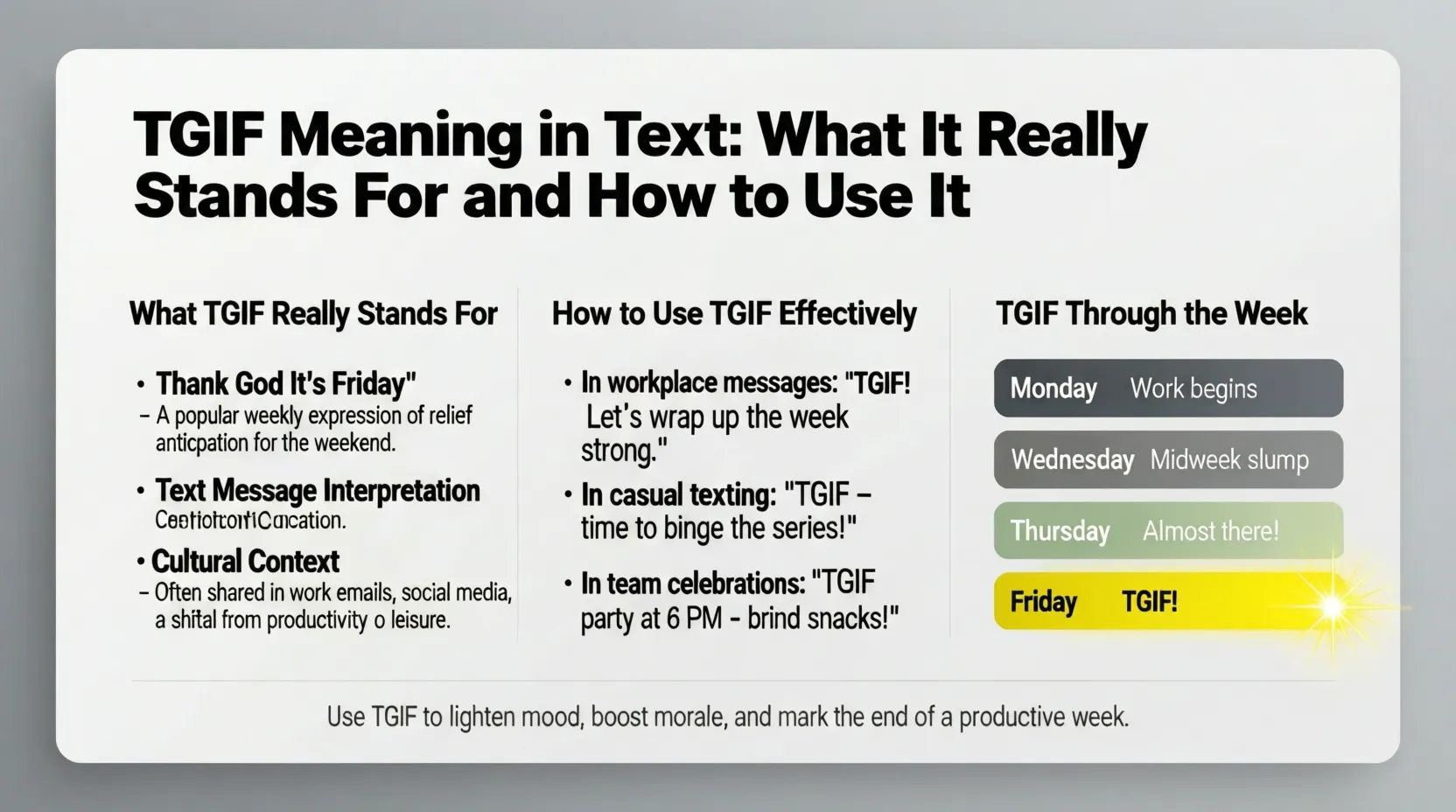
TGIF is an acronym that stands for “Thank God It’s Friday”. It is commonly used to express relief or happiness that the workweek is over and the weekend is about to begin.
- T → Thank
- G → God
- I → It’s
- F → Friday
The phrase reflects a universal sentiment: the anticipation of rest, leisure, and freedom after a week of work or school.
Example in text messaging:
“TGIF! Can’t wait to relax this weekend.”
In professional and casual settings, TGIF is often used to convey excitement, joy, or a sense of closure after a busy week.
The Origin of TGIF
The origin of TGIF is closely tied to the rise of popular culture in the United States.
- Early 20th Century: The concept of celebrating Friday as the end of the workweek existed long before the acronym was coined.
- 1970s: TGIF became widely popularized through marketing campaigns, workplace culture, and the American television show “TGIF”, which aired family-friendly programming on Friday evenings.
- Digital Era: With the advent of texting, instant messaging, and social media, TGIF became shorthand for quickly expressing excitement about the upcoming weekend.
It’s interesting to note that while TGIF is often lighthearted, it also carries subtle cultural significance, emphasizing the human need for rest, recreation, and social connections after structured work.
How to Use TGIF in Texting
TGIF is highly versatile in digital communication. Here are some ways it is commonly used:
1. Casual Conversations
- Friends often text TGIF to express excitement about the weekend.
Example: “TGIF! Finally, a break from all the deadlines.”
2. Workplace Messaging
- Used in professional chats to lighten the mood on a Friday.
Example: “TGIF! Let’s wrap up the last tasks and enjoy the weekend.”
3. Social Media Posts
- Hashtags like #TGIF are popular on Instagram, Twitter, and LinkedIn to engage audiences.
Example: “TGIF! What are your weekend plans? #WeekendVibes #TGIF”
4. Email Sign-Offs
- Less common but occasionally used in informal Friday emails.
Example: “TGIF! Wishing everyone a restful weekend ahead.”
Common Misunderstandings About TGIF
While TGIF is widely recognized, there are a few misconceptions:
- Religious Connotation:
Despite “God” being part of the acronym, TGIF is often secular and used humorously or casually rather than in a strictly religious sense. - Only for Work Contexts:
TGIF isn’t limited to office culture. Students, freelancers, and anyone with a structured week may use it. - Overuse:
While popular, overusing TGIF in professional communication can seem unprofessional. It’s best to use it in casual or semi-formal contexts.
Related Acronyms and Alternatives
If you want variety or a more casual tone, consider these alternatives to TGIF:
| Acronym | Meaning | Context |
|---|---|---|
| TGIW | Thank God It’s Wednesday | Midweek relief |
| TGIT | Thank God It’s Thursday | Almost Friday excitement |
| FRIYAY | Friday + Yay | Enthusiastic Friday expression |
| HAGD | Have a Great Day | General well-wishing |
These alternatives are great for adding personality and freshness to your messages while still conveying excitement or positivity.
Fun Examples of TGIF in Different Contexts
Here are some practical examples showing how TGIF can be used:
Text Messages to Friends
- “TGIF! Movie night at my place tonight?”
- “Finally, TGIF! Time to unwind and chill.”
Workplace Chat
- “TGIF team! Great work this week—let’s finish strong today.”
- “TGIF! Anyone up for a virtual coffee break?”
Social Media
- “TGIF! Weekend plans in the comments below.”
- “TGIF! Who else is ready for some R&R? #WeekendVibes #TGIF”
These examples demonstrate the versatility of TGIF, making it suitable for both casual and semi-formal communication.
Why TGIF Remains Popular
The popularity of TGIF is not just about excitement for the weekend—it also reflects human psychology:
- Anticipation: Celebrating the end of the week builds positive anticipation.
- Community: TGIF fosters shared excitement and connection, especially in social or workplace contexts.
- Cultural Relevance: With decades of presence in media, TGIF has become a cultural shorthand for workweek closure.
FAQs About TGIF
1. Is TGIF religious?
Not necessarily. While it mentions “God,” it’s mostly used secularly to express relief or happiness about Friday.
2. Can I use TGIF in professional emails?
Yes, but keep it casual and avoid overuse in formal communication.
3. What is the difference between TGIF and FRIYAY?
TGIF is more traditional, while FRIYAY is a playful, enthusiastic variation of Friday excitement.
4. Are there international equivalents of TGIF?
Many cultures celebrate the end of the workweek differently, but English-speaking communities primarily use TGIF. Some may simply say “Finally Friday!” or local language equivalents.
5. Can TGIF be used on social media?
Absolutely. Hashtags like #TGIF are extremely popular on Instagram, Twitter, and LinkedIn.
6. What days can similar acronyms be used for?
- TGIW → Wednesday
- TGIT → Thursday
- FRIYAY → Friday (enthusiastically)
7. How do I use TGIF without sounding repetitive?
Mix it with emojis, other phrases like “Weekend vibes,” or creative captions to keep it fresh.
Conclusion
TGIF, or Thank God It’s Friday, is more than just an acronym—it’s a cultural symbol of relief, joy, and anticipation for the weekend. Whether you’re texting friends, posting on social media, or sending a lighthearted message at work, TGIF remains a versatile and widely recognized way to express excitement. By understanding its meaning, origins, and proper usage, you can use TGIF confidently, add personality to your messages, and even engage your audience more effectively online.
Next time Friday rolls around, don’t hesitate to text TGIF—it’s not just about the day, it’s about celebrating the small victories of the week.