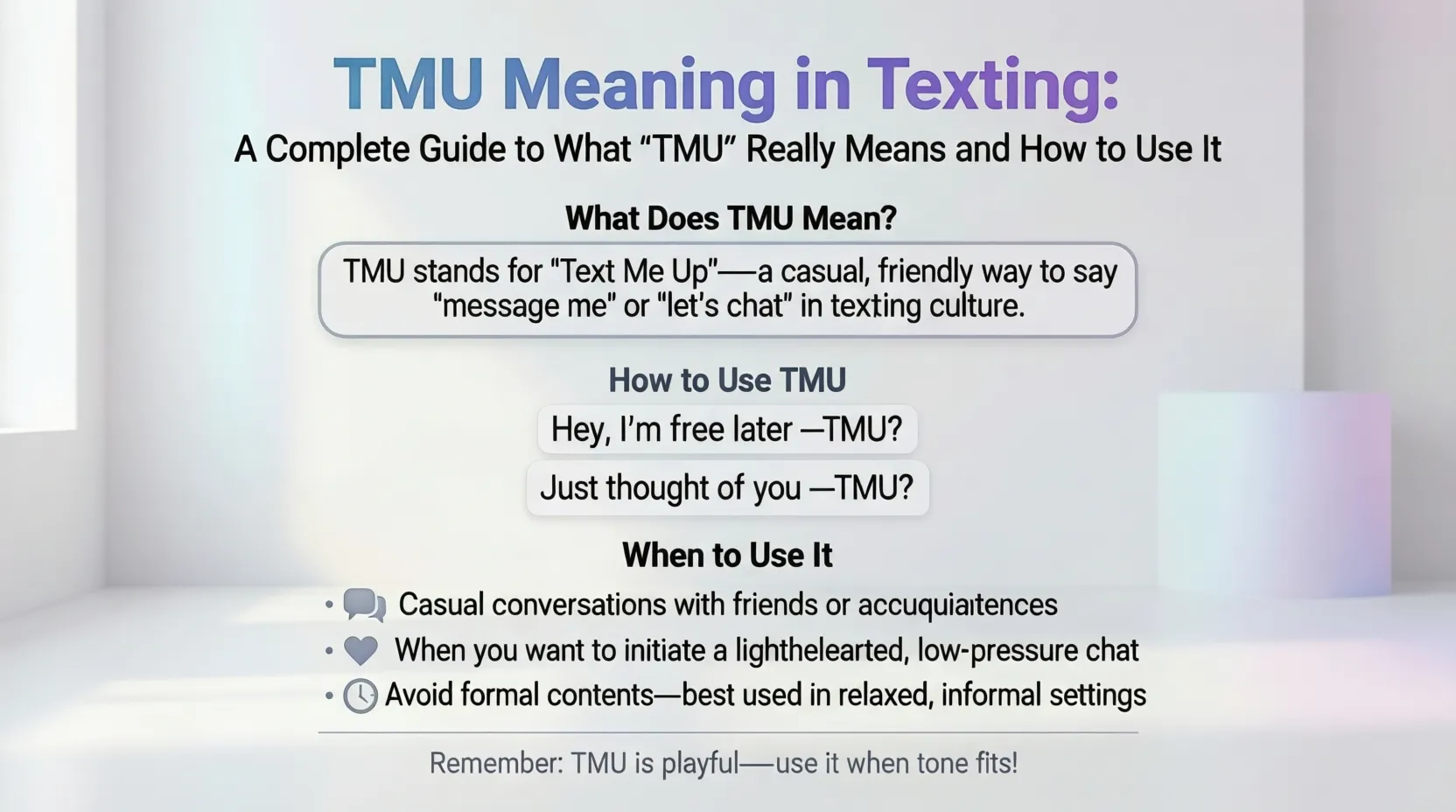
In today’s fast-moving digital world, texting abbreviations and internet slang play a huge role in how people communicate. New shorthand terms appear constantly, and keeping up with them can feel overwhelming. One such term that often causes confusion is TMU.
If you’ve ever received a message that ends with “TMU” and wondered what it meant—or worried you might be misunderstanding the tone—you’re not alone. Understanding the TMU meaning in texting can help you avoid miscommunication, respond appropriately, and sound more confident in digital conversations.
In this in-depth guide, we’ll break down what TMU means in texting, where it comes from, how it’s used in real-life conversations, common misconceptions, alternatives, and tips for using it correctly. By the end, you’ll know exactly when (and when not) to use TMU.
What Does TMU Mean in Texting?
The most common TMU meaning in texting is:
TMU = Talk More Later
When someone uses TMU, they are usually saying that they can’t continue the conversation right now but intend to discuss it in more detail at a later time.
Simple definition:
- TMU is a polite way to pause a conversation
- It signals future continuation
- It helps manage time without sounding rude or dismissive
Example:
- “I’m heading into a meeting right now, TMU.”
- “This sounds important—TMU tonight.”
In most cases, TMU reassures the other person that the conversation matters, even if it has to be paused.
Why TMU Is Popular in Modern Texting
Texting culture values speed, clarity, and convenience. Abbreviations like TMU exist because they save time and reduce typing, especially during busy moments.
Reasons TMU is widely used:
- People multitask while texting
- Conversations often happen during work or school
- Short messages feel more natural in chat apps
- It avoids awkward silence or abrupt endings
Instead of leaving someone on “read,” sending TMU shows respect for the conversation and the person.
The Context Matters: Different Meanings of TMU
Although Talk More Later is the most common meaning, TMU can occasionally have other interpretations, depending on context.
Possible meanings of TMU:
| Meaning | Context |
|---|---|
| Talk More Later | Casual and professional texting |
| Tell Me You | Informal chats, often incomplete sentences |
| Text Me You | Rare, usually clarified by context |
| Time’s Moving Up | Very uncommon, niche usage |
Important note:
In everyday texting and social media, Talk More Later is by far the dominant and most widely accepted meaning. If you’re unsure, always read the message in context.
How TMU Is Commonly Used in Conversations
1. Pausing a Conversation Politely
TMU is often used when someone needs to step away but doesn’t want to end the conversation permanently.
Example:
- “I’m driving right now, TMU when I get home.”
2. Managing Busy Schedules
It helps people set expectations without sounding dismissive.
Example:
- “Work is hectic today, TMU this evening.”
3. Responding Without Ignoring
TMU prevents misunderstandings that come from delayed replies.
Example:
- “I saw your message—TMU, promise.”
4. Professional or Semi-Professional Chats
While informal, TMU can still be acceptable in relaxed work conversations.
Example:
- “In back-to-back calls right now, TMU.”
Tone and Emotional Meaning of TMU
One of the reasons people search for the TMU meaning in texting is concern about tone. Is it friendly? Cold? Dismissive?
Generally, TMU sounds:
- Polite
- Neutral
- Reassuring
- Time-conscious
However, tone depends on:
- Relationship between sender and receiver
- Conversation topic
- Whether the sender follows up later
If someone says TMU but never continues the conversation, it can feel dismissive. Follow-through matters.
When Should You Use TMU?
TMU works best in specific situations.
Use TMU when:
- You genuinely plan to continue the conversation later
- You’re temporarily unavailable
- You want to acknowledge a message quickly
- You need a polite pause
Avoid TMU when:
- You don’t intend to follow up
- The conversation requires immediate attention
- You’re speaking with someone unfamiliar with texting slang
- You’re in very formal communication
TMU vs Similar Texting Abbreviations
To fully understand the TMU meaning in texting, it helps to compare it with similar phrases.
TMU vs TTYL
- TMU: Implies continuation of the same topic
- TTYL (Talk To You Later): More casual, broader goodbye
TMU vs BRB
- TMU: Longer pause, unclear timing
- BRB (Be Right Back): Short, immediate return
TMU vs AFK
- TMU: Conversational and polite
- AFK (Away From Keyboard): More technical, gaming-related
Each abbreviation carries a slightly different expectation of timing and intent.
Common Misunderstandings About TMU
1. TMU Means Disinterest
Not true. TMU usually signals the opposite—it means the person cares enough to continue later.
2. TMU Is Rude
On its own, TMU is not rude. Tone improves when paired with context, such as:
- “Sorry, TMU soon.”
3. TMU Is Universally Known
Some people may not recognize TMU, especially older users or non-native English speakers. Clarity matters.
How to Respond When Someone Says TMU
If someone sends you TMU, your response should match the situation.
Polite responses:
- “Sure, talk later.”
- “No problem, I’ll wait.”
- “Sounds good.”
Professional responses:
- “Understood, speak later.”
- “Okay, thank you for letting me know.”
Responding positively reinforces healthy communication habits.
TMU in Social Media and Online Chats
TMU isn’t limited to text messages. It’s also used on:
- Instagram DMs
- Snapchat
- Facebook Messenger
- Slack (casual teams)
In online spaces, TMU helps manage ongoing conversations without pressure for instant replies.
Alternatives to TMU You Can Use
If you want to avoid abbreviations or sound clearer, consider these alternatives:
Casual alternatives:
- “We’ll talk later.”
- “Let’s continue this later.”
- “I’ll message you later.”
Professional alternatives:
- “Let’s revisit this later.”
- “We can discuss this later today.”
- “I’ll follow up shortly.”
Using full sentences can reduce confusion, especially in mixed-age or professional settings.
Is TMU Appropriate for Professional Texting?
TMU can be acceptable in:
- Internal team chats
- Casual work relationships
- Startup or remote environments
However, in formal settings, it’s better to use complete phrases. Professional clarity often outweighs brevity.
FAQs About TMU Meaning in Texting
1. What does TMU stand for in texting?
TMU most commonly means Talk More Later, indicating a pause with intention to continue the conversation later.
2. Is TMU polite or rude?
TMU is generally polite when used appropriately and followed by later communication.
3. Can TMU be used in professional messages?
Yes, but mainly in informal or internal work chats. Full phrases are safer in formal communication.
4. Does TMU always mean the same thing?
Most of the time, yes. However, rare alternative meanings exist depending on context.
5. How long is “later” when someone says TMU?
It depends on the situation. TMU doesn’t specify timing, so expectations should remain flexible.
6. Is TMU the same as TTYL?
Not exactly. TMU implies continuation of the same topic, while TTYL is a more general sign-off.
7. Should I use TMU if the other person might not know slang?
No. If there’s a chance of confusion, use clear, complete sentences instead.
Conclusion
The TMU meaning in texting is simple yet powerful. It stands for Talk More Later, offering a polite and efficient way to pause a conversation without dismissing it. In a world where instant replies are often expected, TMU helps set boundaries while maintaining connection.
To use TMU effectively:
- Make sure you intend to follow up
- Consider your audience and context
- Pair it with clarity when needed
- Avoid overusing abbreviations in formal settings
By understanding how TMU works and when to use it, you can communicate more confidently, avoid misunderstandings, and navigate modern texting culture with ease.