In today’s fast-paced digital world, texting and online communication are full of abbreviations and slang. One such popular term is “WSP”, which you’ve probably seen in messages, chats, or social media. But what exactly does it mean?
In this comprehensive guide, we’ll break down the WSP meaning in text, how it’s used, when to use it, and alternatives you can try. Whether you’re new to texting slang or just curious, this article will help you understand everything in a simple and engaging way.
What Does WSP Mean in Text? 🤔
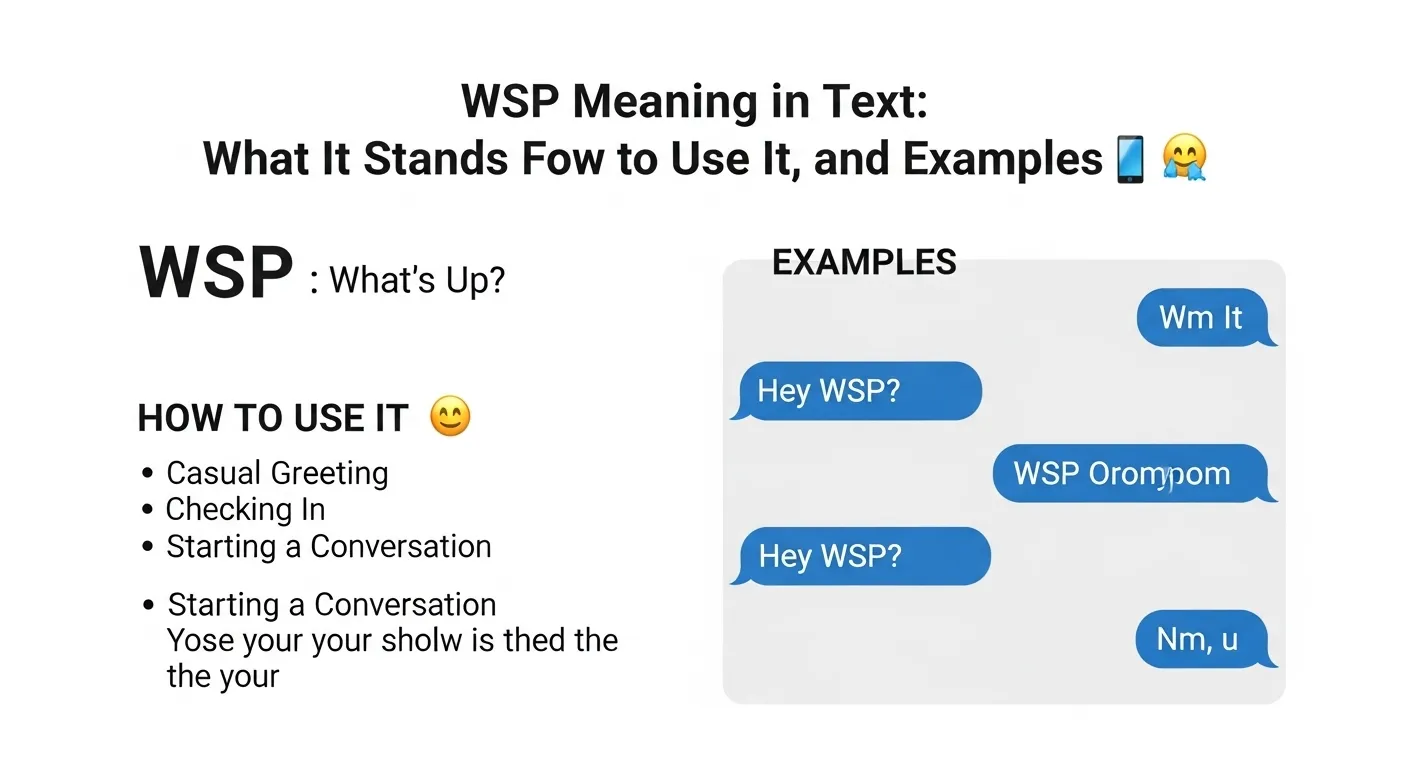
The abbreviation WSP stands for:
👉 “What’s up?”
It’s a casual way of greeting someone or starting a conversation. Just like saying “Hey, what’s going on?” or “How are you?”, WSP is used in informal communication.
Simple Definition
- WSP = What’s up
- Used to check in, start a chat, or ask what someone is doing
Why Is WSP So Popular in Texting? 📲
Texting culture is all about speed, convenience, and informality. Short forms like WSP save time and effort while still getting the message across.
Reasons for its popularity:
- ✅ Quick to type
- ✅ Widely understood among younger audiences
- ✅ Fits casual conversations
- ✅ Common on social media platforms
How to Use WSP in a Text Message 💬
Using WSP is easy. It usually appears at the beginning of a conversation.
Examples:
- “WSP bro?”
- “Hey! WSP?”
- “WSP, you free today?”
- “WSP 😄 long time no talk!”
Best Situations to Use WSP:
- Chatting with friends
- Starting casual conversations
- Checking in with someone
- Messaging peers or classmates
Different Ways People Use WSP in Conversations 🧠
Although WSP mainly means “What’s up,” it can slightly change depending on context.
1. As a Greeting
- “WSP!”
👉 Just saying hello
2. Asking About Someone’s Day
- “WSP? How’s everything going?”
👉 Showing interest
3. Starting a Chat
- “WSP, wanna hang out?”
👉 Opening a conversation
4. Checking Availability
- “WSP? You busy?”
👉 Asking if someone is free
WSP vs Other Similar Text Slang 📊
Here’s how WSP compares to other popular abbreviations:
| Abbreviation | Meaning | Usage Style |
|---|---|---|
| WSP | What’s up | Casual greeting |
| WYD | What you doing | Asking activity |
| SUP | What’s up | Informal greeting |
| HBU | How about you | Response phrase |
| HRU | How are you | Slightly formal |
👉 Key Difference:
- WSP is more general
- WYD is more specific
When NOT to Use WSP 🚫
While WSP is useful, it’s not always appropriate.
Avoid using WSP in:
- ❌ Professional emails
- ❌ Formal conversations
- ❌ Job applications
- ❌ Communication with if possible or clients
Better Alternatives in Formal Settings:
- “Hello”
- “How are you?”
- “Good morning”
Examples of Conversations Using WSP 💬
Example 1: Casual Chat
Person A: WSP bro?
Person B: Nothing much, just chilling.
Example 2: Making Plans
Person A: WSP? You free tonight?
Person B: Yeah, what’s the plan?
Example 3: Checking In
Person A: WSP? Haven’t heard from you.
Person B: Busy with work lately!
Common Misunderstandings About WSP ⚠️
Some people get confused about what WSP means or how to use it.
Misconception #1: It Has Multiple Meanings
👉 Truth: It almost always means “What’s up”
Misconception #2: It’s Formal
👉 Truth: It’s strictly informal
Misconception #3: It Can Be Used Anywhere
👉 Truth: It should only be used in casual settings
Variations and Related Slang Terms 🔄
If you like using WSP, you might also enjoy these similar slang terms:
Popular Alternatives:
- Sup – Shorter version of “What’s up”
- WYD – “What are you doing?”
- Yo – Very casual greeting
- Hey – Simple and universal
- What’s good? – Trendy variation
Is WSP Used on Social Media? 🌐
Yes! WSP is very common across platforms.
Where you’ll see it:
- Instagram DMs
- Snapchat chats
- WhatsApp messages
- Facebook Messenger
- TikTok comments
It’s especially popular among teenagers and young adults.
Tone and Emoji Pairing with WSP 😊
Adding emojis can change the tone of your message.
Examples:
- “WSP 😄” → Friendly and cheerful
- “WSP 👀” → Curious or playful
- “WSP 😂” → Funny vibe
- “WSP 😎” → Cool and confident
How to Respond to WSP 💡
If someone texts you “WSP,” here are some natural replies:
Simple Responses:
- “Nothing much, you?”
- “Just chilling 😄”
- “Busy with work”
- “All good here!”
Engaging Responses:
- “Not much, wanna hang out?”
- “Watching a movie, you?”
The Evolution of Text Slang Like WSP 📚
Text abbreviations like WSP evolved with:
- SMS texting (limited characters)
- Chat apps (fast replies)
- Social media culture
Over time, these abbreviations became part of everyday digital language.
Benefits of Using WSP in Texting ✅
- ✔ Makes conversations quicker
- ✔ Keeps tone casual and friendly
- ✔ Helps start conversations easily
- ✔ Fits modern communication style
Potential Downsides of Using WSP ⚠️
- ❗ Can seem lazy in some contexts
- ❗ Not suitable for professional use
- ❗ Might confuse older audiences
Tips for Using WSP Effectively 💡
- ✅ Use it with friends or peers
- ✅ Pair it with emojis for clarity
- ✅ Avoid overusing slang
- ✅ Know your audience
FAQs About WSP Meaning in Text ❓
1. What does WSP stand for in texting?
WSP stands for “What’s up?”, a casual greeting used in text messages and chats.
2. Is WSP rude or disrespectful?
No, it’s not rude. However, it can seem too casual in formal situations.
3. Can I use WSP in professional messages?
No, it’s best to avoid WSP in professional communication. Use formal greetings instead.
4. What’s the difference between WSP and WYD?
- WSP = What’s up (general greeting)
- WYD = What are you doing (specific question)
5. How do I reply to WSP?
You can respond with:
- “Nothing much”
- “Just chilling”
- “Busy right now”
6. Is WSP used worldwide?
Yes, but it’s more common in English-speaking regions and online communities.
7. Can WSP have other meanings?
In texting, it almost always means “What’s up”, though in rare cases it could have different meanings depending on context.
Conclusion: Understanding WSP in Modern Texting 💬
The term WSP is a simple yet powerful part of modern communication. It stands for “What’s up?” and is widely used to start conversations, check in with friends, or keep chats casual and friendly.
To make the most of it:
- Use WSP in informal settings
- Avoid it in professional communication
- Pair it with emojis or context for better tone
As texting continues to evolve, abbreviations like WSP remain a key part of how we connect quickly and casually. Now that you understand its meaning and usage, you can confidently use it in your everyday conversations!