Have you ever noticed that as the weather gets colder, more people seem eager to get into relationships? If so, you’ve witnessed what many call cuffing season. The phrase has become increasingly popular on social media, dating apps, and in everyday conversations, leaving many people wondering about the true cuffing season meaning and why it has become such a cultural phenomenon.
In today’s world of online dating, relationship trends, and viral internet slang, understanding cuffing season, seasonal dating trends, and relationship culture can help you navigate modern romance more effectively. Whether you’re single, dating, or simply curious about the term, this guide will explain everything you need to know about cuffing season, including its origins, psychology, benefits, drawbacks, and common misconceptions.
What Does Cuffing Season Mean?
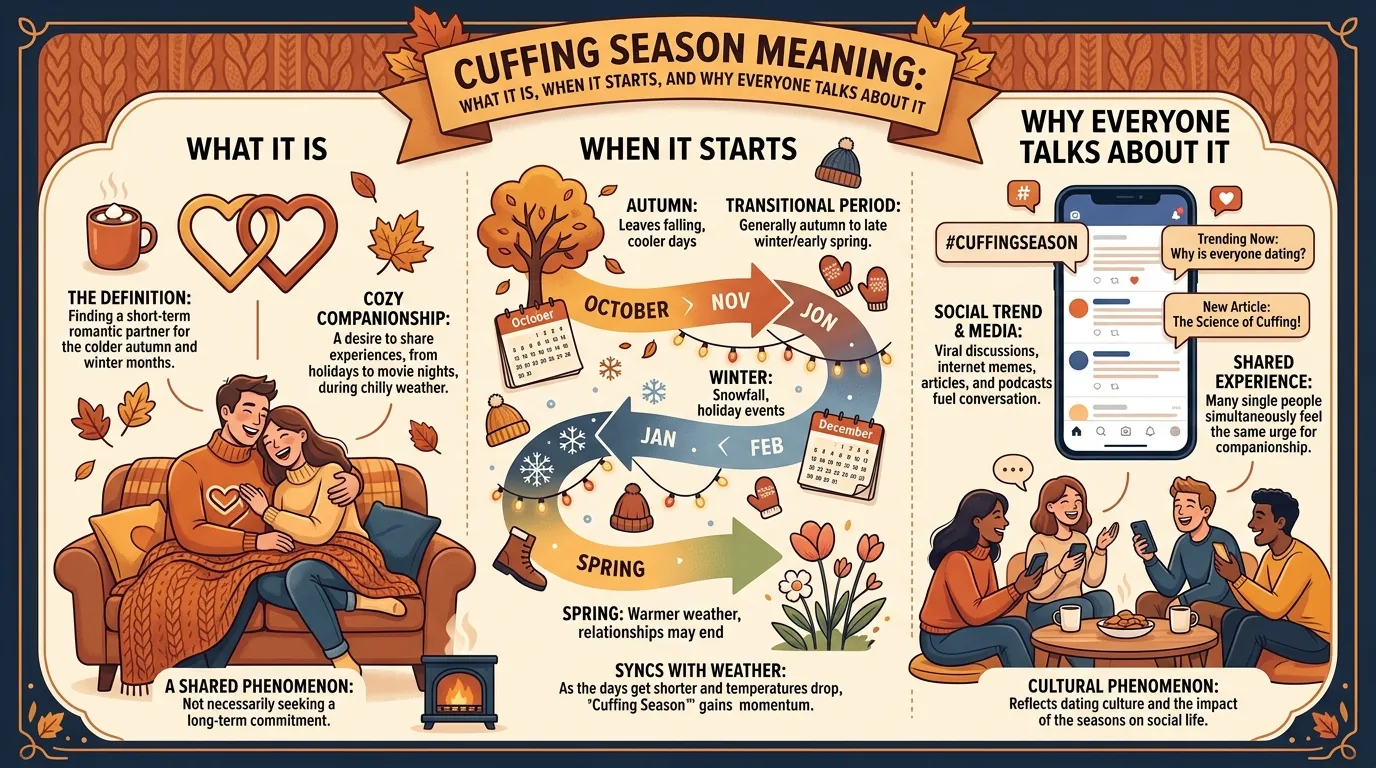
Cuffing season refers to a period during the colder months when people are more likely to seek romantic relationships, companionship, or exclusive partners.
The word “cuffing” comes from the idea of being “handcuffed” or tied to a partner for a period of time. During cuffing season, individuals who may normally prefer being single often look for someone to spend time with during the fall and winter months.
Simple Definition
Cuffing season meaning: A seasonal trend in which people seek committed or semi-committed relationships during colder weather, holidays, and winter months.
When Is Cuffing Season?
While there is no official start date, cuffing season generally begins in early autumn and lasts through winter.
Typical Cuffing Season Timeline
| Period | Stage |
|---|---|
| September | Interest begins growing |
| October | Active dating increases |
| November | Relationships become more serious |
| December | Peak cuffing season |
| January | Holiday companionship continues |
| February | Valentine’s Day influence |
| March | Season often starts ending |
Many people consider October through February the heart of cuffing season.
The Origin of the Term “Cuffing Season”
The term gained popularity in the early 2010s through social media platforms and online culture. However, the concept existed long before the phrase became mainstream.
People have historically sought companionship during colder months due to:
- Reduced outdoor activities
- Longer nights
- Holiday gatherings
- Increased social pressure
- Natural desire for emotional connection
Social media simply gave this behavior a memorable name.
Why Does Cuffing Season Happen?
Many psychological and social factors contribute to cuffing season.
1. Colder Weather Encourages Staying Indoors
When temperatures drop, people spend more time at home.
Activities like:
- Watching movies
- Cooking together
- Relaxing indoors
- Spending cozy evenings
become more appealing with a partner.
2. Holiday Season Loneliness
Major holidays often highlight feelings of loneliness.
Events such as:
- Thanksgiving
- Christmas
- New Year’s Eve
- Valentine’s Day
can make single individuals feel more motivated to find companionship.
3. Social Expectations
Family members frequently ask relationship questions during holiday gatherings.
Examples include:
- “Are you dating anyone?”
- “When are you getting married?”
- “Did you come alone?”
These conversations sometimes increase the desire for a romantic partner.
4. Emotional Connection
Humans naturally seek comfort and connection, especially during darker, colder months when seasonal mood changes may occur.
5. Dating App Activity Increases
Many dating apps report increased user engagement during fall and winter.
People are often:
- Swiping more
- Messaging more
- Going on more dates
- Looking for long-term connections
during cuffing season.
Signs Someone Is Looking for a Cuffing Season Relationship
Not everyone openly admits they are participating in cuffing season.
Here are common signs:
They Suddenly Want Commitment
Someone who previously avoided labels may suddenly seek exclusivity.
They Make Holiday Plans
They invite you to:
- Family gatherings
- Holiday parties
- New Year’s celebrations
They Prioritize Quality Time
Instead of casual interactions, they seek:
- Movie nights
- Weekend trips
- Regular dates
They Talk About the Future
Discussions about upcoming holidays and future plans often increase.
Cuffing Season vs. Serious Relationships
One common misconception is that cuffing season relationships are always temporary.
That’s not necessarily true.
Key Differences
| Cuffing Season Relationship | Long-Term Serious Relationship |
|---|---|
| May start due to seasonal factors | Usually develops naturally over time |
| May focus on companionship | Often focuses on long-term compatibility |
| Sometimes temporary | Typically intended to be lasting |
| Influenced by holidays and weather | Influenced by deeper life goals |
Some cuffing season relationships end when spring arrives, while others grow into lasting partnerships.
The Psychology Behind Cuffing Season
Psychologists often point to several factors that explain this trend.
Seasonal Mood Changes
Shorter daylight hours can affect mood and emotional well-being.
Many people seek:
- Emotional support
- Physical affection
- Increased companionship
during these months.
Need for Belonging
Humans are social creatures.
Research consistently shows that strong relationships contribute to:
- Happiness
- Mental health
- Emotional stability
Fear of Missing Out (FOMO)
Seeing couples:
- Posting holiday photos
- Celebrating together
- Sharing experiences online
can create pressure to find a partner.
Benefits of Cuffing Season
Not every aspect of cuffing season is negative.
There can be several benefits.
Increased Emotional Support
A healthy relationship can provide:
- Comfort
- Encouragement
- Understanding
during stressful times.
More Meaningful Connections
Some people who meet during cuffing season develop genuine long-term relationships.
Fun Shared Experiences
Couples can enjoy:
- Holiday traditions
- Winter vacations
- Seasonal activities
- Special celebrations
together.
Opportunity to Explore Compatibility
Dating during cuffing season may help individuals discover what they truly want in a partner.
Potential Downsides of Cuffing Season
While cuffing season can be enjoyable, there are also challenges.
Temporary Intentions
Some people seek companionship only for the season.
Unrealistic Expectations
Holiday romance can create idealized views of relationships.
Settling Too Quickly
Individuals may overlook compatibility issues simply to avoid being alone.
Spring Breakups
Some relationships end once warmer weather returns and social opportunities increase.
Examples of Cuffing Season in Real Life
Example 1: Holiday Companion
Sarah spends most of the year focusing on work. In October, she starts dating someone and enjoys having a partner for holiday events.
Example 2: Dating App Surge
Michael rarely uses dating apps during summer. As winter approaches, he becomes more active and starts looking for a serious connection.
Example 3: Relationship That Lasts
Emma and Jake begin dating in November. What started as a cuffing season romance eventually turns into a long-term relationship.
Common Misconceptions About Cuffing Season
Myth 1: All Cuffing Season Relationships Are Fake
Reality: Many healthy relationships begin during cuffing season.
Myth 2: Only Young People Participate
Reality: People of all ages seek companionship during colder months.
Myth 3: It’s Just About Physical Attraction
Reality: Emotional support and connection often play a major role.
Myth 4: Everyone Experiences It
Reality: Not everyone feels influenced by seasonal dating trends.
Myth 5: Being Single During Cuffing Season Is Bad
Reality: Many people enjoy being single year-round and feel perfectly content.
Related Dating Terms You Should Know
If you’re exploring modern dating culture, these terms often appear alongside cuffing season.
Situationship
A romantic connection without a clearly defined relationship status.
Talking Stage
The period before officially dating when two people are getting to know each other.
Soft Launch
Introducing a relationship subtly on social media.
Hard Launch
Officially announcing a relationship online.
Breadcrumbing
Giving someone minimal attention to keep their interest without commitment.
Ghosting
Suddenly ending communication without explanation.
How to Navigate Cuffing Season Successfully
If you’re dating during cuffing season, consider these tips.
Be Honest About Your Intentions
Ask yourself:
- Do I want a long-term relationship?
- Am I seeking companionship temporarily?
- What are my expectations?
Communicate Clearly
Discuss:
- Relationship goals
- Commitment expectations
- Future plans
early in the dating process.
Avoid Settling
Don’t enter a relationship simply because of social pressure or loneliness.
Focus on Compatibility
Look beyond holiday excitement and evaluate:
- Shared values
- Communication style
- Long-term goals
Enjoy the Process
Whether you’re seeking a partner or remaining single, focus on activities that genuinely make you happy.
Is Cuffing Season Real or Just Internet Hype?
The term itself is internet slang, but the behavior it describes appears to be real.
Several factors support the idea that cuffing season exists:
- Increased dating app activity
- Seasonal social patterns
- Psychological research on companionship
- Cultural emphasis on holidays and relationships
While not everyone experiences it, many people recognize the trend in their own lives and communities.
Cuffing Season Meaning on Social Media
On platforms like TikTok, Instagram, and X, cuffing season is often discussed humorously.
Common posts include:
- Jokes about finding a winter partner
- Relationship memes
- Dating advice
- Holiday romance content
The phrase has become part of modern internet vocabulary and continues to trend each year as temperatures begin to drop.
Frequently Asked Questions (FAQs)
What is the exact cuffing season meaning?
Cuffing season refers to the period during fall and winter when people are more likely to seek romantic relationships or companionship.
When does cuffing season start?
Most people consider cuffing season to begin around September or October and continue through February.
Why is it called cuffing season?
The term comes from the idea of being “cuffed” or tied to a romantic partner during colder months.
Are cuffing season relationships temporary?
Not always. Some relationships are short-term, while others develop into long-lasting partnerships.
Does cuffing season only affect young adults?
No. People of various ages may experience increased interest in companionship during fall and winter.
Is cuffing season a real psychological phenomenon?
Although the term is informal, psychologists acknowledge that seasonal factors, holidays, and social needs can influence dating behavior.
Can you be happy while single during cuffing season?
Absolutely. Many people enjoy the season without seeking a romantic relationship and focus on friendships, family, hobbies, and personal growth.
Conclusion
Understanding the cuffing season meaning helps explain a fascinating trend in modern dating culture. As temperatures drop and holidays approach, many people naturally seek companionship, emotional support, and romantic connections. While cuffing season is often discussed humorously online, the social and psychological factors behind it are very real.
The key is to approach relationships with honesty and realistic expectations. Whether you’re looking for a long-term partner, exploring new connections, or happily embracing single life, remember that meaningful relationships should be based on compatibility and genuine connection rather than seasonal pressure.
As cuffing season arrives each year, focus on what truly makes you happy, communicate openly about your intentions, and enjoy the journey—whether you’re coupled up or confidently flying solo.