In today’s world of texting, social media, and online dating, the phrase talking stage meaning has become one of the most searched relationship terms. Whether you’re chatting with someone new, navigating a potential romance, or trying to understand where a relationship is headed, knowing what the talking stage means can help you avoid confusion and set realistic expectations.
The talking stage is often the period before an official relationship begins. It’s a time when two people communicate regularly, get to know each other, explore compatibility, and decide whether they want to pursue something more serious. Understanding this stage is important because it has become a common part of modern dating culture.
In this guide, we’ll explore the meaning of the talking stage, its signs, rules, benefits, challenges, red flags, and how it differs from dating and relationships.
What Is the Talking Stage?
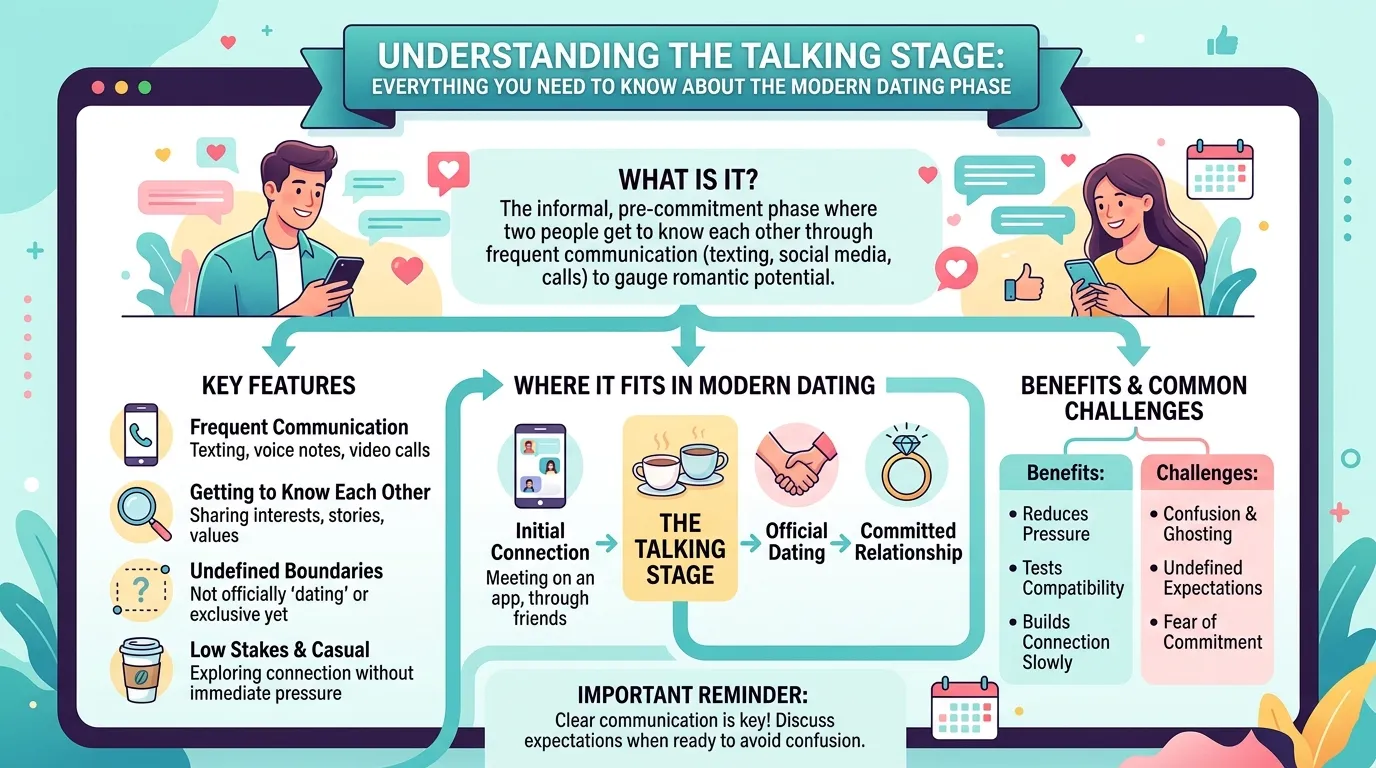
The talking stage refers to the early phase of romantic interest where two people communicate frequently without officially defining their relationship.
During this period, individuals:
- Exchange messages and calls regularly
- Learn about each other’s personalities
- Build emotional connections
- Explore romantic interest
- Determine compatibility
- Decide whether to move toward dating or a relationship
Simply put, the talking stage is the “getting to know you” phase before becoming an official couple.
Simple Definition
Talking Stage Meaning: A period where two people are interested in each other and communicate consistently to explore a potential romantic relationship without making a formal commitment.
Why Is the Talking Stage So Popular Today?
Modern dating has changed significantly over the past decade.
Instead of jumping directly into relationships, many people prefer to spend time learning about someone first. Dating apps, social media platforms, and instant messaging have made it easier to maintain communication before committing.
Reasons for its popularity include:
- More dating options available online
- Desire to avoid rushing into relationships
- Increased focus on emotional compatibility
- Fear of commitment among some individuals
- Need to build trust gradually
For many people, the talking stage acts as a bridge between friendship and a committed relationship.
Signs You Are in the Talking Stage
Many people wonder whether they’re actually in the talking stage or simply friends.
Here are some common signs.
1. You Talk Every Day
Daily communication is one of the biggest indicators.
Examples:
- Good morning texts
- Checking in throughout the day
- Late-night conversations
- Sharing daily experiences
2. You Show Romantic Interest
The conversations often go beyond casual friendship.
Examples:
- Flirting
- Compliments
- Playful teasing
- Heart emojis
- Romantic jokes
3. You’re Learning About Each Other
You ask deeper questions such as:
- Life goals
- Family background
- Personal values
- Future plans
- Relationship expectations
4. You’re Excited to Hear From Them
Receiving a text or notification from them makes your day better.
You may find yourself:
- Waiting for their messages
- Thinking about them often
- Looking forward to conversations
5. No Official Labels Exist Yet
Despite frequent communication, neither person has defined the relationship.
Common thoughts include:
- “What are we?”
- “Are we dating?”
- “Where is this going?”
Stages of the Talking Stage
The talking stage itself often develops through several phases.
Initial Interest
This is where attraction begins.
Activities include:
- Following each other online
- Casual conversations
- Exchanging contact information
Frequent Communication
The connection grows stronger.
People begin:
- Texting daily
- Calling regularly
- Sharing personal stories
Emotional Connection
Trust and comfort start developing.
This stage may involve:
- Discussing personal challenges
- Sharing vulnerabilities
- Offering emotional support
Decision Point
Eventually, both individuals decide whether to:
- Start dating officially
- Enter a relationship
- Remain friends
- End communication
Talking Stage vs Dating
Many people confuse the talking stage with dating.
Here’s a comparison.
| Talking Stage | Dating |
|---|---|
| Exploring interest | Pursuing a romantic connection |
| No official commitment | Often involves exclusivity discussions |
| Learning basic compatibility | Building a deeper relationship |
| Undefined relationship status | More clearly defined |
| Focus on communication | Focus on experiences together |
Example
Talking Stage:
“We text every day and flirt, but we’re not officially together.”
Dating:
“We’re going on dates regularly and exploring a relationship.”
Talking Stage vs Relationship
The talking stage is not the same as a committed relationship.
| Talking Stage | Relationship |
|---|---|
| No labels | Defined status |
| Uncertain future | Shared commitment |
| Testing compatibility | Building a future together |
| Less responsibility | Greater responsibility |
| Exploring feelings | Established emotional bond |
Benefits of the Talking Stage
The talking stage offers several advantages when approached correctly.
Better Compatibility Assessment
It allows people to determine whether they’re truly compatible before committing.
You can evaluate:
- Values
- Interests
- Communication style
- Lifestyle preferences
Reduced Pressure
Without immediate commitment, people can be more relaxed and authentic.
Stronger Emotional Foundation
Healthy relationships often begin with meaningful conversations.
A solid emotional connection can create:
- Trust
- Understanding
- Respect
Prevention of Rushed Decisions
Many failed relationships result from moving too quickly.
The talking stage helps individuals:
- Slow down
- Observe behavior
- Make informed choices
Common Challenges During the Talking Stage
Although beneficial, the talking stage isn’t always easy.
Lack of Clarity
One of the biggest frustrations is uncertainty.
Questions often arise:
- Are we exclusive?
- Do they like me?
- Is this going anywhere?
Mixed Signals
Some people communicate inconsistently.
Examples:
- Flirting one day
- Acting distant the next
- Avoiding serious discussions
Different Expectations
One person may seek a relationship while the other wants something casual.
Emotional Attachment
Strong feelings can develop before any commitment exists, creating disappointment if expectations differ.
Red Flags in the Talking Stage
Certain behaviors may indicate problems.
Inconsistent Communication
If someone disappears frequently without explanation, it may signal low interest.
Refusal to Meet
If months pass without plans to meet (when possible), caution may be warranted.
Constant Excuses
Repeated excuses can suggest a lack of genuine effort.
Avoiding Important Conversations
Healthy connections involve honest communication.
Keeping You Secret
Someone who consistently hides the connection may not be serious about pursuing a relationship.
Green Flags in the Talking Stage
Positive signs can indicate relationship potential.
Consistent Effort
They regularly communicate and make time for you.
Honest Communication
They openly discuss thoughts, feelings, and intentions.
Respect for Boundaries
They respect your comfort level and personal space.
Genuine Interest
They ask meaningful questions and remember details about your life.
Future-Oriented Conversations
They naturally discuss plans involving both of you.
How Long Should the Talking Stage Last?
There is no universal timeline.
Some talking stages last:
- A few weeks
- One to three months
- Several months
Generally, if the talking stage continues indefinitely without progress, it may indicate hesitation or incompatibility.
Healthy Timeline Indicators
- Communication becomes more meaningful over time.
- Both people make consistent effort.
- Relationship goals are discussed.
- Clarity gradually increases.
Rules for a Healthy Talking Stage
While there are no strict rules, certain practices can improve the experience.
Be Honest About Your Intentions
Communicate what you’re looking for.
Examples:
- Serious relationship
- Casual dating
- Friendship first
Avoid Playing Games
Manipulative tactics often create confusion.
Avoid:
- Ignoring messages intentionally
- Making someone jealous
- Sending mixed signals
Maintain Your Independence
Continue focusing on:
- Work
- Studies
- Family
- Friendships
- Personal goals
Set Boundaries
Healthy boundaries protect emotional well-being.
Communicate Clearly
If you’re confused about where things stand, ask respectfully.
Examples of a Talking Stage
Example 1: College Students
Two students meet through mutual friends.
They:
- Text daily
- Share personal stories
- Flirt regularly
After two months, they decide to start dating officially.
Example 2: Online Dating Match
A dating app match leads to daily conversations.
They:
- Video call weekly
- Discuss future goals
- Build trust
Eventually, they become an exclusive couple.
Example 3: Workplace Connection
Two coworkers begin talking after work.
They:
- Exchange messages
- Learn about each other
- Develop feelings
The talking stage helps them decide whether pursuing a relationship is a good idea.
Common Misconceptions About the Talking Stage
“Talking Means We’re Dating”
Not necessarily.
Frequent communication alone does not automatically create a relationship.
“Talking Stage Guarantees a Relationship”
Many talking stages do not progress beyond initial interest.
“More Texting Equals More Commitment”
Communication frequency does not always reflect emotional commitment.
“Only Young People Have Talking Stages”
People of all ages experience this phase in modern dating.
Related Dating Terms You Should Know
Understanding similar terms can help clarify relationship discussions.
Situationship
A romantic connection without clear commitment or labels.
Casual Dating
Dating without serious long-term expectations.
Exclusive Dating
Both people agree to focus only on each other.
Courtship
A more intentional and traditional approach to finding a long-term partner.
Friend Zone
A situation where one person desires romance while the other sees the relationship as friendship.
How to Move From the Talking Stage to a Relationship
If the connection feels strong, consider taking the next step.
1. Evaluate Compatibility
Ask yourself:
- Do our values align?
- Can we communicate effectively?
- Do we enjoy spending time together?
2. Have an Honest Conversation
Discuss:
- Relationship goals
- Expectations
- Commitment preferences
3. Observe Actions
Actions often reveal more than words.
Look for:
- Consistency
- Reliability
- Respect
4. Define the Relationship
When both individuals are ready, discussing labels can remove uncertainty and strengthen the connection.
Frequently Asked Questions (FAQs)
What does talking stage mean in a relationship?
The talking stage is the early phase where two people communicate regularly to explore romantic interest before officially becoming a couple.
Is the talking stage the same as dating?
No. The talking stage usually comes before dating and focuses on learning about each other and assessing compatibility.
How long should a talking stage last?
There is no fixed timeline, but many talking stages last a few weeks to a few months before progressing or ending.
Can you talk to multiple people during the talking stage?
It depends on mutual expectations. Unless exclusivity has been discussed, some people may talk to multiple potential partners.
What are red flags in the talking stage?
Common red flags include inconsistent communication, dishonesty, avoidance of serious conversations, and lack of effort.
How do I know if the talking stage is going well?
Positive signs include consistent communication, mutual interest, respect, honesty, and conversations about future possibilities.
When should you define the relationship?
When both individuals have developed a meaningful connection and want clarity regarding commitment and future expectations.
Conclusion
Understanding the talking stage meaning is essential in today’s dating world. The talking stage is a period of exploration, communication, and emotional connection that helps people determine whether a romantic relationship is worth pursuing. It provides an opportunity to build trust, assess compatibility, and learn about each other before making a commitment.
The healthiest talking stages involve honesty, consistency, mutual respect, and clear communication. While uncertainty can sometimes be frustrating, approaching this phase with realistic expectations and open conversations can lead to stronger and more meaningful relationships.
If you’re currently in a talking stage, focus on getting to know the other person genuinely, communicate your intentions clearly, and pay attention to actions as much as words. Doing so can help you navigate modern dating with confidence and increase the chances of building a healthy, lasting connection.