In today’s fast-paced dating world, relationship labels are becoming more flexible than ever. One term that has gained massive popularity on social media and dating apps is situationship. If you’ve ever wondered about the situationship meaning, you’re not alone. Millions of people are searching for answers about this modern relationship dynamic and trying to understand where they stand in their romantic connections.
A situationship can be exciting, confusing, and sometimes emotionally challenging. Unlike traditional relationships, it often exists in a gray area where two people share a romantic or physical connection without clearly defining what they are to each other.
In this comprehensive guide, we’ll explore the meaning of situationship, its signs, benefits, drawbacks, examples, and how to determine whether a situationship is right for you. By the end, you’ll have a clear understanding of this modern dating trend and how to handle it effectively.
What Does Situationship Mean?
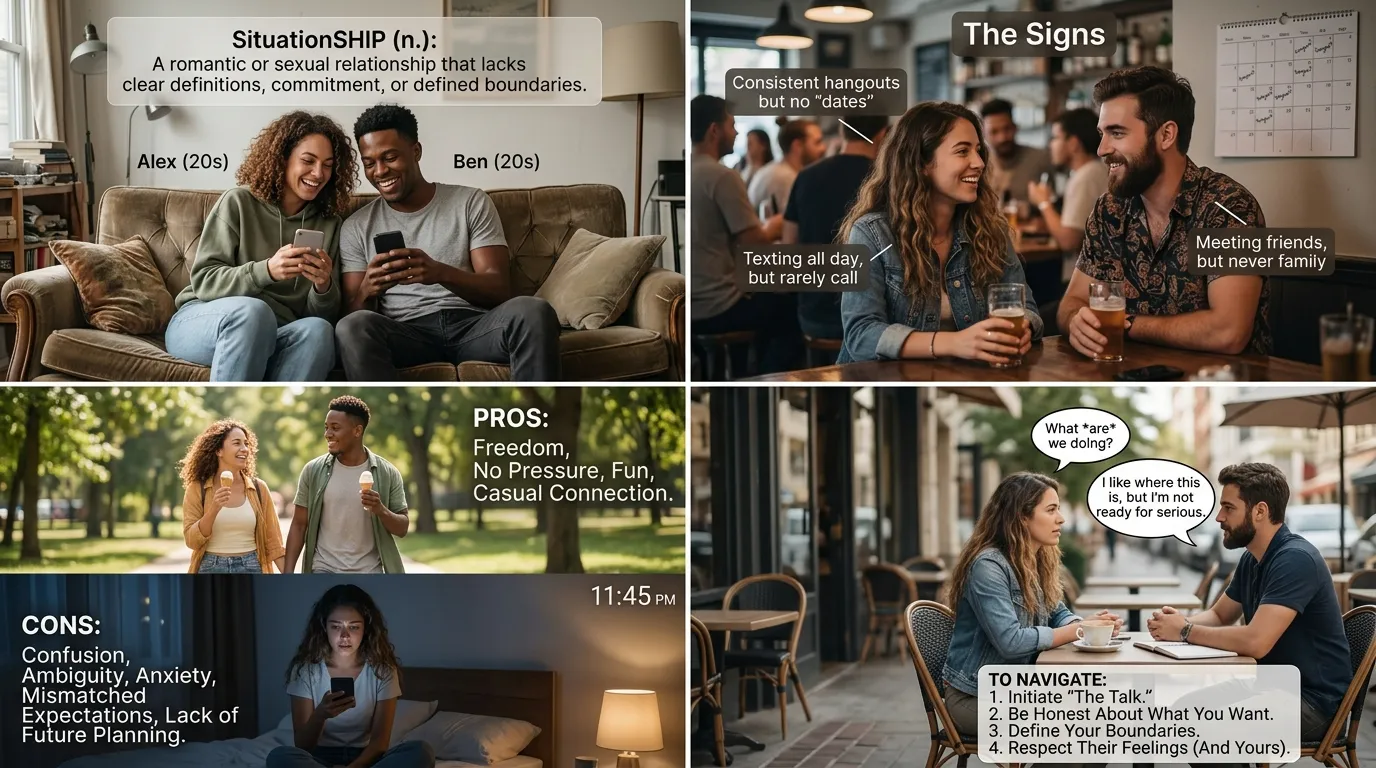
A situationship is a romantic or intimate relationship that lacks clear labels, expectations, or commitment. It exists somewhere between casual dating and a committed relationship.
In simple terms, a situationship occurs when two people spend time together, communicate regularly, and may even act like a couple, but they have not officially defined their relationship.
Situationship Definition
Situationship: A relationship characterized by emotional or physical intimacy without a formal commitment or established relationship status.
For example:
- You text every day.
- You go on dates.
- You spend weekends together.
- You may be physically intimate.
- But neither person has discussed exclusivity or long-term plans.
This uncertainty is what distinguishes a situationship from a traditional relationship.
Why Are Situationships So Common Today?
Modern dating culture has changed dramatically over the past decade.
Several factors contribute to the rise of situationships:
1. Dating Apps
Apps make it easier to meet multiple people simultaneously, leading some individuals to avoid immediate commitment.
2. Fear of Commitment
Many people want companionship but aren’t ready for the responsibilities of a serious relationship.
3. Focus on Personal Growth
Some individuals prioritize careers, education, or self-development before settling into a committed partnership.
4. Changing Social Norms
Traditional dating rules are evolving, and many people now prefer flexible relationship arrangements.
5. Avoiding Labels
Some couples enjoy spending time together without feeling pressured to define their relationship.
Situationship vs Relationship
Many people confuse situationships with relationships.
Here’s a simple comparison:
| Situationship | Relationship |
|---|---|
| Undefined status | Clearly defined |
| Uncertain future | Shared expectations |
| Limited commitment | Mutual commitment |
| Boundaries may be unclear | Boundaries are discussed |
| Exclusivity often uncertain | Exclusivity often established |
| Conversations about the future are rare | Future plans are discussed |
The biggest difference is clarity. Relationships generally involve mutual understanding, while situationships often involve ambiguity.
Signs You Are in a Situationship
Not sure whether you’re in a situationship? Here are some common signs.
1. You Avoid the “What Are We?” Conversation
Neither person has clearly defined the relationship.
Whenever the topic arises, one or both partners may change the subject or avoid giving a direct answer.
2. Everything Feels Uncertain
You may constantly wonder:
- Do they like me?
- Are we exclusive?
- Is this going anywhere?
- Am I wasting my time?
This uncertainty is a major hallmark of a situationship.
3. Future Plans Are Rare
People in situationships often focus on the present.
You might:
- Make weekend plans.
- Meet up regularly.
- Spend holidays separately.
But discussions about future goals are usually absent.
4. The Relationship Lacks Labels
You don’t refer to each other as:
- Boyfriend
- Girlfriend
- Partner
- Significant other
Instead, you may use vague terms like:
- Friend
- Someone I’m seeing
- Person I’m talking to
5. Communication Is Inconsistent
One week, communication may be constant.
The next week, they might disappear for days.
This inconsistency often creates confusion and emotional stress.
6. You Haven’t Met Important People in Their Life
In committed relationships, partners often meet:
- Family members
- Close friends
- Colleagues
In situationships, these introductions may never happen.
7. Emotional Availability Is Limited
The connection may feel strong physically but shallow emotionally.
Conversations may avoid deeper topics such as:
- Long-term goals
- Commitment
- Family planning
- Life aspirations
Examples of a Situationship
Understanding real-world examples can help clarify the concept.
Example 1: The Weekend Couple
Sarah and Jake spend every weekend together. They go on dates, watch movies, and stay over at each other’s homes.
However, after six months, neither has discussed exclusivity or commitment.
This is a classic situationship.
Example 2: The Constant Texters
Emma and Ryan text every day and flirt frequently.
They occasionally meet in person but avoid conversations about their future.
Their connection remains undefined.
Example 3: The On-and-Off Connection
Alex and Jordan reconnect repeatedly over several years.
They share emotional and physical intimacy but never establish a committed relationship.
This ongoing ambiguity is another example of a situationship.
Pros of a Situationship
Despite their reputation, situationships aren’t always negative.
Some people genuinely enjoy them.
Freedom and Flexibility
There is often less pressure compared to a traditional relationship.
People can:
- Focus on personal goals
- Maintain independence
- Explore compatibility naturally
Reduced Expectations
Without rigid relationship rules, some individuals feel more relaxed.
This can lower stress for people not ready for serious commitment.
Opportunity for Self-Discovery
Situationships may help people:
- Learn what they want
- Understand relationship preferences
- Develop communication skills
Emotional Connection Without Immediate Commitment
Some people enjoy companionship while taking time to determine whether a deeper relationship is appropriate.
Cons of a Situationship
While situationships offer flexibility, they can also create emotional challenges.
Uncertainty and Anxiety
The lack of clarity can lead to:
- Overthinking
- Stress
- Emotional confusion
Unequal Expectations
One person may desire commitment while the other prefers keeping things casual.
This mismatch can cause heartbreak.
Lack of Security
Without defined boundaries, people may feel insecure about their place in the other person’s life.
Difficulty Moving Forward
Situationships can become stagnant.
Months or even years may pass without any progress toward a committed relationship.
Emotional Attachment
Even when commitment is absent, feelings often develop.
If expectations aren’t aligned, emotional pain can result.
Why Do People Stay in Situationships?
There are many reasons why individuals remain in situationships.
Fear of Losing the Connection
Some people worry that asking for clarity might end the relationship.
Hope for Commitment
One partner may believe the situationship will eventually become official.
Comfort and Familiarity
Even uncertainty can feel safer than starting over with someone new.
Fear of Rejection
Avoiding difficult conversations can seem easier than risking disappointment.
Enjoying the Current Arrangement
Not everyone wants a committed relationship, and some people are genuinely satisfied with a situationship.
Situationship Red Flags
Certain behaviors may indicate an unhealthy situationship.
Watch for:
🚩 Mixed signals
🚩 Consistent lack of communication
🚩 Refusal to discuss the future
🚩 Only contacting you when convenient
🚩 Emotional unavailability
🚩 Keeping the relationship secret
🚩 Lack of respect for boundaries
These signs may suggest that the arrangement is causing more harm than good.
How to Navigate a Situationship
If you find yourself in a situationship, these strategies can help.
Be Honest About Your Needs
Ask yourself:
- What do I want?
- Am I happy with this arrangement?
- Do I want commitment?
Self-awareness is essential.
Communicate Clearly
Open conversations can reduce confusion.
Questions you might ask include:
- What are we looking for?
- Are we exclusive?
- Where do you see this going?
Clear communication often prevents misunderstandings.
Set Boundaries
Healthy boundaries help protect emotional well-being.
Examples include:
- Defining communication expectations
- Establishing exclusivity preferences
- Discussing emotional needs
Pay Attention to Actions
Words matter, but actions reveal intentions.
Observe whether their behavior aligns with what they say.
Know When to Walk Away
If your needs aren’t being met, leaving may be the healthiest option.
Staying in a situation that causes ongoing stress can prevent personal growth and future opportunities.
Situationship Alternatives
If a situationship doesn’t fit your goals, consider these alternatives.
Casual Dating
Dating multiple people without exclusivity.
Exclusive Dating
Seeing one person while exploring compatibility before committing.
Committed Relationship
A defined partnership with mutual expectations and shared goals.
Friendship
Maintaining a platonic connection without romantic involvement.
Common Myths About Situationships
Myth 1: Situationships Never Become Relationships
Not true.
Some situationships eventually evolve into healthy, committed partnerships.
Myth 2: Situationships Are Always Toxic
While some are unhealthy, others can be mutually beneficial when both people have aligned expectations.
Myth 3: Only Young People Have Situationships
People of all ages can find themselves in undefined relationships.
Myth 4: Commitment Is the Only Goal
Different people have different relationship preferences.
Not everyone seeks traditional commitment.
How Social Media Influences Situationships
Platforms like social media often popularize dating terminology and relationship trends.
As a result:
- More people recognize situationships.
- Relationship expectations continue evolving.
- Discussions about emotional boundaries become more common.
However, online advice isn’t always applicable to every situation. Personal communication remains the most reliable way to understand your relationship status.
FAQ About Situationship Meaning
What is the exact meaning of a situationship?
A situationship is an undefined romantic or intimate relationship that lacks clear commitment, labels, or expectations.
Is a situationship the same as friends with benefits?
No. Friends with benefits usually focuses on physical intimacy without romantic commitment, while situationships often involve emotional connections and dating-like behaviors.
Can a situationship become a real relationship?
Yes. Many situationships evolve into committed relationships when both individuals communicate openly and desire the same future.
How long should a situationship last?
There is no fixed timeline. However, if uncertainty continues for months or years and causes emotional distress, it may be worth discussing expectations.
Are situationships unhealthy?
Not necessarily. They can work when both people understand and agree on the arrangement. Problems usually arise when expectations differ.
Why do situationships hurt so much?
The uncertainty can create anxiety and emotional attachment without the security of commitment, making disappointments more painful.
How do I end a situationship?
Be direct, respectful, and honest. Clearly communicate your feelings and explain why the arrangement no longer meets your needs.
Conclusion
Understanding the situationship meaning is essential in today’s evolving dating landscape. A situationship is an undefined romantic connection that exists somewhere between casual dating and a committed relationship. While it can offer freedom, flexibility, and companionship, it may also create uncertainty, confusion, and emotional stress.
The key to navigating a situationship successfully is communication, self-awareness, and clear boundaries. Be honest about what you want, discuss expectations openly, and pay attention to whether the relationship aligns with your goals. If both people share the same understanding, a situationship can work. If not, seeking clarity sooner rather than later can save time and emotional energy.
Ultimately, healthy relationships—whether casual, committed, or somewhere in between—are built on mutual respect, honest communication, and shared expectations. Knowing what you want and expressing it confidently is the best way to create meaningful and fulfilling connections.