If you’ve spent any time on TikTok, Instagram, Snapchat, X (formerly Twitter), or texting with friends, you’ve probably seen someone described as “thirsty.” At first glance, you might think the word refers to someone who simply needs a glass of water. However, in modern internet culture, THIRSTY meaning slang has a completely different interpretation.
Today, “thirsty” is one of the most popular slang terms used online. It describes someone who appears overly eager for attention, validation, compliments, romance, or affection. Whether someone constantly posts selfies hoping for likes or repeatedly messages someone who isn’t responding, people may jokingly call that behavior “thirsty.”
Understanding THIRSTY meaning slang is important because internet language changes rapidly. Using the term correctly helps you understand memes, social media comments, online conversations, and even pop culture references. In this guide, you’ll learn exactly what “thirsty” means, where it came from, how it’s used today, examples in texting, common misunderstandings, and when it’s appropriate to use.
Quick Answer: What Does THIRSTY Mean in Slang?
Thirsty is slang for:
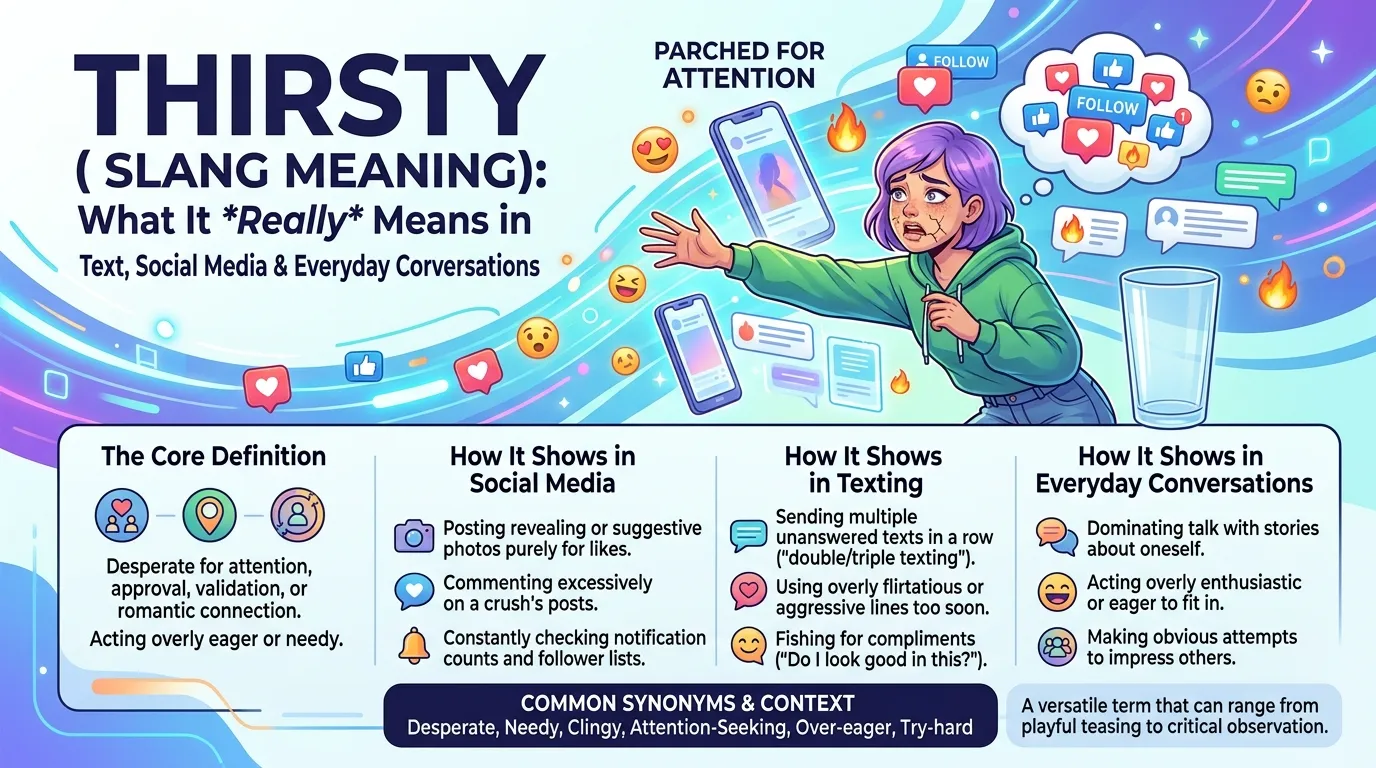
Being overly eager, desperate, or attention-seeking, especially when trying to get romantic or sexual attention from someone.
The word doesn’t usually refer to actual drinking or dehydration.
Simple Definition
Someone is considered thirsty when they:
- Try too hard to impress someone
- Constantly seek compliments
- Desperately pursue romance
- Want attention on social media
- Repeatedly flirt without success
- Act overly interested in someone
What Does THIRSTY Mean in Text Messages?
In texting, thirsty usually refers to someone’s behavior rather than their physical condition.
Examples
Friend 1:
“I’ve sent her six messages today.”
Friend 2:
“Bro… you’re acting thirsty.”
Person A:
“He comments on every single one of her photos.”
Person B:
“That’s thirsty.”
Example:
“I know you’re excited, but don’t sound too thirsty.”
Meaning:
Don’t appear desperate.
THIRSTY Meaning on Social Media
Social media helped make this slang incredibly popular.
Someone may be called thirsty if they:
- Constantly post revealing selfies for compliments
- Leave flirtatious comments everywhere
- Always seek likes and validation
- Message influencers repeatedly
- Obsessively chase someone’s attention
Platforms where you’ll often hear it include:
- TikTok
- Snapchat
- X
- Discord
The Origin of THIRSTY as Slang
The slang meaning comes from the idea of someone being “hungry” or “desperate” for something.
Instead of thirst for water, they’re said to have a thirst for attention, love, popularity, or romance.
This expression became widely popular during the early 2010s.
Hip-hop culture, internet memes, and social media helped spread it worldwide.
Eventually, phrases like these became common:
- Thirst trap
- Stay thirsty
- So thirsty
- Thirsty comments
- Thirsty behavior
Today, millions of people use the word daily online.
Why Do People Say Someone Is “Thirsty”?
Usually because they think someone is trying too hard.
Examples include:
Looking for Attention
Posting dozens of selfies every day just to receive compliments.
Chasing Someone
Messaging someone repeatedly without getting replies.
Seeking Validation
Constantly asking:
- “Am I attractive?”
- “Do I look good?”
- “Rate me.”
Excessive Flirting
Flirting with nearly everyone online.
Different Types of “Thirsty” Behavior
Not all thirstiness looks the same.
Romantic Thirst
Trying too hard to date someone.
Example:
“I’ll do anything if you’ll go out with me.”
Social Media Thirst
Posting content mainly to receive attention.
Example:
Uploading several selfies every day with captions asking for compliments.
Celebrity Thirst
Constantly commenting on celebrity posts hoping they’ll respond.
Example:
“I’ve commented on every one of her Instagram posts.”
Validation Thirst
Always looking for approval.
Example:
“Please tell me I look amazing.”
Fame Thirst
Doing outrageous things just to become viral.
What Is a Thirst Trap?
One of the most popular slang expressions is thirst trap.
Definition
A thirst trap is a photo or video intentionally posted to attract admiration, compliments, flirting, or romantic attention.
Examples include:
- Gym selfies
- Beach pictures
- Fashion photos
- Mirror selfies
- Shirtless photos
- Glamorous makeup looks
Not every attractive photo is a thirst trap.
Intent matters.
Examples of THIRSTY in Everyday Conversation
Example 1
“He’s acting thirsty after texting her ten times.”
Example 2
“Stop commenting heart emojis under every picture.”
Example 3
“She isn’t interested. Don’t be thirsty.”
Example 4
“That caption is giving thirsty energy.”
Example 5
“He looked desperate, honestly.”
THIRSTY Meaning on TikTok
TikTok users frequently use thirsty to describe:
- Flirty videos
- Attractive creators
- Comment sections
- Attention-seeking trends
- Viral challenges
Common comments include:
- “Everyone in the comments is thirsty.”
- “The thirst is unreal.”
- “Thirsty edits.”
- “This video has people acting thirsty.”
THIRSTY Meaning on Instagram
Instagram uses include:
- “Thirst trap.”
- “Thirsty captions.”
- “Thirsty comments.”
- “Stop being thirsty.”
Examples:
“Your comments are getting thirsty.”
“That post is definitely a thirst trap.”
THIRSTY Meaning in Dating
Dating apps commonly use the word.
Someone may seem thirsty if they:
- Send too many messages
- Become attached too quickly
- Ask for dates immediately
- Ignore rejection
- Constantly seek reassurance
Healthy interest is different from appearing desperate.
THIRSTY vs Flirty
| Thirsty | Flirty |
|---|---|
| Often desperate | Usually confident |
| Seeks validation | Shows playful interest |
| Can make others uncomfortable | Usually respectful |
| Tries too hard | Feels natural |
| Often one-sided | Usually mutual |
THIRSTY vs Desperate
Although similar, they’re not always identical.
Thirsty
Usually playful internet slang.
Desperate
More serious criticism.
Someone can be slightly thirsty without actually being desperate.
Positive vs Negative Uses
Most of the time, “thirsty” is teasing.
However, context matters.
Negative
“He’s so thirsty.”
Meaning:
He’s trying far too hard.
Playful
“I’m thirsty for vacation.”
Meaning:
I really want a vacation.
Common Slang Related to THIRSTY
Several internet expressions have similar meanings.
Simp
Someone who gives excessive attention to another person hoping for affection.
Down Bad
Being emotionally overwhelmed by attraction.
Clout Chasing
Seeking popularity through other people.
Pick Me
Someone who constantly seeks approval, often by putting others down.
Attention Seeking
Trying hard to become the center of attention.
Synonyms for THIRSTY
Depending on context, similar words include:
- Desperate
- Attention-seeking
- Eager
- Overly interested
- Clingy
- Needy
- Obsessed
- Validation seeking
- Overenthusiastic
- Lovestruck
When Should You Avoid Saying Someone Is Thirsty?
The term can hurt feelings.
Avoid using it when:
- Someone sincerely likes another person.
- They’re expressing genuine emotions.
- They’re asking for help.
- The situation is sensitive.
Remember:
Showing interest doesn’t automatically make someone thirsty.
Common Misunderstandings
It Always Means Romance
Not necessarily.
Someone can be thirsty for:
- Fame
- Followers
- Likes
- Attention
- Success
It Always Means Something Sexual
No.
Sometimes it simply means wanting attention.
Every Selfie Is a Thirst Trap
False.
Many people post photos simply to share memories.
Examples in Pop Culture
You’ll often hear:
- “The comments are thirsty.”
- “Twitter is thirsty today.”
- “That’s a thirst trap.”
- “Fans are thirsty.”
- “People are acting thirsty.”
These phrases are common in celebrity discussions and viral content.
How to Tell if Someone Is Using THIRSTY Literally or as Slang
Look at the context.
Literal
“I’m thirsty after running.”
Meaning:
Needs water.
Slang
“He’s thirsty for attention.”
Meaning:
Wants validation.
Context makes the meaning obvious.
Tips for Using THIRSTY Correctly
- Use it casually among friends.
- Understand the context first.
- Don’t use it to insult someone unnecessarily.
- Remember it’s internet slang.
- Avoid using it in formal writing.
Frequently Asked Questions
What does THIRSTY mean in slang?
It means someone appears overly eager, desperate, or attention-seeking, especially for romance, compliments, or validation.
Is calling someone thirsty an insult?
Usually it’s playful teasing, but depending on tone and context, it can also be insulting.
What is a thirst trap?
A thirst trap is a photo or video intentionally shared to attract compliments, admiration, flirting, or romantic attention.
Does thirsty always mean romantic interest?
No. It can also describe someone seeking fame, likes, followers, popularity, or general attention.
What does “thirsty comments” mean?
These are comments that openly admire, flirt with, or strongly express attraction toward someone.
Is thirsty the same as simp?
Not exactly. A simp usually shows excessive devotion to someone, while thirsty refers more broadly to appearing overly eager for attention or affection.
Can thirsty be used positively?
Yes. Friends often use it jokingly, and people sometimes use it humorously to express excitement about something they really want, such as saying they’re “thirsty for a vacation” or “thirsty for new music.”
Final Thoughts
The modern THIRSTY meaning slang has evolved far beyond its original connection to needing water. Today, it describes someone who seems overly eager for attention, affection, compliments, romance, or validation, especially in online spaces like TikTok, Instagram, Snapchat, and text messaging.
While the term is often used humorously among friends, context is everything. Not every selfie is a thirst trap, and not everyone showing genuine interest is being thirsty. Understanding the difference helps you communicate more naturally and avoid misunderstandings.
As internet language continues to evolve, knowing popular slang like thirsty, simp, down bad, pick me, and clout chasing can help you better understand social media trends, memes, and everyday conversations. The next time you see someone called “thirsty,” you’ll know exactly what it means—and whether it’s playful teasing, friendly banter, or genuine criticism.