Hiring a motorhome for the first time sounds simple: pick up the keys, drive off, enjoy the views. In reality, the first day is usually a small adventure of its own. Most first-timers make the same handful of mistakes, and almost all of them are easy to avoid if you know what to expect.
Driving it is easier than you think, but parking isn’t
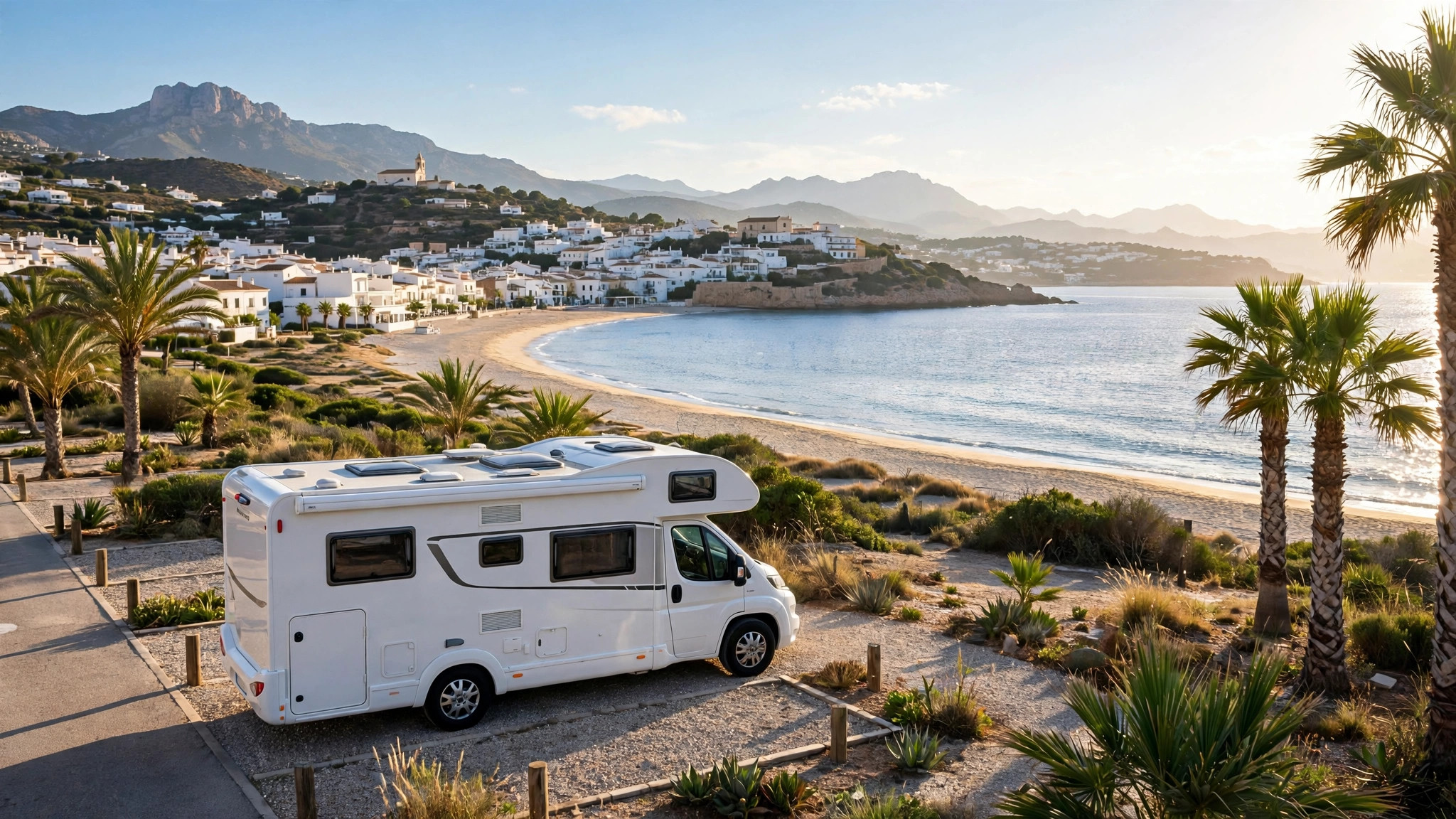
Most rental motorhomes in Spain are built on a van chassis and drive much like a large car. After half an hour on the motorway, most people relax. The real challenge comes in old town centres. Narrow streets in places like Altea or Villajoyosa were not designed for a vehicle three metres high and seven metres long.
The rule of thumb: park on the edge of town and walk in. Many Spanish towns now have dedicated motorhome areas (áreas de autocaravanas) with parking, fresh water and waste disposal, often for a few euros a night.
Water, power and waste: the three things to understand on day one
A motorhome is a small house on wheels, and like any house it needs supplies. Before you set off, make sure you understand three systems:
- Fresh water. Know how big the tank is and where to refill it. Showers use water faster than you’d think.
- Grey and black water. Grey water comes from the sink and shower, black water from the toilet. Both need emptying at proper service points, never by the roadside.
- Electricity. Lights and the fridge run from a leisure battery, which charges while you drive or when you plug in at a campsite. Leaving everything on overnight can drain it.
A good rental company will walk you through all of this at handover. At LSR365, a motorhome hire company in Alicante, the team builds and converts motorhomes themselves, so the handover covers every tank, switch and valve, and they stay reachable by phone if something isn’t clear once you’re on the road.
Pack less than you think
First-timers almost always bring too much. Storage space in a motorhome is limited, and every extra kilo affects fuel consumption. Soft bags fold away more easily than hard suitcases. Bedding, kitchen kit and camping chairs are often included in the rental, so check before you pack your own.
Don’t plan too many kilometres
On a map, 300 km a day looks reasonable. In practice, with stops, slow mountain roads and time to set up in the evening, 100–150 km a day is far more relaxing. Spain’s Costa Blanca is ideal for this: beaches, mountains, castles and salt lakes all sit within a short drive of each other, so you can see a lot without spending the whole holiday behind the wheel.
Choose the right size
Bigger isn’t always better. A compact campervan is easier to park and cheaper to run, which suits couples. Families or groups of four or more will appreciate a larger motorhome with fixed beds and a proper bathroom. Browsing the motorhomes available to hire in Alicante side by side is the easiest way to compare layouts, bed sizes and storage before you book.
The first night is the hardest
Almost everyone feels a little unsure on the first evening: levelling the vehicle, switching on the heater, figuring out where everything goes. By the second day it feels routine, and by the third most people are already planning their next trip. That’s the real secret of motorhome travel: the learning curve is short, and the freedom lasts the whole holiday.