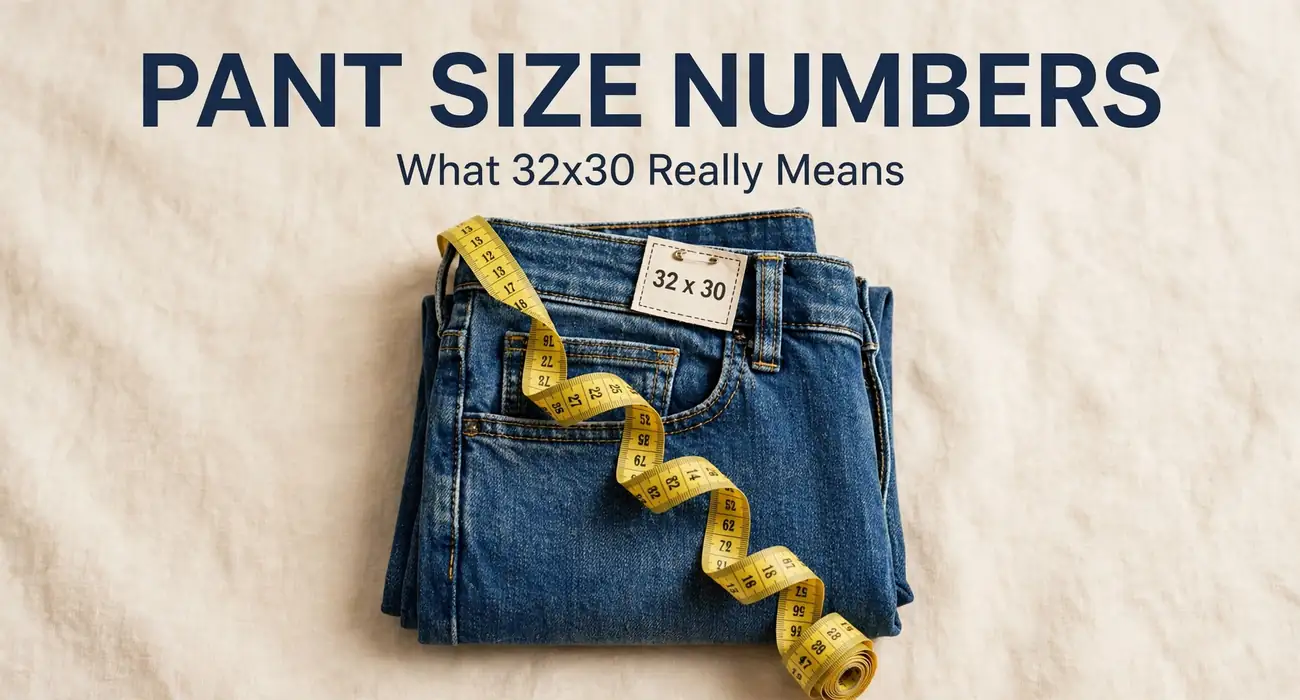
You pick up a pair of jeans. The tag says 32×30. You know it is your size, more or less, but what do those two numbers actually mean? If you have ever guessed, ordered the wrong fit, or returned pants that looked right online, you are not alone.
Those two numbers carry almost everything you need to know about how a pair of pants will fit. The first is your waist, the second is your inseam. Once you understand them, shopping gets faster, returns get rarer, and the pants you buy actually fit the way you expected.
The First Number Is Your Waist
The first number is your waist measurement in inches. A 32 means the waistband measures about 32 inches around. To find yours, wrap a cloth tape around your natural waistline, the spot where you normally wear your pants, and keep the tape level and snug but not tight. Measure over light clothing, not a thick belt or heavy layers.
If you fall between sizes, most people size up for comfort, especially with fabric that has no stretch. A waistband that is slightly loose can be fixed with a belt. One that is too tight cannot be fixed at all.
The Second Number Is Your Inseam
The second number is your inseam, the length of the inner leg seam from the crotch to the hem. In 32×30, the inseam is 30 inches. This number decides where your pants end, at the ankle, just above the shoe, or dragging on the floor.
The inseam deserves a closer look, because it affects fit more than most people expect. Our detailed guide to inseam meaning covers how to measure it correctly, average lengths by height, and how the right length changes with each pant style.
Common Size Combinations
Most brands use the same number pairs again and again. Here are the ones you will see most often, and who they usually fit.
| Size | Waist | Inseam | Usually fits |
| 30×30 | 30 in | 30 in | Slim to regular builds of average height |
| 32×30 | 32 in | 30 in | Regular builds of average height |
| 32×32 | 32 in | 32 in | Regular builds, taller than average |
| 34×32 | 34 in | 32 in | Larger waist, taller length |
| 34×34 | 34 in | 34 in | Tall builds |
| 36×34 | 36 in | 34 in | Larger waist, tall length |
These are starting points, not rules. Your exact fit depends on the brand, the cut, and the rise, which brings us to the next point.
Why the Same Size Fits Differently
You can buy the same size from two brands and get two very different fits. Three things cause most of the difference.
Brand Differences
There is no universal standard for sizing. One brand’s 32 can be another brand’s 30 or 34. Always check the brand’s own size chart instead of trusting the number alone.
Rise
The rise is the distance from the crotch to the waistband. A high rise sits higher on your waist and shortens the effective leg length, while a low rise does the opposite. The numbers on the tag do not change, but the way the pants sit on you does.
Fabric and Stretch
Stretch fabric molds to your body, while stiff fabric like raw denim stays rigid. The same measurements can feel relaxed in one pair and tight in another, so check the fabric blend before you buy.
How to Find Your Size in Two Minutes
You do not need a tailor. You need a tape measure and two minutes.
- Measure your waist with a cloth tape at your natural waistline.
- Measure your inseam from a pair of pants that fits you well, from the crotch seam to the hem.
- Check the brand’s size chart before you buy, because sizes vary from brand to brand.
- If you are between sizes, size up in length. It is easier to hem pants that are too long than to add length to ones that are too short.
Common Mistakes to Avoid
- Guessing your size from your height alone. Height is a rough guide, but two people of the same height can have very different leg lengths.
- Skipping the size chart. Two brands can label the same body very differently.
- Forgetting your shoes. Heels, boots, and sneakers all change where the hem should hit, so measure with the shoes you plan to wear.
- Buying the same size in every style. Skinny jeans, dress pants, and shorts all sit differently, even when the numbers match.
Conclusion
Pant size numbers are not a code. The first number is your waist, the second is your inseam, and together they tell you almost everything about the fit. Measure once, write your numbers down, and check the chart every time you try a new brand. You will save time, money, and a lot of returns.