In today’s digital world, internet slang evolves faster than ever. One term that frequently appears across social media platforms, gaming communities, online forums, and messaging apps is “lurking.” If you’ve ever seen someone say, “I’m just lurking” or “Stop lurking and say hi!”, you may have wondered what it actually means.
Understanding lurking meaning slang is important because it reflects a common online behavior practiced by millions of people every day. Whether you’re browsing Reddit, scrolling through TikTok comments, reading Discord conversations, or quietly observing discussions in Facebook groups, you’ve probably been a lurker at some point.
This guide explains the meaning of lurking in slang, where it came from, how it’s used online, examples in conversations, common misconceptions, and related internet terms. By the end, you’ll have a complete understanding of this popular digital expression.
What Does Lurking Mean in Slang?
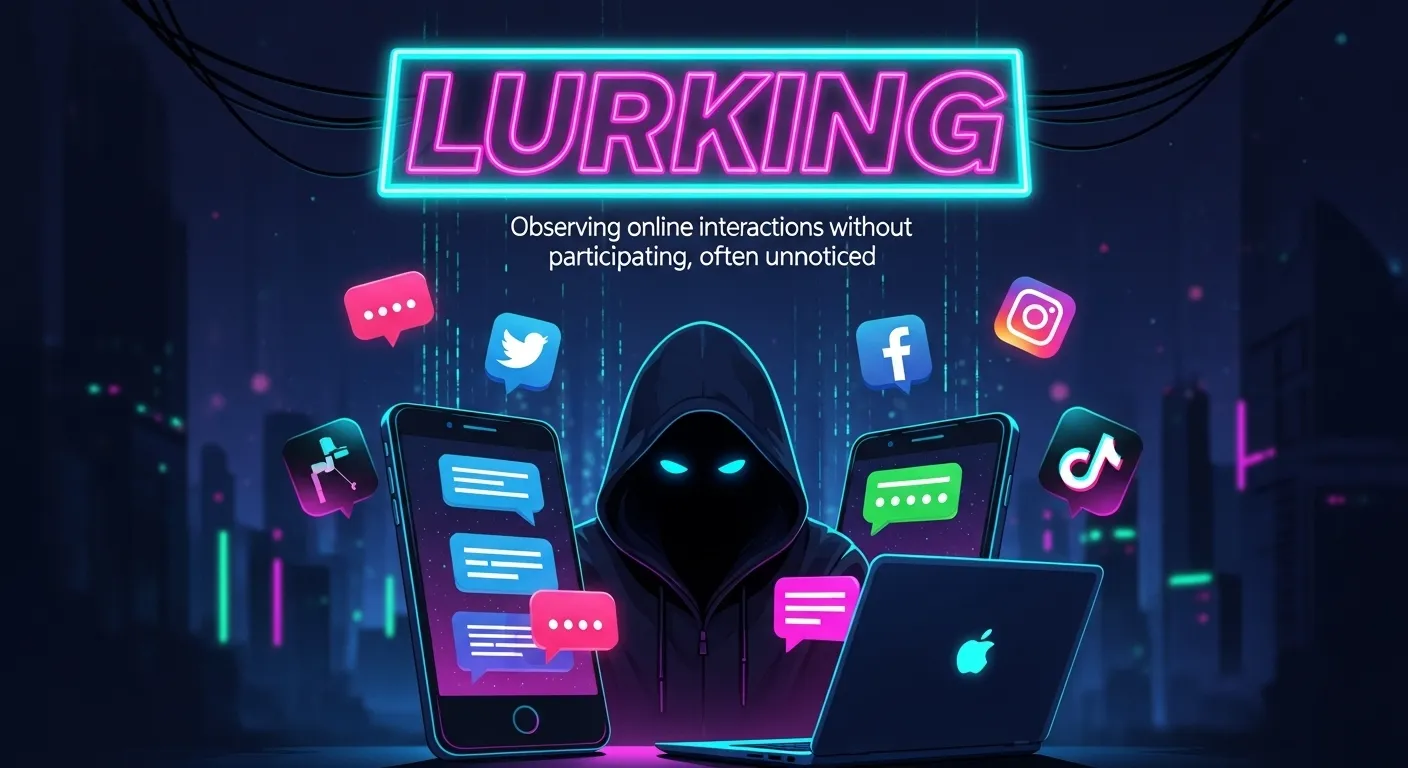
In slang, lurking means quietly observing online conversations, communities, or social media content without actively participating.
A person who lurks typically:
- Reads posts
- Watches videos
- Follows discussions
- Scrolls through comments
- Monitors conversations
But they rarely:
- Post comments
- Create content
- Join discussions
- React publicly
Simple Definition
Lurking = Watching or reading online without interacting.
For example:
“I’ve been lurking in this gaming group for months but never posted anything.”
This means the person has been following the group’s activity without actively participating.
The Origin of the Word “Lurking”
The word lurk existed long before the internet.
Traditionally, “lurk” meant:
- To remain hidden
- To stay out of sight
- To wait secretly
- To observe without being noticed
As internet culture developed during the 1990s and early 2000s, online communities adopted the term to describe users who quietly read discussions without contributing.
Over time, the meaning shifted from something potentially suspicious to a mostly neutral description of online behavior.
Today, lurking is considered a normal part of internet culture.
Lurking Meaning in Social Media
On social media platforms, lurking refers to consuming content without interacting with it publicly.
Examples include:
- Watching Instagram Stories without posting your own
- Reading Facebook posts without commenting
- Scrolling TikTok videos without liking them
- Reading X (Twitter) threads silently
- Browsing LinkedIn posts without engaging
Example
A friend might say:
“I see you online every day, but you’re always lurking.”
This means they notice you’re viewing content but rarely posting or commenting.
Lurking Meaning in Text Messages
In texting, lurking often means:
- Quietly watching conversations
- Staying in a group chat without talking
- Following updates without responding
Examples
Friend: “Why are you so quiet in the group chat?”
You: “Sorry, I’ve just been lurking.”
Meaning:
You’ve been reading messages but haven’t participated.
Another example:
“I’ve been lurking in the chat all afternoon.”
This indicates passive observation rather than active involvement.
Lurking in Online Communities
Many online communities encourage newcomers to lurk before participating.
This helps users:
- Understand community rules
- Learn acceptable behavior
- Discover discussion topics
- Avoid posting repetitive questions
Common Places Where People Lurk
- Reddit communities
- Discord servers
- Online forums
- Facebook groups
- Telegram channels
- Gaming communities
- Streaming chats
Many experienced internet users even recommend:
“Lurk first, post later.”
This approach helps people become familiar with a community’s culture.
Why Do People Lurk Online?
Not everyone wants to be highly visible on the internet.
There are many reasons people choose to lurk.
1. Learning Before Participating
New users often observe discussions before joining them.
They may want to:
- Learn community norms
- Understand topics
- Avoid mistakes
2. Social Anxiety
Some individuals enjoy reading discussions but feel uncomfortable posting.
Lurking allows them to stay informed without social pressure.
3. Privacy Concerns
Many users prefer keeping a low profile online.
They consume content without leaving a visible digital footprint.
4. Entertainment
Some people simply enjoy reading conversations.
They don’t feel a need to contribute.
5. Research and Information Gathering
Professionals, students, and hobbyists often lurk in communities to gather insights and learn from others.
Is Lurking Bad?
Not necessarily.
Contrary to popular belief, lurking is generally considered normal online behavior.
Benefits of Lurking
✅ Learn community rules
✅ Gain knowledge
✅ Avoid unnecessary arguments
✅ Stay informed
✅ Protect privacy
Potential Downsides
❌ Miss networking opportunities
❌ May seem inactive
❌ Less community engagement
❌ Limited relationship building
Most online communities have a large percentage of lurkers compared to active contributors.
In fact, many websites rely on a small number of active users creating content while a much larger audience consumes it.
Examples of Lurking in Conversations
Here are common examples showing how the slang is used.
Example 1
Person A: “You never comment on my posts.”
Person B: “I see them all. I’m just lurking.”
Example 2
Friend: “Have you joined the server yet?”
You: “Yeah, I’ve been lurking for a few days.”
Example 3
Gamer: “I don’t talk much during streams.”
Viewer: “So you’re basically a lurker.”
Example 4
Coworker: “Do you use LinkedIn often?”
Response: “Mostly for lurking and reading industry updates.”
What Is a Lurker?
A lurker is someone who engages in lurking behavior.
Definition
A lurker is:
A person who observes online discussions without actively participating.
Example Sentences
- “I’m a Reddit lurker.”
- “Most members are lurkers.”
- “She lurks more than she posts.”
- “The server has thousands of lurkers.”
The term is usually neutral and not considered insulting.
Lurking vs Stalking: What’s the Difference?
Many people confuse lurking with stalking.
However, they are not the same.
| Lurking | Stalking |
|---|---|
| Passive observation | Obsessive monitoring |
| Usually harmless | Can be invasive |
| Common online behavior | Often unwanted behavior |
| General content viewing | Focused attention on specific individuals |
| Socially accepted | May cross personal boundaries |
Key Difference
Lurking typically involves browsing public content casually.
Stalking involves excessive monitoring of a specific person in a way that may feel intrusive.
Lurking in Gaming Culture
Gaming communities frequently use the term lurking.
Examples include:
- Watching Twitch streams silently
- Staying in voice channels without talking
- Reading game discussions without posting
Common Gaming Phrase
“Thanks for lurking!”
Streamers often say this to viewers who watch without chatting.
It acknowledges silent support from audience members.
Lurking on Twitch
On streaming platforms, lurking has become especially common.
A viewer may:
- Open a stream
- Leave it running
- Watch occasionally
- Avoid chatting
This is known as lurking on Twitch.
Example
“I’m working right now, but I’ll be lurking in your stream.”
Meaning:
The viewer is supporting the stream without actively participating.
Many streamers appreciate lurkers because they still contribute viewership.
Lurking on Reddit
Reddit has one of the largest lurking cultures online.
Many users:
- Read discussions daily
- Never comment
- Rarely create posts
A common Reddit saying is:
“Long-time lurker, first-time poster.”
This phrase means someone has spent a long time observing before finally participating.
Common Misconceptions About Lurking
Misconception #1: Lurkers Are Creepy
Not true.
Most lurkers are simply consuming content privately.
Misconception #2: Lurkers Don’t Contribute
Even without posting, lurkers:
- Increase readership
- Support creators
- Spread information
- Strengthen communities through audience presence
Misconception #3: Everyone Should Post
Participation is optional.
Many people gain value from communities without actively contributing.
Misconception #4: Lurking Means Hiding Something
Usually not.
Most users lurk because it’s convenient and comfortable.
Similar Slang Terms Related to Lurking
Here are some related internet expressions.
Ghosting
Disappearing from communication entirely.
Example: Not replying to messages for weeks.
Snooping
Looking through information in a curious or invasive way.
Creeping
Checking someone’s profile repeatedly.
Browsing
Casually exploring content.
Watching from the Shadows
A humorous way to describe lurking.
How to Use “Lurking” Correctly
You can use the term in casual online conversations.
Examples
- “I’ve been lurking in the forum.”
- “Just lurking today.”
- “I’m not posting yet, only lurking.”
- “Been lurking for months.”
- “Thanks for all the tips—I’ve been lurking here for a while.”
Incorrect Usage
Avoid using lurking to describe active participation.
For example:
❌ “I posted ten comments because I was lurking.”
If you’re posting actively, you’re no longer just lurking.
When Lurking Can Be Helpful
Lurking can be beneficial in several situations.
Before Joining a New Community
Observe:
- Rules
- Tone
- Common topics
During Professional Networking
Read discussions before contributing.
Learning a New Hobby
Watch experts interact before asking questions.
Research Purposes
Gather information efficiently without interrupting discussions.
The Psychology Behind Lurking
Researchers studying online behavior have found that many people prefer observing rather than contributing.
Reasons include:
- Fear of judgment
- Desire for anonymity
- Information gathering
- Introverted personality traits
- Limited time
This behavior is extremely common and has become a normal part of digital life.
In many online communities, lurkers significantly outnumber active posters.
Popular Phrases Using Lurking
You may encounter these expressions online:
- “Just lurking.”
- “Professional lurker.”
- “Lurking mode activated.”
- “Long-time lurker.”
- “Friendly lurker.”
- “Serial lurker.”
- “Lurk and learn.”
- “Lurking in the shadows.”
These phrases are usually lighthearted and self-deprecating.
FAQ About Lurking Meaning Slang
What does lurking mean in slang?
Lurking means quietly observing online content, discussions, or communities without actively participating.
Is lurking a bad thing?
No. Lurking is generally considered normal internet behavior and is common across social media platforms and online communities.
What is a lurker?
A lurker is someone who reads, watches, or follows online activity without posting comments or creating content.
What does “long-time lurker” mean?
It means a person has been observing a community for a long period before participating.
What does lurking mean on social media?
It refers to viewing posts, stories, videos, or discussions without liking, commenting, or sharing.
Is lurking the same as stalking?
No. Lurking is passive observation of public content, while stalking involves excessive attention toward a specific individual and may become intrusive.
Why do people lurk online?
People lurk to learn, stay informed, protect privacy, avoid social pressure, or simply enjoy reading content without participating.
Conclusion
Understanding lurking meaning slang helps make sense of a behavior that has become a major part of modern internet culture. Simply put, lurking means observing online conversations, communities, or content without actively participating. Whether someone is reading Reddit discussions, watching Twitch streams, scrolling social media feeds, or following a Discord server, lurking is a common and often completely normal activity.
While some people view lurking as being quiet or reserved online, it can actually be a smart way to learn community norms, gather information, and maintain privacy. Most internet users have been lurkers at some point, and many continue to alternate between lurking and active participation depending on the situation.
The next time you hear someone say they’re “just lurking,” you’ll know exactly what they mean: they’re watching, reading, and staying informed—even if they aren’t saying much.