In today’s world of social media, online dating, workplace networking, and personal relationships, you’ve probably heard someone say, “That’s a red flag.” But what exactly does that mean?
Understanding the red flag meaning can help you identify warning signs in relationships, friendships, workplaces, and everyday situations. Whether you’re evaluating a new romantic partner, considering a job offer, or building new friendships, recognizing red flags can help you make informed decisions and avoid potential problems.
This comprehensive guide explains the meaning of red flags, where the term comes from, common examples, and how to distinguish genuine warning signs from harmless personality differences.
What Does Red Flag Mean?
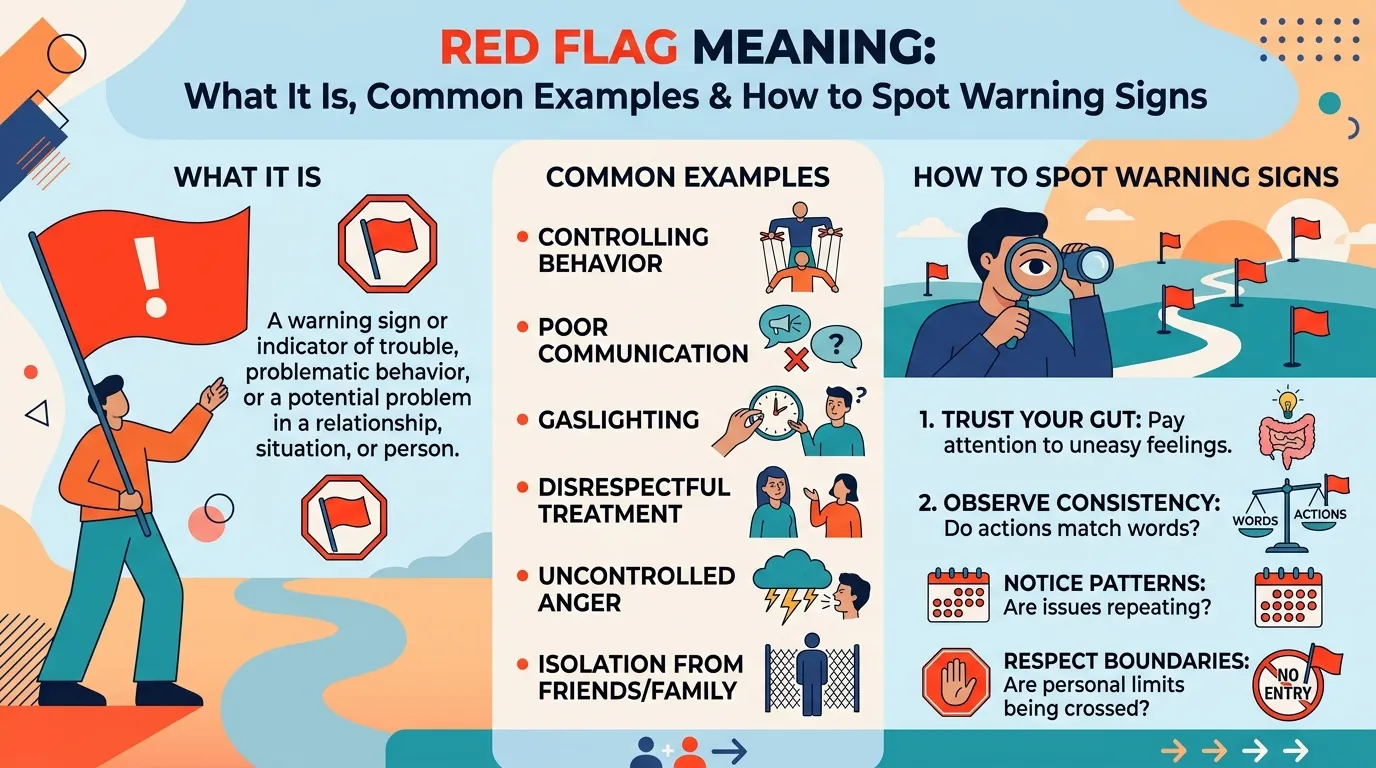
A red flag is a warning sign that indicates a potential problem, risk, danger, or unhealthy behavior. The term is commonly used to describe behaviors, attitudes, or situations that suggest something may not be right.
Simple Definition
Red flag meaning: A signal or indicator that warns you to be cautious because a person, situation, or circumstance may lead to negative consequences.
For example:
- A person who constantly lies may be a red flag in a relationship.
- An employer who avoids discussing salary details could be a workplace red flag.
- An investment promising guaranteed huge returns may be a financial red flag.
In simple terms, a red flag tells you to pay attention and proceed carefully.
The Origin of the Term “Red Flag”
The phrase “red flag” comes from the historical use of actual red flags as warning signals.
Throughout history, red flags have been used to indicate:
- Danger
- Emergency situations
- Military warnings
- Hazardous conditions
- Areas requiring caution
Because the color red naturally attracts attention and is often associated with danger, the phrase eventually became a metaphor for warning signs in everyday life.
Today, people commonly use the term in conversations, social media posts, psychology discussions, and relationship advice.
Why Are Red Flags Important?
Recognizing red flags can protect you from:
- Toxic relationships
- Emotional manipulation
- Financial scams
- Unsafe environments
- Workplace problems
- Unhealthy friendships
Ignoring warning signs often leads to bigger issues later.
For example:
| Situation | Possible Red Flag | Potential Outcome |
|---|---|---|
| Dating | Constant dishonesty | Broken trust |
| Friendship | Manipulative behavior | Emotional stress |
| Workplace | High employee turnover | Poor work environment |
| Finance | Unrealistic promises | Financial loss |
| Business | Lack of transparency | Bad partnerships |
Learning to identify red flags allows you to make better decisions and protect your well-being.
Red Flag Meaning in Relationships
The phrase is most commonly used in romantic relationships.
A relationship red flag is a behavior or pattern that suggests a person may be unhealthy, dishonest, controlling, or incompatible with you.
Common Relationship Red Flags
1. Constant Lying
Trust is the foundation of every healthy relationship.
Warning signs include:
- Frequent excuses
- Contradicting stories
- Hiding important information
2. Extreme Jealousy
A little jealousy is normal, but excessive jealousy can become controlling.
Examples:
- Monitoring your phone
- Demanding constant updates
- Accusing you without evidence
3. Lack of Respect
Respect is essential.
Red flags include:
- Insults
- Mocking your opinions
- Ignoring your boundaries
4. Controlling Behavior
Healthy relationships involve mutual respect and independence.
Examples include:
- Telling you who you can see
- Making decisions for you
- Limiting your freedom
5. Refusal to Take Responsibility
People who never admit mistakes often create ongoing conflict.
Signs include:
- Blaming others
- Making excuses
- Avoiding accountability
Red Flags in Friendships
Friendships should provide support, trust, and positivity.
Common Friendship Red Flags
- Only contacting you when they need something
- Gossiping about everyone
- Constant negativity
- Lack of support during difficult times
- Breaking promises repeatedly
- Competing rather than celebrating your success
Healthy friendships involve mutual effort and respect.
Red Flag Meaning in Dating Culture
In modern dating culture, the phrase “red flag” has become extremely popular.
People often discuss dating red flags on:
- TikTok
- YouTube
- Dating apps
Popular Dating Red Flags
- Love bombing
- Ghosting patterns
- Dishonesty
- Inconsistent communication
- Lack of emotional maturity
- Disrespect toward service workers
- Refusing to discuss future goals
However, it’s important to avoid labeling every minor flaw as a red flag.
Nobody is perfect.
A true red flag usually involves repeated harmful behavior rather than occasional mistakes.
What Is Love Bombing?
One of the most discussed modern relationship red flags is love bombing.
Love bombing occurs when someone overwhelms another person with excessive affection, attention, gifts, or praise early in a relationship.
Examples:
- Declaring love within days
- Constant texting
- Excessive gifts
- Pressuring commitment quickly
While affection itself is healthy, love bombing becomes concerning when it’s used to gain control or create dependency.
Workplace Red Flags
Red flags aren’t limited to personal relationships.
Employers and job seekers often use the term when evaluating workplaces.
Common Workplace Red Flags
During Interviews
- Vague job descriptions
- Unrealistic expectations
- Refusal to discuss compensation
- Disorganized hiring process
After Hiring
- High employee turnover
- Poor communication
- Toxic management
- Lack of work-life balance
- Frequent unpaid overtime
Recognizing workplace red flags can help you avoid unhealthy work environments.
Financial Red Flags
Financial scams often contain obvious warning signs.
Common Financial Red Flags
- Guaranteed profits
- Pressure to invest immediately
- Lack of documentation
- Requests for personal information
- “Too good to be true” offers
For example:
If someone promises you’ll double your money in a week with zero risk, that’s a major red flag.
Legitimate investments always involve some level of risk.
Social Media Red Flags
Social media has created new opportunities for identifying warning signs.
Online Red Flags
- Fake profiles
- Inconsistent information
- Excessive secrecy
- Manipulative behavior
- Catfishing
- Scam messages
Always verify information before trusting someone you’ve only met online.
Psychological Perspective on Red Flags
Psychologists often describe red flags as recurring behaviors that indicate potential emotional or interpersonal difficulties.
Behavioral Red Flags
- Chronic dishonesty
- Aggression
- Emotional manipulation
- Gaslighting
- Lack of empathy
- Boundary violations
Recognizing these patterns early can prevent long-term emotional harm.
Red Flags vs. Deal Breakers
Many people confuse red flags with deal breakers.
Although related, they are not the same.
| Red Flags | Deal Breakers |
|---|---|
| Warning signs | Personal non-negotiables |
| May require further evaluation | Immediate reason to walk away |
| Sometimes fixable | Usually not negotiable |
| Vary by situation | Vary by personal values |
Example
A person arriving late occasionally may be a concern but not necessarily a deal breaker.
However, repeated dishonesty may become both a red flag and a deal breaker.
Red Flags vs. Personal Preferences
Not every difference is a red flag.
Sometimes people mistake personal preferences for warning signs.
Not Usually Red Flags
- Different hobbies
- Different music tastes
- Introverted personality
- Different communication styles
- Unique interests
A genuine red flag generally involves harmful behavior, not simply a difference in personality.
What Are Green Flags?
The opposite of red flags is green flags.
Green flags indicate healthy, positive behaviors.
Common Green Flags
- Honest communication
- Respect for boundaries
- Emotional maturity
- Reliability
- Accountability
- Empathy
- Consistency
Looking for green flags is just as important as identifying red flags.
What Are Yellow Flags?
Many experts also discuss yellow flags.
Yellow flags are caution signs that require observation but aren’t necessarily serious problems.
Examples
- Difficulty communicating emotions
- Occasional inconsistency
- Lack of confidence
- Different conflict styles
These issues may improve through communication and personal growth.
Common Misconceptions About Red Flags
Misconception #1: Every Flaw Is a Red Flag
Reality:
Everyone has imperfections.
A red flag usually involves repeated problematic behavior.
Misconception #2: One Mistake Defines a Person
Reality:
People make mistakes.
Patterns matter more than isolated incidents.
Misconception #3: Red Flags Only Exist in Dating
Reality:
Red flags can appear in:
- Friendships
- Business partnerships
- Family relationships
- Employment situations
- Financial opportunities
Misconception #4: Red Flags Guarantee Failure
Reality:
Some concerns can be addressed through communication, accountability, and growth.
However, serious red flags should never be ignored.
How to Spot Red Flags Early
Recognizing warning signs becomes easier with practice.
Ask Yourself
- Does this person respect my boundaries?
- Are their actions consistent with their words?
- Do I feel safe and respected?
- Are they honest?
- Do they take responsibility for mistakes?
Pay Attention To
- Patterns
- Consistency
- Communication
- Treatment of others
- Emotional reactions
Trusting both evidence and intuition can help you make wise decisions.
Examples of Red Flags in Everyday Life
Scenario 1: Dating
Someone constantly cancels plans but always has an excuse.
Potential red flag:
Lack of reliability or interest.
Scenario 2: Friendship
A friend only contacts you when they need help.
Potential red flag:
One-sided relationship.
Scenario 3: Business
A partner refuses to put agreements in writing.
Potential red flag:
Lack of transparency.
Scenario 4: Online Purchase
A seller demands payment outside secure platforms.
Potential red flag:
Possible scam.
How to Respond to Red Flags
If you notice warning signs:
1. Observe Patterns
Avoid making assumptions from one incident.
Look for recurring behavior.
2. Communicate Clearly
Discuss concerns directly when appropriate.
3. Set Boundaries
Protect your time, energy, and well-being.
4. Seek Advice
Trusted friends, mentors, or professionals may provide valuable perspective.
5. Be Prepared to Walk Away
Some red flags indicate serious risks that should not be ignored.
Frequently Asked Questions (FAQs)
What does red flag mean in slang?
In slang, a red flag refers to a warning sign that suggests a person or situation may be problematic, unhealthy, or risky.
Why is it called a red flag?
The term comes from historical red warning flags used to signal danger, hazards, or emergencies.
What is a red flag in a relationship?
A relationship red flag is a behavior or pattern that suggests potential problems, such as dishonesty, manipulation, disrespect, or controlling behavior.
Are red flags always bad?
Not necessarily. Some concerns may be minor and manageable. However, serious or repeated red flags deserve attention and careful evaluation.
What is the opposite of a red flag?
The opposite is a green flag, which represents positive, healthy, and trustworthy behavior.
Can a red flag become a deal breaker?
Yes. If a warning sign is severe or continues despite communication and effort, it may become a deal breaker.
Are red flags the same for everyone?
No. People’s values, experiences, and boundaries differ, so some red flags may be more important to certain individuals than others.
Conclusion
Understanding the red flag meaning is an important life skill that can help you navigate relationships, friendships, workplaces, financial decisions, and online interactions more confidently. A red flag is essentially a warning sign that signals potential problems and encourages you to pay closer attention.
The key is to focus on patterns rather than isolated incidents. Not every flaw or disagreement is a red flag, but repeated behaviors such as dishonesty, manipulation, disrespect, or lack of accountability deserve careful consideration. At the same time, it’s equally important to recognize green flags, which indicate trustworthiness, respect, and emotional maturity.
As you move through life, stay observant, trust evidence, communicate openly, and establish healthy boundaries. By learning to identify red flags early, you can make better decisions, build healthier relationships, and protect your overall well-being.