In the fast-moving world of social media slang, new words and phrases appear almost every day. One term that often confuses people is “ratio.” You may have seen comments like “Ratio,” “You got ratioed,” or “This tweet is a ratio.” If you’re wondering about the ratio meaning social media, you’re not alone.
The term has become a major part of internet culture across platforms such as X (formerly Twitter), TikTok, Instagram, Facebook, YouTube, and Reddit. Understanding what a ratio means can help you better interpret online conversations, trends, and user reactions.
In this guide, we’ll explore the meaning of ratio on social media, where it came from, why people use it, examples of ratios, and how it affects online engagement.
What Does Ratio Mean on Social Media?
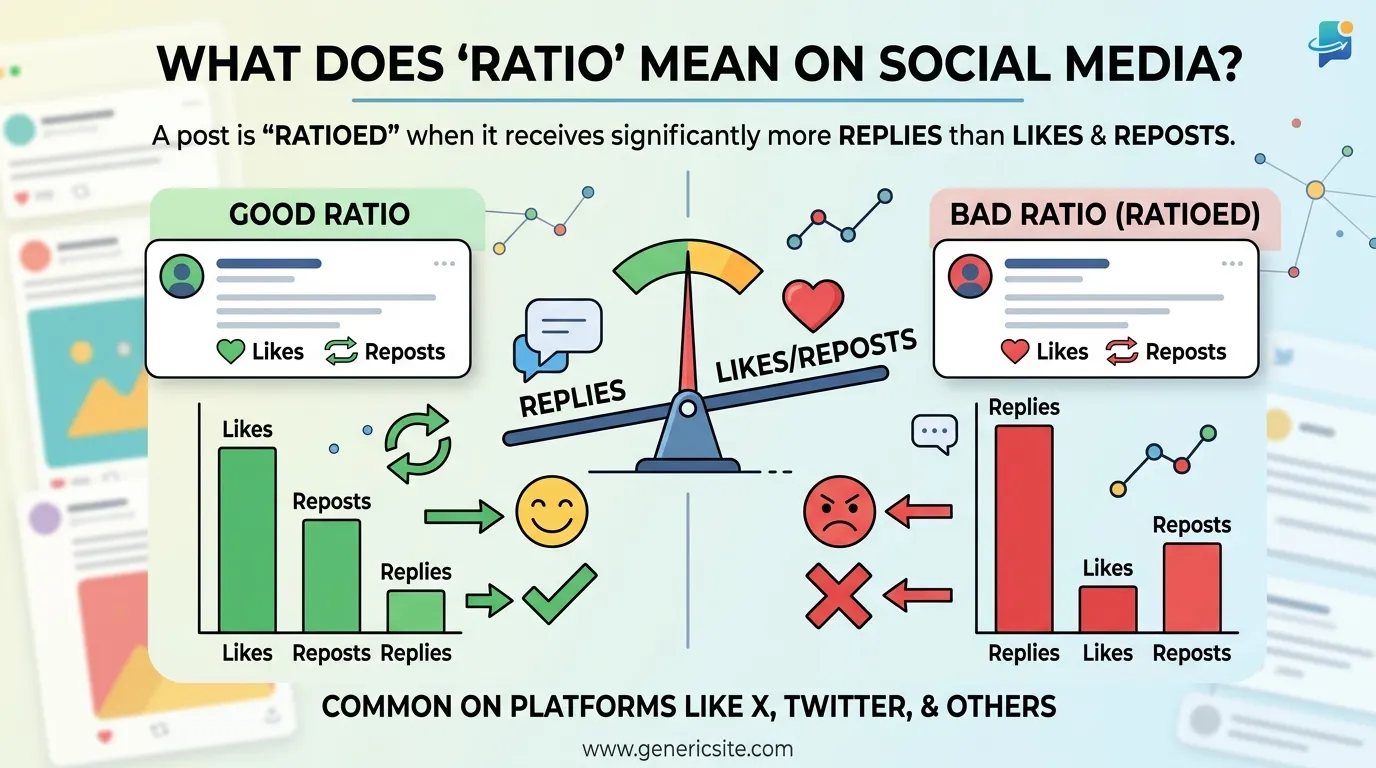
A ratio on social media occurs when a post receives significantly more negative engagement than positive engagement.
Most commonly, a ratio happens when:
- A post gets many replies but relatively few likes.
- A reply receives more likes than the original post.
- The audience overwhelmingly disagrees with the content.
- Users use engagement metrics to express criticism.
In simple terms:
A ratio is often a sign that people disagree with, dislike, or are criticizing a post.
For example:
| Engagement Type | Original Post |
|---|---|
| Likes | 500 |
| Replies | 5,000 |
This large difference suggests people are responding critically rather than simply liking the post. Many social media users would call this a “ratio.”
The Origin of the Term “Ratio”
The concept became popular on Twitter (now X) around the mid-2010s.
Users noticed that controversial tweets often received:
- Thousands of replies
- Few likes
- Significant criticism
People began using the word “ratio” to describe the relationship between likes and replies.
Over time, the term evolved into internet slang and spread across:
- TikTok
- YouTube
- Discord
Today, “ratio” is widely recognized as a shorthand way of saying:
“Most people disagree with this.”
How a Ratio Works
The idea is based on comparing engagement numbers.
Positive Engagement
Usually, popular content gets:
- High likes
- High shares
- Positive comments
Example:
| Likes | Comments |
|---|---|
| 10,000 | 200 |
This indicates people generally appreciate the content.
Negative Engagement
A ratio often appears when:
| Likes | Comments |
|---|---|
| 500 | 4,000 |
The high number of comments suggests many people are responding critically.
What Does “You Got Ratioed” Mean?
When someone says:
“You got ratioed.”
They usually mean:
- Your post was unpopular.
- A reply received more support than your original content.
- The audience disagreed with your opinion.
Example:
Original Post:
“Pizza is overrated.”
Likes: 200
Reply:
“Absolutely not.”
Likes: 5,000
In this case, the reply has more support than the original statement, meaning the original poster got ratioed.
Different Types of Ratios on Social Media
Not every ratio looks the same. There are several common forms.
1. Reply Ratio
This is the classic ratio.
Characteristics:
- Many replies
- Few likes
- High disagreement
Example:
A celebrity posts a controversial opinion and receives thousands of critical comments.
2. Like Ratio
A reply receives significantly more likes than the original post.
Example:
Original tweet: 300 likes
Reply: 15,000 likes
The reply effectively ratioed the original post.
3. Quote Tweet Ratio
On X, users often quote a post rather than replying directly.
Signs include:
- Thousands of quote tweets
- Public criticism
- Debate spreading across the platform
This can create a large-scale ratio effect.
4. Video Ratio
On platforms like TikTok and YouTube:
- Comment sections become overwhelmingly negative.
- Response videos gain more support than the original content.
The creator may be considered ratioed.
Ratio Meaning on Different Social Media Platforms
The meaning stays similar, but how ratios appear can vary.
Ratio on X (Twitter)
This is where the term became famous.
Users often reply with:
- “Ratio”
- “L”
- “Common ratio”
The goal is sometimes to gain more likes than the original post.
Ratio on TikTok
TikTok users often:
- Comment “ratio”
- Create response videos
- Encourage others to like their comment
Example:
A comment saying “Ratio” gains 50,000 likes while the video receives less engagement.
Ratio on Instagram
Instagram ratios usually happen through:
- Comment sections
- Story responses
- Reels discussions
A top comment may receive more likes than the post itself.
Ratio on Facebook
Facebook ratios often appear when:
- Posts attract angry reactions.
- Comment sections become critical.
- Shares spread criticism.
Ratio on YouTube
YouTube ratios occur when:
- Comments overwhelmingly disagree.
- Response videos gain traction.
- Community discussions criticize content.
Why Do People Try to Ratio Others?
Ratios have become a form of online social signaling.
People use them to:
- Express disagreement
- Challenge opinions
- Highlight misinformation
- Participate in internet culture
- Gain attention
In many cases, saying “ratio” is itself a meme.
Some users comment only:
“Ratio.”
Their goal is to receive more likes than the original post.
Examples of Ratio in Social Media Conversations
Example 1
Person A:
“Nobody likes dogs.”
Likes: 100
Replies: 5,000
Result:
People strongly disagree.
This is a ratio.
Example 2
Person A:
“This movie was terrible.”
Likes: 500
Reply:
“It won multiple awards.”
Likes: 10,000
The reply ratioed the original post.
Example 3
Influencer Posts Controversial Advice
Original video:
- 20,000 likes
Top comment:
- 150,000 likes
Many users would consider this a ratio.
Is Getting Ratioed Always Bad?
Not necessarily.
While ratios often indicate disagreement, context matters.
Sometimes people get ratioed because:
- They shared a controversial opinion.
- Their joke was misunderstood.
- Their statement sparked debate.
- They challenged a popular viewpoint.
In some situations, getting ratioed can increase visibility.
More comments often mean:
- Greater reach
- More impressions
- More discussion
However, increased visibility isn’t always positive.
Common Misunderstandings About Ratios
Many people misunderstand what a ratio actually means.
Misconception 1: Every Ratio Means Failure
Not true.
A ratio simply reflects audience reaction.
Some controversial posts intentionally generate discussion.
Misconception 2: Likes Always Determine Ratios
Not always.
Different platforms measure engagement differently.
Replies, comments, shares, and quote posts can all contribute.
Misconception 3: Ratios Are Scientific
Ratios are mostly a social media convention.
There is no official formula used by every platform.
The community decides whether something feels ratioed.
Why Ratios Became So Popular
Several factors contributed to the rise of ratio culture.
Social Validation
People enjoy seeing public approval or disapproval.
Ratios provide visible evidence of community sentiment.
Meme Culture
Internet communities often turn engagement patterns into jokes.
“Ratio” became part of meme language.
Fast Communication
Typing “ratio” is quicker than explaining disagreement.
One word can communicate:
- Disapproval
- Criticism
- Mockery
- Community consensus
Related Social Media Slang Terms
Understanding ratio is easier when you know related internet expressions.
| Term | Meaning |
|---|---|
| L | A loss or failure |
| W | A win or success |
| Clapback | A clever response |
| Roast | Humorous criticism |
| Cancelled | Public rejection of behavior |
| Viral | Rapid popularity |
| Troll | Someone provoking reactions |
| Engagement | User interaction with content |
These terms often appear alongside discussions about ratios.
How to Avoid Getting Ratioed
While no strategy guarantees success, you can reduce negative reactions.
Think Before Posting
Ask yourself:
- Is the information accurate?
- Could it be misunderstood?
- Is it unnecessarily offensive?
Verify Facts
Fact-check content before sharing.
Misinformation often attracts ratios.
Respect Different Opinions
Civil discussion usually receives better engagement than hostile arguments.
Avoid Clickbait
Misleading content can trigger criticism and negative responses.
Learn from Feedback
If a post gets ratioed, review the comments.
You may discover useful insights.
Can a Ratio Be Positive?
Interestingly, yes.
Some users use the term more casually today.
For example:
- Friendly competition
- Joke comments
- Fan communities
A positive ratio might happen when:
- A funny comment becomes more popular than the original post.
- Fans support a witty response.
In these cases, a ratio isn’t necessarily negative.
The Psychology Behind Ratios
Ratios reveal how online communities behave.
People naturally seek:
- Group approval
- Social belonging
- Shared opinions
When users see many comments criticizing a post, they may be more likely to join the discussion.
This creates a phenomenon known as:
Social proof
People often follow perceived majority opinions.
Ratios can amplify this effect.
How Brands and Influencers Handle Ratios
Businesses and creators monitor ratios because they reveal audience sentiment.
A ratio can indicate:
- Customer dissatisfaction
- PR issues
- Communication problems
- Audience concerns
Smart brands often:
- Respond professionally
- Clarify misunderstandings
- Address criticism directly
- Improve future messaging
Ignoring major ratios can sometimes worsen public perception.
Ratio Meaning Social Media: Quick Summary Table
| Term | Meaning |
|---|---|
| Ratio | More negative engagement than positive engagement |
| Ratioed | Receiving overwhelming disagreement |
| “Ratio” Comment | Attempt to get more likes than the original post |
| Like Ratio | Reply receives more likes than original content |
| Comment Ratio | High comments compared to likes |
| Positive Ratio | A humorous or supportive ratio situation |
Frequently Asked Questions (FAQs)
What does ratio mean in social media slang?
A ratio generally means a post received significantly more criticism, replies, or opposing engagement than supportive engagement.
Why do people comment “ratio”?
Users comment “ratio” to predict or encourage a response that gains more likes than the original post.
Is being ratioed always negative?
No. While it often indicates disagreement, some ratios occur as jokes, memes, or friendly interactions.
Which platform started the ratio trend?
The concept became most popular on X (formerly Twitter), where users compared replies and likes to gauge public reaction.
What does “successful ratio” mean?
A successful ratio occurs when a reply receives more engagement or support than the original post.
Can brands get ratioed?
Yes. Companies, influencers, celebrities, and public figures can all be ratioed if audiences react negatively to their content.
Is a ratio an official social media metric?
No. Ratio is an informal internet slang term rather than an official measurement used by social media platforms.
Conclusion
Understanding the ratio meaning social media is essential for anyone navigating today’s online world. A ratio typically indicates that a post has received more criticism, disagreement, or negative engagement than support. Originating on X (Twitter), the concept has expanded across TikTok, Instagram, Facebook, YouTube, and other platforms, becoming a core part of internet culture.
While getting ratioed often signals public disapproval, it isn’t always negative. Sometimes ratios emerge from humor, viral discussions, or spirited debates. The key is understanding the context behind the engagement.
As social media continues to evolve, knowing terms like ratio, ratioed, L, W, and other internet slang helps you better understand online conversations and participate confidently in digital communities. Whether you’re a casual user, content creator, marketer, or business owner, recognizing what a ratio means can help you interpret audience sentiment and engage more effectively online.