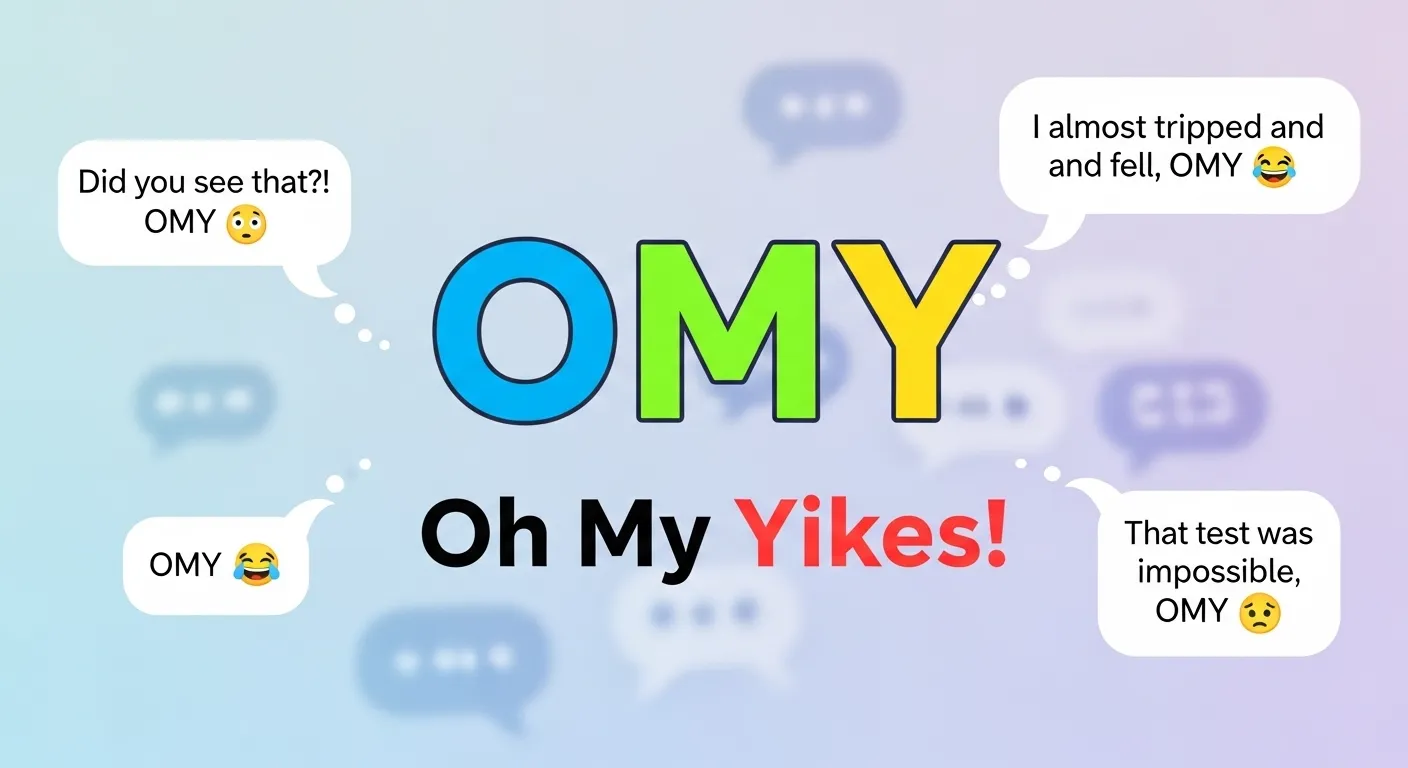
In today’s fast-paced digital world, texting shortcuts and internet slang have become a major part of everyday communication. If you’ve recently come across “OMY” in a message and felt confused, you’re not alone. Understanding these abbreviations is important for staying connected and avoiding misunderstandings.
In this guide, we’ll break down the OMY meaning in text, explore how it’s used across platforms like WhatsApp, Snapchat, and Instagram, and provide real-life examples so you can confidently use it yourself.
What Does OMY Mean in Text?
The most common meaning of OMY in text is:
👉 “On My Way”
It’s a quick and convenient way to let someone know that you are heading toward a destination.
Simple Definition:
- OMY = On My Way
Example:
- Friend: “Where are you?”
- You: “OMY 🚗”
This short reply instantly communicates that you’ve already started moving.
Why Is OMY So Popular in Texting?
The rise of abbreviations like OMY is driven by the need for fast and efficient communication.
Reasons for its popularity:
- ⏱️ Saves time while typing
- 📱 Perfect for mobile conversations
- 💬 Fits naturally in casual chats
- 🚗 Useful in real-time situations
People prefer short forms because they reduce effort without losing meaning.
How to Use OMY in Conversations
Using OMY is simple, but context matters.
Common Situations to Use OMY:
- When you’re heading to meet someone
- When you’re late and want to update someone
- When confirming arrival plans
Examples:
- “I’ll be there in 10 mins, OMY!”
- “Traffic is confused but OMY now 😅”
- “Just left home, OMY 🚶♂️”
OMY vs Similar Text Abbreviations
There are several similar texting abbreviations that you might confuse with OMY.
Comparison Table:
| Abbreviation | Meaning | Usage Context |
|---|---|---|
| OMY | On My Way | Heading somewhere |
| OTW | On The Way | Same as OMY (more common) |
| BRB | Be Right Back | Temporary absence |
| TTYL | Talk To You Later | Ending conversation |
👉 Pro Tip:
“OTW” is slightly more common, but OMY is still widely understood.
Different Meanings of OMY (Less Common Uses)
While “On My Way” is the most popular meaning, OMY can have other meanings depending on context.
Other Possible Meanings:
- 😲 Oh My… (Used to express surprise or shock)
- 💭 Oh My Yes (Rare, but used in enthusiastic replies)
Examples:
- “OMY… I can’t believe this happened!”
- “OMY, that’s amazing news!”
⚠️ These meanings are less common, so context is key.
OMY on Social Media Platforms
Different platforms influence how slang like OMY is used.
1. WhatsApp
- Used in casual chats with friends and family
- Example: “Leaving now, OMY 👍”
2. Snapchat
- Often paired with snaps or location updates
- Example: “OMY to the party 🎉”
3. Instagram DMs
- Used in quick replies
- Example: “OMY, see you soon!”
4. Gaming Chats
- Used for coordination
- Example: “OMY to your location!”
Tone and Context: When to Use OMY
Although OMY is convenient, it’s not suitable for every situation.
Use OMY When:
- ✔️ Chatting casually
- ✔️ Messaging friends or family
- ✔️ Giving quick updates
Avoid OMY When:
- ❌ Writing formal emails
- ❌ Communicating professionally
- ❌ Talking to someone unfamiliar with slang
Real-Life Scenarios Using OMY
Let’s look at how OMY fits into everyday conversations.
Scenario 1: Meeting a Friend
- Friend: “Are you close?”
- You: “OMY, 5 mins!”
Scenario 2: Late Arrival
- Boss: “Where are you?”
- You: “Sorry, OMY now.” (Better to avoid slang here!)
Scenario 3: Group Plans
- Friend: “Everyone’s here!”
- You: “OMY 🚗”
Common Misunderstandings About OMY
Even simple abbreviations can cause confusion.
Misconception 1: OMY Always Means One Thing
Not true. While “On My Way” is the main meaning, context can change interpretation.
Misconception 2: Everyone Understands It
Some people, especially older users, may not recognize it.
Misconception 3: It’s Professional
It’s not. Avoid using it in formal settings.
Alternatives to OMY
If you want to vary your texting style, here are some alternatives:
Casual Alternatives:
- “On the way”
- “Coming now”
- “Heading over”
- “Almost there”
Formal Alternatives:
- “I am on my way”
- “I will arrive shortly”
- “Currently en route”
When NOT to Use OMY
Using OMY in the wrong context can make you seem unprofessional or unclear.
Avoid using OMY in:
- 📧 Business emails
- 📝 Academic writing
- 👔 Professional communication
Instead, use full sentences to maintain clarity.
Tips for Using OMY Effectively
Here are some simple tips to help you use OMY correctly:
- ✅ Use it with people familiar with texting slang
- ✅ Keep your message clear and concise
- ✅ Add emojis for tone (optional)
- ❌ Don’t overuse abbreviations
- ❌ Avoid in serious conversations
The Evolution of Texting Abbreviations
Texting slang like OMY didn’t appear overnight.
How it evolved:
- 📟 Started with SMS character limits
- 🌐 Expanded with internet chat rooms
- 📱 Became mainstream with smartphones
Today, abbreviations are part of digital language culture.
OMY in Pop Culture and Online Trends
While not as famous as “LOL” or “OMG,” OMY is gaining popularity in:
- Social media captions
- Meme culture
- Messaging apps
Its simplicity makes it easy to adopt.
Frequently Asked Questions (FAQs)
1. What does OMY mean in texting?
OMY usually means “On My Way.”
2. Is OMY the same as OTW?
Yes, both mean the same thing, but OTW is more commonly used.
3. Can OMY mean something else?
Sometimes, it can mean “Oh My…”, depending on the context.
4. Is OMY formal or informal?
It is informal and best used in casual conversations.
5. Should I use OMY in professional messages?
No, it’s better to use full phrases like “I am on my way.”
6. Is OMY widely understood?
Most younger users understand it, but not everyone does.
7. Can I use OMY on social media?
Yes, it’s commonly used on platforms like WhatsApp, Snapchat, and Instagram.
Conclusion: What You Should Remember About OMY
Understanding the OMY meaning in text helps you communicate more effectively in today’s digital world. While it mainly stands for “On My Way,” its meaning can shift depending on context.
Key Takeaways:
- ✔️ OMY = On My Way
- ✔️ Best for casual conversations
- ✔️ Saves time and effort
- ❌ Not suitable for formal communication
Actionable Tip:
Use OMY when chatting with friends, but switch to full sentences in professional settings to avoid confusion.