In today’s fast-moving digital world, texting slang and social media abbreviations change almost every day. One abbreviation that often confuses people is SFS meaning in text. If you’ve seen “SFS” on Snapchat, Instagram, or in messages and wondered what it means, you’re not alone.
This guide will break down everything you need to know about SFS, including its meanings, origins, how to use it correctly, real-life examples, and common mistakes people make.
What Does SFS Mean in Text?
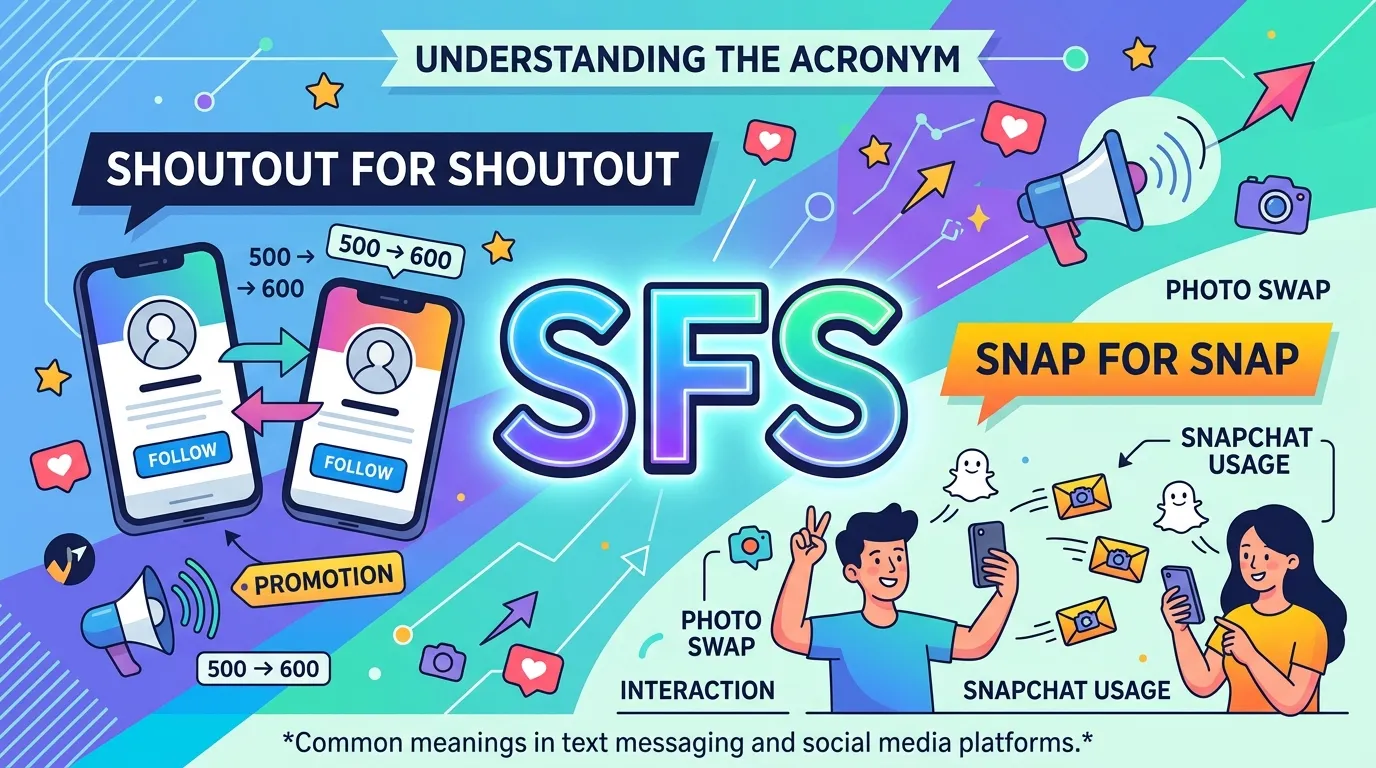
The abbreviation SFS can have multiple meanings depending on the context, but the most common ones are:
1. Shoutout for Shoutout (Most Popular)
This is the most widely used meaning, especially on social media platforms.
- SFS = Shoutout for Shoutout
- It’s a mutual promotion strategy where two users promote each other.
👉 Example:
- “Hey, want to do SFS?”
- “Sure, post me and I’ll post you back!”
2. Snap for Snap (Snapchat Usage)
On Snapchat, SFS often means:
- SFS = Snap for Snap
- Users exchange snaps to increase engagement or streaks.
👉 Example:
- “SFS? Let’s build streaks!”
- “Add me for SFS 🔥”
3. Spam for Spam
Sometimes, especially in comment sections:
- SFS = Spam for Spam
- Users like or comment on each other’s posts to boost engagement.
👉 Example:
- “SFS? I’ll like your posts if you like mine.”
Why Is SFS So Popular?
The popularity of SFS meaning in text comes from the rise of social media growth strategies. People want:
- More followers
- More likes
- Higher engagement
- Better visibility
SFS helps users grow faster without spending money.
Where Is SFS Commonly Used?
You’ll usually see SFS on:
Social Media Platforms
- Snapchat
- TikTok
Messaging Apps
- Messenger
- Telegram
How SFS Works (Step-by-Step)
Here’s how a typical SFS interaction works:
- User A asks for SFS
- User B agrees
- Both users share each other’s content
- Followers see the promotion
- Both accounts gain exposure
Example of SFS in Real Life
Let’s say you have an Instagram page:
Step 1: You message someone
👉 “Hey, SFS?”
Step 2: They agree
Step 3: You post:
👉 “Go follow @username 🔥 Amazing content!”
Step 4: They do the same for you
Result: Both gain followers 🎉
Benefits of Using SFS
Using SFS can be very helpful if done correctly.
✅ Advantages
- Boosts followers quickly
- Increases engagement (likes, comments, views)
- Builds connections with other creators
- Free promotion (no ads needed)
Downsides of SFS
SFS isn’t always perfect. There are some risks:
❌ Disadvantages
- Low-quality followers (people who don’t engage later)
- Can look spammy if overused
- Time-consuming
- Some users may not return the favor
SFS vs Other Popular Text Slang
Here’s a quick comparison to help you understand better:
| Abbreviation | Meaning | Usage |
|---|---|---|
| SFS | Shoutout for Shoutout | Promotion |
| L4L | Like for Like | Engagement |
| F4F | Follow for Follow | Followers |
| C4C | Comment for Comment | Interaction |
When Should You Use SFS?
SFS works best in these situations:
- You’re starting a new social media account
- You want quick growth
- You’re collaborating with similar creators
- You’re running a promotion or campaign
When NOT to Use SFS
Avoid using SFS when:
- You want high-quality, loyal followers
- Your brand is professional or corporate
- You’re targeting a niche audience
- You already have strong organic growth
Tips to Use SFS Effectively
If you want real results, follow these tips:
🔥 1. Choose the Right People
Work with accounts that:
- Have similar content
- Have real followers
- Are active
🔥 2. Keep It Balanced
Don’t spam SFS requests. Quality > quantity.
🔥 3. Be Honest
Always return the shoutout if someone promotes you.
🔥 4. Add Value
Instead of just “SFS,” say:
👉 “Check out this amazing page!”
Common Mistakes People Make
Many users misunderstand SFS meaning in text and misuse it.
🚫 Mistakes to Avoid
- Sending SFS to random people
- Not returning the favor
- Overusing SFS daily
- Promoting irrelevant accounts
- Ignoring your own content quality
SFS in Different Contexts
Let’s explore how SFS meaning changes slightly based on context:
📱 On Instagram
- Mostly “Shoutout for Shoutout”
- Used in stories and DMs
👻 On Snapchat
- “Snap for Snap”
- Used to build streaks
💬 In Comments
- “Spam for Spam”
- Used to boost likes/comments
Is SFS Still Effective in 2026?
Yes—but with conditions.
Social media algorithms are smarter now. They prefer:
- Real engagement
- Authentic content
- Consistent posting
👉 SFS still works, but only if:
- You use it strategically
- You combine it with quality content
Alternatives to SFS
If you want better long-term growth, try these:
🌟 Organic Growth Methods
- Posting high-quality content
- Using trending hashtags
- Collaborating with influencers
- Creating viral reels/videos
🤝 Collaboration Ideas
- Giveaways
- Joint posts
- Content partnerships
Real-Life Example Scenario
Imagine two small creators:
- Creator A: 1,000 followers
- Creator B: 1,200 followers
They do SFS.
Result:
- Both gain 100–200 new followers
- Engagement increases
But if followers aren’t interested:
- They may unfollow later
👉 That’s why quality matters.
FAQs About SFS Meaning in Text
1. What does SFS mean in texting?
SFS usually means Shoutout for Shoutout, where users promote each other.
2. What does SFS mean on Snapchat?
It often means Snap for Snap, where users exchange snaps.
3. Is SFS safe to use?
Yes, but be careful who you interact with and avoid spammy behavior.
4. Does SFS help grow followers?
Yes, but mostly short-term. Long-term growth needs quality content.
5. Is SFS the same as F4F?
No.
- SFS = Promotion
- F4F = Follow exchange
6. Can brands use SFS?
Small brands can, but big brands usually avoid it to maintain professionalism.
7. Why do people ignore SFS requests?
Because:
- Too many requests
- Low trust
- Irrelevant content
Final Thoughts: Should You Use SFS?
Now that you understand the full SFS meaning in text, you can decide whether it’s right for you.
Key Takeaways:
- SFS mainly means Shoutout for Shoutout
- It’s a quick way to grow on social media
- Works best for beginners and small accounts
- Not ideal for long-term or high-quality growth
👉 Best Strategy:
Use SFS occasionally, but focus more on creating valuable, engaging content.
Actionable Tips to Get Started Today
- Try SFS with 2–3 relevant accounts
- Post engaging content alongside it
- Track your follower growth
- Stop if results aren’t meaningful