Have you ever seen someone called a “beta” on social media, in memes, gaming chats, or online discussions and wondered what it means? The term has become a popular part of internet slang, often used to describe a person’s behavior, confidence level, or social status. However, the meaning isn’t always straightforward, and many people misunderstand how the word is used today.
In this guide, we’ll explore the beta meaning slang, where the term came from, how it’s used online, examples in real conversations, related slang terms, and common misconceptions. Whether you’ve seen it on TikTok, Reddit, X (Twitter), Instagram, or gaming communities, this article will help you understand exactly what people mean when they use the word beta.
What Does Beta Mean in Slang?
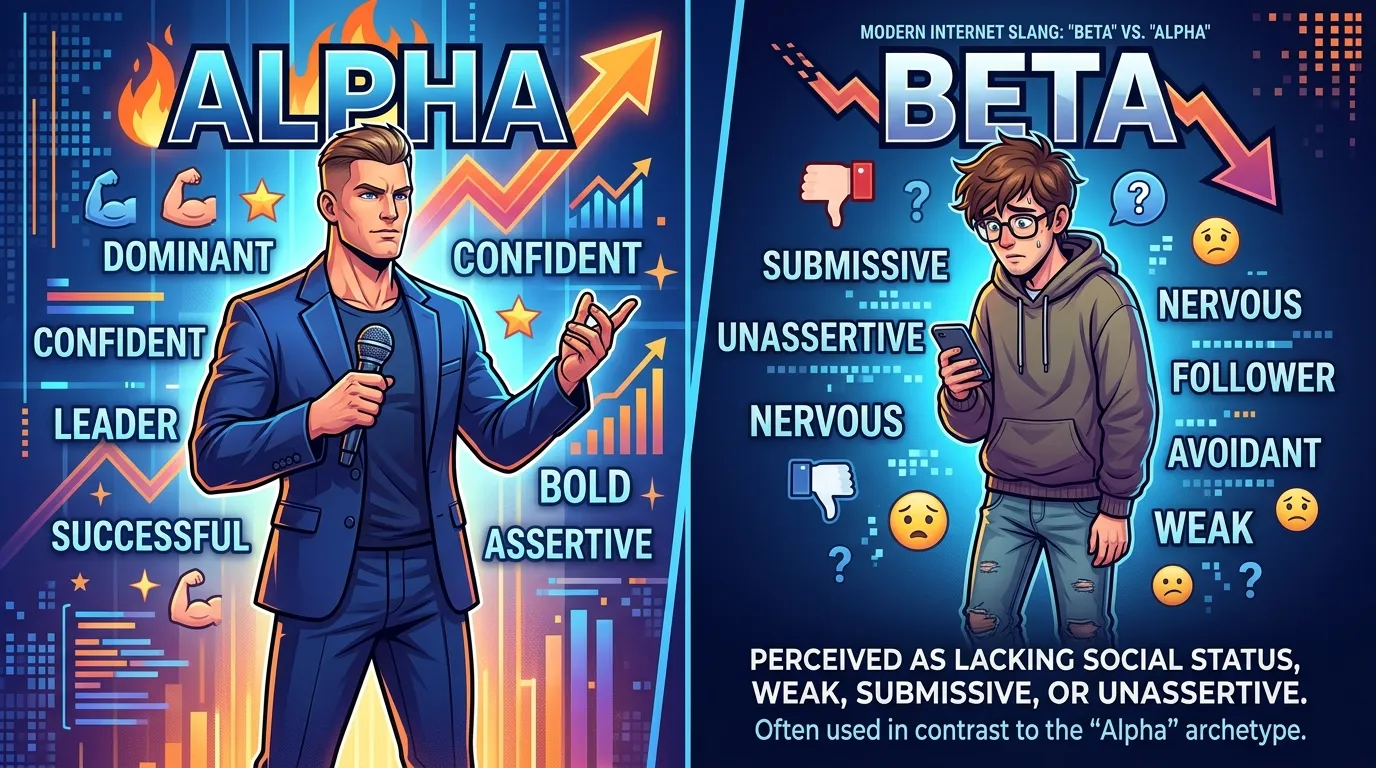
In modern slang, beta is often used to describe someone who is perceived as:
- Passive or submissive
- Lacking confidence
- Easily influenced by others
- Not assertive in social situations
- Less dominant compared to an “alpha”
The term is usually used as an insult or criticism, although some people use it jokingly among friends.
Simple Definition
| Term | Slang Meaning |
|---|---|
| Beta | A person viewed as less dominant, less confident, or overly passive |
| Alpha | A person viewed as confident, dominant, or a leader |
Example
Person A: “He never speaks up for himself.”
Person B: “That’s such beta behavior.”
In this example, “beta” is being used to criticize someone for appearing timid or unwilling to stand up for themselves.
Where Did the Term Beta Come From?
The slang usage of beta comes from the idea of alpha and beta hierarchies, which originally appeared in discussions about animal behavior.
For many years, people believed wolf packs had:
- Alpha wolves (leaders)
- Beta wolves (second in command)
- Lower-ranking members
Over time, internet communities adopted these terms and began applying them to human social behavior.
However, modern research has shown that the original wolf hierarchy theory was oversimplified. Despite this, the terms alpha and beta remained popular online and evolved into internet slang.
Beta Meaning on Social Media
On platforms like TikTok, Instagram, Reddit, and X, the word beta is often used in comments, memes, and debates.
Examples include:
- “Bro is acting beta.”
- “That’s the most beta thing I’ve ever seen.”
- “Stop being beta and ask her out.”
- “Beta mindset.”
In many cases, users employ the term to suggest that someone lacks confidence or leadership qualities.
Social Media Example
A video shows someone avoiding confrontation.
Comments:
- “Too beta.”
- “Alpha would’ve handled that differently.”
- “Beta energy.”
These comments reflect how internet users compare behavior to perceived standards of confidence and assertiveness.
Beta Meaning in Dating Slang
One of the most common places you’ll encounter the term beta is in dating discussions.
In dating slang, a beta male is often described as someone who:
- Is overly accommodating
- Avoids conflict
- Seeks approval constantly
- Lacks confidence in romantic situations
Example
Someone might say:
“He never expresses what he wants in relationships. People call that beta behavior.”
It’s important to note that these descriptions are subjective opinions rather than scientifically recognized personality categories.
What Is a Beta Male?
The phrase beta male is one of the most widely recognized uses of the term.
A beta male is commonly portrayed online as:
- Quiet
- Non-confrontational
- Supportive
- Introverted
- Less socially dominant
Depending on who uses the term, it can be:
- An insult
- A joke
- A stereotype
- A self-description
Common Beta Male Traits Mentioned Online
- Avoiding arguments
- Being overly nice
- Seeking validation
- Following rather than leading
- Hesitating to take risks
However, many people argue that these traits aren’t necessarily negative.
Is Being Called Beta Always Negative?
Not always.
While beta is frequently used as an insult, some people reject the negative stereotype entirely.
They argue that qualities associated with being “beta” can actually be strengths, including:
- Kindness
- Empathy
- Patience
- Cooperation
- Emotional intelligence
For example:
A person who listens carefully and treats others respectfully might be labeled beta by some internet users, while others would consider those positive characteristics.
This is one reason why the term remains controversial.
Beta Meaning in Gaming Culture
Gaming communities often use beta slang in competitive settings.
Examples include:
- “That was a beta move.”
- “Stop playing so beta.”
- “You need a more alpha strategy.”
In gaming, beta usually refers to:
- Playing too cautiously
- Avoiding aggressive actions
- Lacking confidence during gameplay
Example
A player avoids attacking despite having an advantage.
Teammates might joke:
“Quit playing beta.”
In this context, the term relates to game strategy rather than personality.
Beta Meaning in Meme Culture
Internet memes have helped spread the popularity of beta slang.
Many memes feature:
- Alpha vs beta comparisons
- Sigma vs beta jokes
- Exaggerated stereotypes
These memes often portray:
| Meme Character | Typical Description |
|---|---|
| Alpha | Confident leader |
| Beta | Follower |
| Sigma | Independent outsider |
| Chad | Extremely confident and attractive |
| NPC | Someone who follows the crowd |
Most of these portrayals are humorous exaggerations rather than serious personality analyses.
What Is Beta Energy?
The phrase beta energy has become increasingly common online.
People use it to describe behavior they view as:
- Weak
- Hesitant
- Insecure
- Overly passive
Example
Someone constantly apologizes for minor things.
Comment:
“That’s beta energy.”
Again, the phrase reflects internet slang rather than a formal psychological concept.
The Difference Between Alpha and Beta
Many people encounter beta through comparisons with alpha personalities.
Alpha
Typically described as:
- Confident
- Assertive
- Competitive
- Leader-oriented
Beta
Typically described as:
- Reserved
- Cooperative
- Less dominant
- Conflict-avoidant
Quick Comparison
| Alpha | Beta |
|---|---|
| Leads | Follows |
| Assertive | Passive |
| Confident | Hesitant |
| Dominant | Cooperative |
| Competitive | Supportive |
Real people, however, rarely fit neatly into either category.
Beta vs Sigma: What’s the Difference?
The rise of the sigma male trend has created another popular comparison.
Beta
- Seeks approval
- Works within groups
- Avoids confrontation
Sigma
- Independent
- Self-reliant
- Doesn’t seek status
- Operates outside social hierarchies
Example
Internet stereotype:
- Alpha = Leader
- Beta = Follower
- Sigma = Lone wolf
These classifications are mostly internet-created archetypes rather than scientifically validated personality types.
Common Situations Where People Use Beta
You might hear the word beta when someone:
Avoids Conflict
“He wouldn’t stand up for himself. That’s beta.”
Lacks Confidence
“She’s too scared to try. Beta mindset.”
Seeks Constant Approval
“Stop asking everyone what they think. That’s beta behavior.”
Acts Overly Cautious
“You had the chance and didn’t take it. Beta move.”
Common Misconceptions About Beta Slang
Many myths surround the term.
Myth 1: Beta Is a Scientific Personality Type
Reality:
There is no widely accepted psychological category called “beta personality.”
Myth 2: Being Nice Means You’re Beta
Reality:
Kindness and confidence can coexist.
Being respectful doesn’t automatically make someone beta.
Myth 3: Everyone Is Either Alpha or Beta
Reality:
Human personalities are far more complex than simple labels.
People show different traits depending on circumstances.
Myth 4: Beta People Can’t Be Successful
Reality:
Many successful leaders are collaborative, thoughtful, and empathetic.
These qualities are often associated with so-called beta traits.
Related Slang Terms
Understanding beta becomes easier when you know similar internet slang.
Alpha
Someone viewed as dominant and confident.
Example
“He’s the alpha of the group.”
Sigma
An independent person who doesn’t follow traditional social hierarchies.
Example
“That’s sigma behavior.”
Chad
A meme term describing a highly confident and attractive man.
Example
“Absolute Chad move.”
NPC
Short for Non-Player Character.
Used to describe someone perceived as unoriginal or following the crowd.
Example
“NPC behavior.”
Simp
Someone who appears overly devoted to another person, often romantically.
Example
“People called him a simp.”
Examples of Beta in Everyday Conversations
Example 1
Friend 1: “Why didn’t you ask for the promotion?”
Friend 2: “I wasn’t sure.”
Friend 1: “That’s beta.”
Example 2
Gamer: “You never push objectives.”
Teammate: “I’m being careful.”
Gamer: “Too beta.”
Example 3
Comment Online:
“Beta mindset keeps people stuck.”
Example 4
Meme Caption:
“Beta: waits for permission. Chad: just does it.”
Why Has Beta Become So Popular Online?
Several factors contributed to its popularity:
Social Media Trends
Platforms encourage catchy labels and stereotypes.
Meme Culture
Alpha-beta jokes spread rapidly through memes.
Self-Improvement Communities
Some online groups discuss confidence and leadership using alpha-beta terminology.
Dating Discussions
The term appears frequently in conversations about attraction and relationships.
Should You Take the Term Seriously?
Generally, it’s best to view beta slang critically.
While the term can describe perceived behavior, it often:
- Oversimplifies personality
- Relies on stereotypes
- Ignores individual differences
- Encourages unnecessary labeling
Many experts suggest focusing on actual behaviors rather than categorizing people as alpha, beta, or sigma.
A more useful question might be:
- Is someone confident?
- Are they respectful?
- Do they communicate effectively?
- Can they stand up for themselves?
These qualities matter more than internet labels.
Frequently Asked Questions (FAQs)
What does beta mean in slang?
In slang, beta refers to someone perceived as passive, submissive, less confident, or less dominant compared to an alpha personality.
Is beta an insult?
Often, yes. Many people use beta as a criticism. However, some use it jokingly or ironically among friends.
What is a beta male?
A beta male is an internet slang term for a man who is viewed as less dominant, less assertive, or more passive than an alpha male.
Is beta a real personality type?
No. Psychology does not officially recognize beta as a personality classification.
What does beta energy mean?
Beta energy refers to behavior that people perceive as hesitant, insecure, passive, or lacking confidence.
What’s the difference between beta and sigma?
Beta is often portrayed as a follower within a social hierarchy, while sigma is portrayed as independent and outside traditional hierarchies.
Can someone be both confident and kind?
Absolutely. Confidence and kindness are not opposites. Many successful people demonstrate both qualities simultaneously.
Conclusion
Understanding the beta meaning slang helps make sense of many online conversations, memes, gaming discussions, and social media trends. In modern internet culture, beta is typically used to describe someone perceived as passive, less assertive, or lacking confidence compared to an “alpha.” However, the term is largely based on stereotypes and internet-created social categories rather than scientific facts.
When encountering words like beta, alpha, sigma, or Chad, remember that they are often exaggerated labels used for humor, criticism, or storytelling. Real people are far more complex than these simple categories. Instead of focusing on labels, it is usually more productive to develop genuine confidence, communication skills, emotional intelligence, and self-respect.
The next time you see someone called a beta online, you’ll understand the context, the slang meaning, and the broader cultural conversation behind the term.