In today’s digital world, internet slang evolves rapidly, and some words become part of everyday conversations almost overnight. One such term is “gaslighting.” You may have seen people on social media saying things like, “Stop gaslighting me!” or “That’s literally gaslighting.” But what does it actually mean?
Understanding the gaslighting meaning slang is important because the term is often used in relationships, friendships, workplaces, online discussions, and even memes. While many people use it casually, gaslighting has a deeper psychological meaning that shouldn’t be ignored.
This guide explores the meaning of gaslighting in slang, where the term came from, how it’s used online, examples, common misconceptions, related slang terms, and much more.
What Does Gaslighting Mean in Slang?
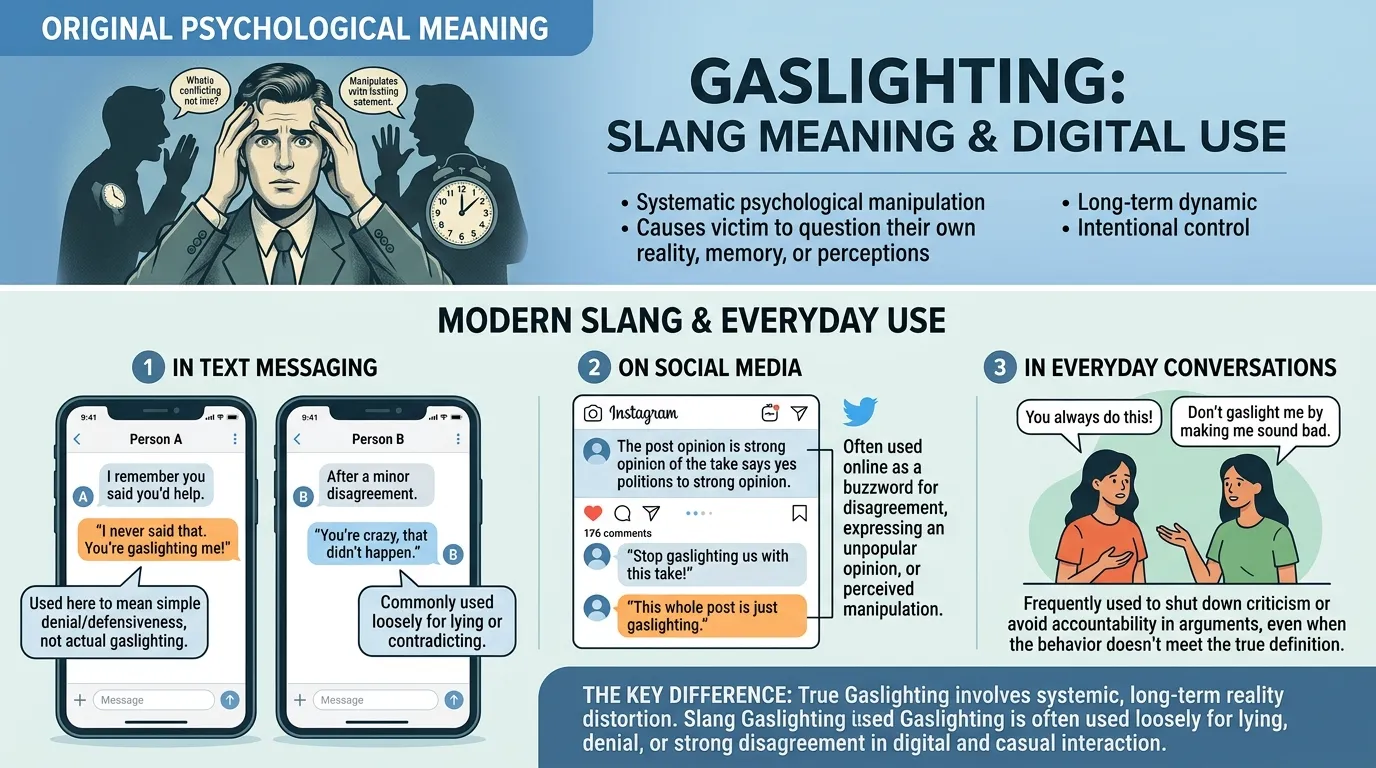
In slang, gaslighting refers to manipulating someone into questioning their own memories, feelings, perceptions, or understanding of reality.
When someone says:
“You’re gaslighting me.”
They usually mean:
“You’re trying to make me doubt what I know happened.”
In modern internet slang, the term is often used whenever someone feels another person is denying facts, twisting events, or making them feel confused about reality.
Simple Definition
Gaslighting (slang): A form of manipulation where a person makes someone question their memory, judgment, or perception of events.
Quick Meaning of Gaslighting
| Term | Meaning |
|---|---|
| Gaslighting | Manipulating someone into doubting themselves |
| Slang Usage | Calling out dishonest or reality-twisting behavior |
| Common Platforms | TikTok, Instagram, X, Reddit, Facebook |
| Tone | Usually negative or accusatory |
| Related Terms | Manipulation, lying, guilt-tripping, emotional abuse |
The Origin of the Word Gaslighting
The term didn’t start as internet slang.
It comes from the 1938 play “Gas Light”, later adapted into a famous movie. In the story, a husband manipulates his wife into believing she’s losing her sanity.
One way he does this is by dimming the gas-powered lights in their home and then denying that the lights changed when she notices.
Over time, psychologists adopted the term gaslighting to describe a form of emotional manipulation.
Eventually, social media users began using the word in everyday conversations, making it a popular slang expression.
Gaslighting Meaning on Social Media
On social media platforms, gaslighting is often used when someone appears to deny obvious facts or rewrite events.
Examples
Example 1
Person A:
“You said you’d come to the party.”
Person B:
“I never said that.”
Person A:
“Stop gaslighting me. I have the text messages.”
Example 2
Friend:
“You seemed upset yesterday.”
Other Friend:
“You’re imagining things.”
Friend:
“Why are you gaslighting me?”
Example 3
TikTok Comment:
“The internet is gaslighting us into believing this trend is cool.”
Here, the term is used more humorously to suggest collective influence or pressure.
How Gaslighting Works
Gaslighting often follows a pattern.
The Manipulator Might:
- Deny something happened
- Twist facts
- Change details of events
- Blame the other person
- Minimize someone’s feelings
- Accuse others of overreacting
- Create confusion
The Victim Might Begin To:
- Question their memory
- Doubt their judgment
- Feel confused frequently
- Seek constant reassurance
- Lose confidence
This is why genuine gaslighting is considered a serious psychological issue.
Common Gaslighting Phrases
People who gaslight may use statements like:
- “That never happened.”
- “You’re imagining things.”
- “You’re too sensitive.”
- “You’re overreacting.”
- “I never said that.”
- “You’re remembering it wrong.”
- “Everyone agrees you’re mistaken.”
- “You’re mistaken.”
While a single statement doesn’t automatically mean gaslighting, repeated patterns of behavior can be a warning sign.
Gaslighting in Relationships
Gaslighting frequently appears in discussions about romantic relationships.
Example
Partner A:
“You hurt my feelings when you ignored my messages.”
Partner B:
“You’re being dramatic. That never happened.”
If this pattern repeats consistently, it can cause Partner A to question their experiences and emotions.
Signs of Relationship Gaslighting
- Constant denial of events
- Shifting blame
- Invalidating emotions
- Making a partner feel irrational
- Refusing accountability
Gaslighting Among Friends
Gaslighting isn’t limited to romantic relationships.
It can happen among friends too.
Example
Friend A:
“You excluded me from the group outing.”
Friend B:
“Nobody excluded you. You’re making things up.”
If Friend B repeatedly dismisses legitimate concerns despite evidence, it may be considered gaslighting.
Workplace Gaslighting
Workplace gaslighting has become a trending topic online.
Examples
A manager might:
- Deny giving instructions
- Blame employees for management mistakes
- Rewrite project histories
- Ignore documented facts
Common Workplace Statements
- “I never told you to do that.”
- “You’re confused.”
- “That’s not what happened.”
- “You’re misunderstanding everything.”
Repeated behavior can create stress and self-doubt among employees.
Gaslighting vs Lying
Many people assume gaslighting and lying are the same thing.
They are related but not identical.
| Lying | Gaslighting |
|---|---|
| False information | Manipulation of reality |
| Can happen once | Usually repeated |
| Goal is deception | Goal is control and confusion |
| Doesn’t always affect confidence | Often causes self-doubt |
A person can lie without gaslighting, but gaslighting often involves lying.
Gaslighting vs Manipulation
Gaslighting is a type of manipulation, but not all manipulation is gaslighting.
Manipulation
- Influencing behavior
- Persuading someone unfairly
- Creating guilt
Gaslighting
- Specifically attacks someone’s perception of reality
- Causes self-doubt
- Makes people question their memory
Think of gaslighting as a specialized form of emotional manipulation.
Gaslighting Examples in Everyday Life
Example 1: Forgotten Conversation
Person:
“We talked about this yesterday.”
Gaslighter:
“No we didn’t. You’re imagining things.”
Example 2: Broken Promise
Person:
“You promised to help.”
Gaslighter:
“I never promised that.”
Example 3: Emotional Dismissal
Person:
“That comment hurt me.”
Gaslighter:
“You’re too sensitive.”
Example 4: Family Situation
Child:
“That situation upset me.”
Parent:
“You’re making it up.”
Repeated experiences like this can create long-term self-doubt.
Why Gaslighting Has Become Popular Slang
Several factors contributed to the popularity of the term:
Increased Mental Health Awareness
People today discuss emotional well-being more openly than ever.
Social Media Discussions
TikTok, Reddit, Instagram, and YouTube frequently discuss toxic behavior and relationship dynamics.
Viral Content
Many creators use gaslighting examples in videos, memes, and educational content.
Relatable Experiences
Many people recognize situations where they felt their reality was dismissed.
How Gen Z Uses Gaslighting
Among younger internet users, the term has expanded beyond its original psychological meaning.
Examples include:
- “The internet is gaslighting us.”
- “This app is gaslighting me.”
- “The weather is gaslighting everyone.”
In these cases, the word is often used humorously rather than literally.
Common Misunderstandings About Gaslighting
Misconception 1: Every Disagreement Is Gaslighting
Not true.
People can simply remember events differently without intentionally manipulating anyone.
Misconception 2: One Lie Equals Gaslighting
Gaslighting is usually a repeated pattern rather than a single incident.
Misconception 3: Only Romantic Partners Gaslight
Gaslighting can occur among:
- Friends
- Family members
- Coworkers
- Bosses
- Public figures
- Online communities
Misconception 4: Gaslighting Is Always Intentional
Some people may engage in gaslighting-like behavior without fully realizing the impact of their actions.
Related Slang Terms
If you’re learning modern internet language, you’ll often see gaslighting alongside these terms:
| Slang Term | Meaning |
|---|---|
| Toxic | Harmful behavior |
| Manipulation | Influencing unfairly |
| Red Flag | Warning sign |
| Love Bombing | Excessive affection for control |
| Guilt-Tripping | Making someone feel guilty |
| Narcissistic | Excessively self-centered behavior |
| Emotional Abuse | Harmful emotional treatment |
| Delulu | Delusional thinking (internet slang) |
How to Respond if Someone Is Gaslighting You
If you believe someone is repeatedly gaslighting you:
Keep Records
Save:
- Text messages
- Emails
- Notes
- Screenshots
Documentation can help confirm facts.
Trust Evidence
Look at objective information rather than relying solely on memory.
Talk to Trusted People
Friends, family members, mentors, or counselors can offer perspective.
Set Boundaries
Limit interactions with people who repeatedly distort reality.
Seek Professional Support
Mental health professionals can help if gaslighting is causing significant emotional distress.
Gaslighting in Memes and Internet Culture
The internet often uses the word jokingly.
Examples:
- “My alarm clock gaslights me every morning.”
- “This puzzle is gaslighting me.”
- “My GPS is gaslighting me.”
These jokes exaggerate confusion for comedic effect.
However, it’s worth remembering that real gaslighting is a serious issue and not just a meme.
Is Gaslighting Always Emotional Abuse?
Not necessarily.
A single misunderstanding isn’t emotional abuse.
However, persistent gaslighting that intentionally causes someone to doubt themselves can become a form of emotional abuse.
Key factors include:
- Frequency
- Intent
- Impact
- Power dynamics
Frequently Asked Questions (FAQs)
What does gaslighting mean in slang?
In slang, gaslighting means manipulating someone into questioning their memory, perception, feelings, or understanding of reality.
Is gaslighting the same as lying?
No. Lying involves giving false information, while gaslighting involves making someone doubt their own perception of events.
Why do people say “stop gaslighting me”?
They usually feel that someone is denying facts, twisting reality, or making them question what actually happened.
Can friends gaslight each other?
Yes. Gaslighting can occur in friendships, families, workplaces, and romantic relationships.
Is gaslighting always intentional?
Not always. Some people may dismiss or distort others’ experiences without realizing the impact, though repeated behavior can still be harmful.
Why is gaslighting popular on TikTok and social media?
The term became popular due to increased awareness of mental health, relationship dynamics, and viral discussions about toxic behaviors.
Can gaslighting be used as a joke?
Yes. Many internet users use it humorously to describe confusing situations, though the original meaning relates to psychological manipulation.
Conclusion
The gaslighting meaning slang goes far beyond a trendy internet buzzword. At its core, gaslighting describes behavior that makes someone question their own reality, memories, emotions, or perceptions. While the term originated from a classic story and later became a psychological concept, it is now widely used across social media, texting, memes, and everyday conversations.
The key takeaway is that genuine gaslighting involves repeated manipulation and reality distortion, not simply disagreement or occasional misunderstandings. Understanding the difference helps people communicate more clearly and recognize unhealthy behavior patterns when they occur.
Whether you encounter the term on TikTok, Instagram, Reddit, or in real-life conversations, knowing what gaslighting means allows you to use the word accurately and understand its serious implications. By staying aware, trusting evidence, maintaining healthy boundaries, and communicating openly, you can better navigate situations where reality and perception seem to conflict.