Have you ever received a message that says, “Hit me up later” or “Hit me up if you need anything” and wondered what it actually means? If so, you’re not alone. The phrase “hit me up” is one of the most common slang expressions used in texting, social media, and casual conversations today.
Understanding hit me up meaning slang can help you communicate more naturally online and avoid misunderstandings. Whether you’re chatting with friends, meeting new people, networking, or scrolling through social media, you’ll likely encounter this phrase frequently.
In this guide, we’ll explore the complete meaning of “hit me up,” where it came from, how it’s used, examples in different situations, alternative expressions, common mistakes, and much more.
What Does Hit Me Up Mean in Slang?
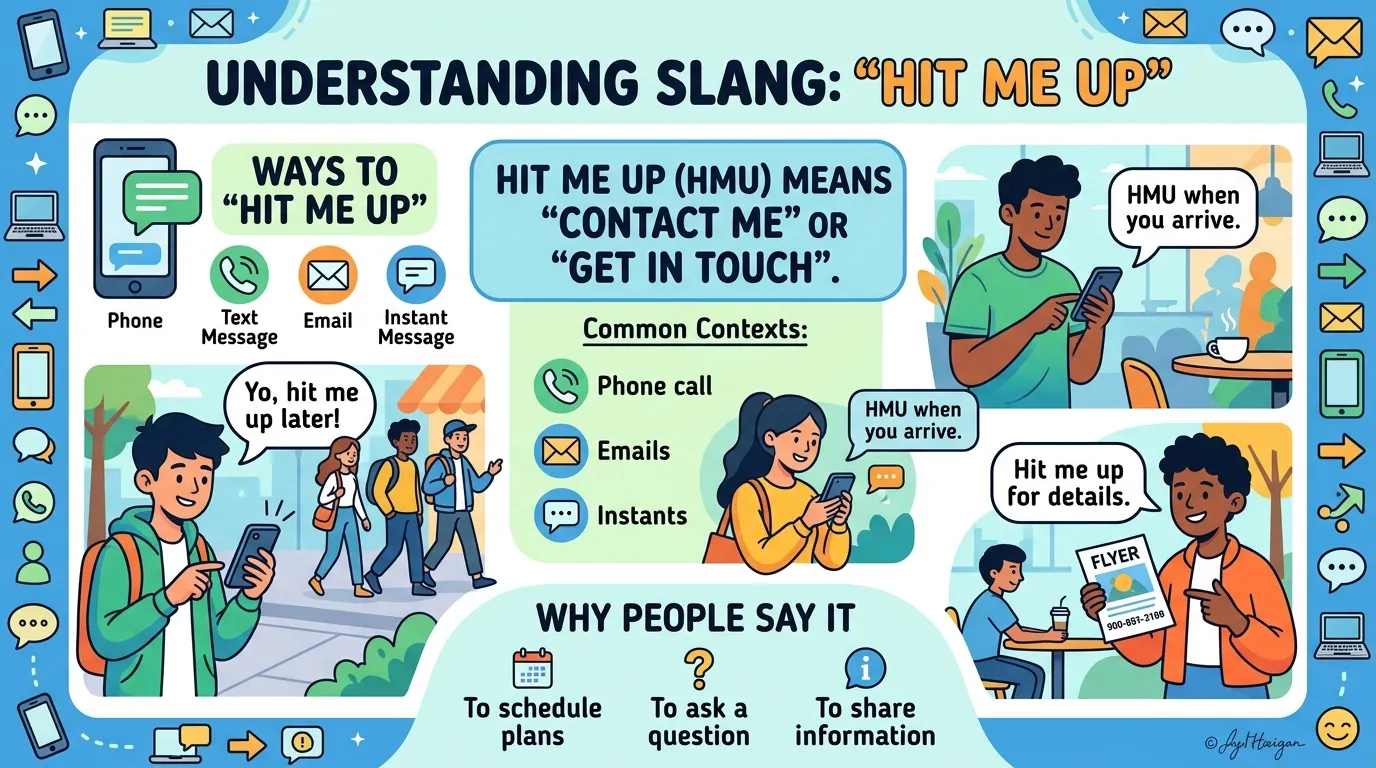
In slang, “hit me up” means:
Contact me, message me, call me, or get in touch with me.
It’s a casual way of inviting someone to communicate with you in the future.
Simple Definition
If someone says:
“Hit me up later.”
They mean:
“Contact me later.”
The phrase doesn’t involve physically hitting anyone. It’s simply an informal expression used in modern English.
Quick Meaning at a Glance
| Phrase | Meaning |
|---|---|
| Hit me up | Contact me |
| Hit me up later | Contact me later |
| Hit me up anytime | Contact me whenever you want |
| Hit me up if you need help | Reach out if you need assistance |
| Hit me up on Instagram | Send me a message on Instagram |
Origin of the Phrase “Hit Me Up”
Like many slang terms, “hit me up” originated in American urban culture and became popular through music, especially hip-hop and rap.
In earlier usage, “hit” could mean “approach” or “request something from someone.”
Over time, the phrase evolved into:
- Call me
- Message me
- Reach out
- Get in touch
The growth of texting, smartphones, and social media helped make the expression extremely common worldwide.
Today, you’ll hear it in:
- Text messages
- Instagram DMs
- Snapchat chats
- TikTok comments
- WhatsApp conversations
- Casual face-to-face discussions
How Is “Hit Me Up” Used?
The phrase is typically used when someone wants future communication.
Examples
✅ “Hit me up when you get home.”
✅ “Hit me up if you’re free this weekend.”
✅ “Hit me up on WhatsApp.”
✅ “Hit me up if you have questions.”
In each example, the speaker is inviting the other person to contact them.
Hit Me Up Meaning in Text Messages
In texting, “hit me up” usually means:
- Send me a text
- Message me
- Contact me later
Example Conversation
Alex: Are you free tonight?
Jordan: Not sure yet. Hit me up around 7.
Meaning:
“Send me a message around 7.”
Another Example
Friend: I need help with my project.
You: No problem, hit me up later.
Meaning:
“Contact me later and I’ll help.”
Hit Me Up Meaning on Social Media
On social media, the phrase often refers to direct messaging.
Examples
- “Hit me up in the DMs.”
- “Hit me up on Instagram.”
- “Hit me up on Snapchat.”
- “Hit me up if you’re interested.”
In these situations, the person is inviting private communication.
Common Platforms
- TikTok
- Snapchat
- X (Twitter)
- Telegram
Hit Me Up Meaning in Dating
In dating culture, “hit me up” can suggest interest in talking, meeting, or getting to know someone.
Example
“You’re really cool. Hit me up sometime.”
Meaning:
“I’d like to hear from you again.”
Depending on context, it may indicate:
- Romantic interest
- Casual friendship
- Desire to continue communication
The exact meaning depends on the relationship between the people involved.
Hit Me Up Meaning From a Friend
Among friends, the phrase is usually friendly and casual.
Examples
- “Hit me up when you’re bored.”
- “Hit me up if you need anything.”
- “Hit me up this weekend.”
This typically means:
- Stay in touch
- Reach out
- Let’s talk later
There’s usually no hidden meaning.
Hit Me Up Meaning at Work
Although slang is generally informal, you may occasionally hear it in relaxed workplaces.
Example
“Hit me up if you need those files.”
Meaning:
“Contact me if you need those files.”
In professional settings, alternatives like these may sound more appropriate:
- Contact me
- Reach out to me
- Let me know
- Send me a message
Different Ways People Use “Hit Me Up”
Here are some common variations.
Hit Me Up Later
Meaning:
Contact me later.
Example:
“Busy right now. Hit me up later.”
Hit Me Up Anytime
Meaning:
You can contact me whenever you want.
Example:
“Need advice? Hit me up anytime.”
Hit Me Up Tomorrow
Meaning:
Contact me tomorrow.
Example:
“Let’s discuss it then. Hit me up tomorrow.”
Hit Me Up If You Need Anything
Meaning:
Reach out if you need help or support.
Example:
“Good luck with the move. Hit me up if you need anything.”
Hit Me Up in the DMs
Meaning:
Send me a private message.
Example:
“Interested in collaborating? Hit me up in the DMs.”
Is “Hit Me Up” Flirty?
Sometimes yes, sometimes no.
The phrase itself isn’t automatically romantic.
Friendly Example
“Hit me up if you want to play basketball.”
This is simply friendly.
Flirty Example
“You seem interesting. Hit me up sometime 😉”
This may suggest romantic interest.
How to Tell
Look at:
- Emojis
- Tone
- Previous conversations
- Relationship context
The surrounding message usually reveals the intent.
Common Situations Where People Say “Hit Me Up”
People often use this phrase when they want future communication.
Social Situations
- Making plans
- Inviting conversation
- Networking
- Meeting new friends
Online Situations
- Social media messaging
- Gaming chats
- Community groups
- Online marketplaces
Professional Situations
- Informal teamwork
- Freelance networking
- Startup communities
Examples of Hit Me Up in Sentences
Here are real-world examples.
Casual
- Hit me up when you arrive.
- Hit me up later tonight.
- Hit me up if you’re free.
Friendly
- Hit me up whenever you want to hang out.
- Hit me up if you need advice.
Social Media
- Hit me up in my DMs.
- Hit me up on Instagram.
Dating
- Hit me up sometime.
- Hit me up if you want to grab coffee.
Synonyms and Alternatives to “Hit Me Up”
If you want different ways to express the same idea, try these alternatives.
| Phrase | Meaning |
|---|---|
| Contact me | Formal |
| Reach out | Professional |
| Message me | Modern |
| Text me | Specific |
| Call me | Direct |
| Get in touch | Neutral |
| Let me know | Casual |
| Drop me a line | Friendly |
| Send me a DM | Social media |
| Ping me | Workplace slang |
Hit Me Up vs Reach Out
Many people wonder about the difference.
| Hit Me Up | Reach Out |
|---|---|
| Casual slang | More professional |
| Common among friends | Common at work |
| Used in texting | Used in business |
| Informal tone | Polite tone |
Example
Casual:
“Hit me up later.”
Professional:
“Please reach out if you have any questions.”
Hit Me Up vs Text Me
The two phrases are similar but not identical.
Text Me
Specifically means:
Send a text message.
Hit Me Up
Can mean:
- Text
- Call
- DM
- Contact in any way
Therefore, “hit me up” is broader.
Common Misunderstandings About Hit Me Up
Many English learners misunderstand this phrase.
Misunderstanding #1: It Means Physical Hitting
No.
The phrase is figurative and has nothing to do with violence.
Misunderstanding #2: It’s Always Romantic
Not true.
It can be:
- Friendly
- Professional
- Romantic
- Helpful
Context matters.
Misunderstanding #3: It’s Rude
Usually it’s not rude.
Among friends and online communities, it’s considered normal and friendly.
When Should You Avoid Using “Hit Me Up”?
Although common, there are situations where it may sound too informal.
Avoid In
- Job interviews
- Formal emails
- Academic papers
- Business proposals
- Official documents
Better Alternatives
- Contact me
- Reach out to me
- Please let me know
- Feel free to email me
Why Is “Hit Me Up” So Popular?
Several reasons explain its popularity.
It’s Short
People prefer quick communication.
It’s Flexible
It can refer to:
- Calls
- Texts
- DMs
- Emails
It Sounds Friendly
The phrase creates a casual and approachable tone.
Social Media Influence
Instagram, TikTok, Snapchat, and texting culture have helped spread the expression globally.
Hit Me Up Meaning for English Learners
If English isn’t your first language, remember this simple rule:
Easy Formula
Hit me up = Contact me
Whenever you see the phrase, replace it mentally with:
- Contact me
- Message me
- Reach out to me
You’ll understand most conversations correctly.
Popular Text Examples Using Hit Me Up
Here are some messages you might see online.
- “Hit me up when you’re free.”
- “Hit me up after class.”
- “Hit me up if you’re interested.”
- “Hit me up tomorrow.”
- “Hit me up on WhatsApp.”
- “Hit me up in the DMs.”
- “Hit me up whenever.”
- “Hit me up if you need help.”
All of them simply involve contacting someone.
FAQs About Hit Me Up Meaning Slang
What does “hit me up” mean in texting?
It means contact me, usually by sending a text, DM, or message.
Is “hit me up” rude?
No. It’s generally considered casual and friendly, especially among friends and younger speakers.
Does “hit me up” mean call me?
Sometimes. It can mean call, text, message, or otherwise get in touch.
Is “hit me up” romantic?
Not necessarily. It can be friendly, professional, or romantic depending on the context.
What is another way to say “hit me up”?
Common alternatives include:
- Contact me
- Reach out
- Message me
- Text me
- Get in touch
Can I use “hit me up” at work?
Only in informal workplace conversations. In formal communication, use phrases like “contact me” or “reach out.”
What does “hit me up in the DMs” mean?
It means send a private message through social media.
Conclusion
Understanding hit me up meaning slang is essential for navigating modern conversations, texting culture, and social media interactions. In simple terms, “hit me up” means “contact me” or “get in touch with me.” Whether someone wants a text message, phone call, DM, or general communication, the phrase serves as a friendly invitation to continue the conversation.
Remember that context is important. The phrase can be used among friends, in dating situations, on social media, or even in casual work environments. If you’re unsure of its meaning, replacing it with “contact me” will usually give you the correct interpretation.
The next time someone says, “Hit me up later,” you’ll know exactly what they mean—and you’ll be ready to respond confidently.