In today’s world of social media, texting, and internet culture, new slang terms seem to appear every day. One word that has become especially popular on platforms like TikTok, Instagram, Snapchat, and X is “opp.” If you’ve seen someone write “he’s an opp” or “watch out for the opps,” you might be wondering what it means.
Understanding opp meaning slang can help you keep up with online conversations, memes, music lyrics, and modern youth culture. While the term may seem confusing at first, its meaning is actually straightforward once you understand the context.
In this guide, we’ll explore the meaning of opp, where it came from, how people use it in text messages and social media, common examples, misunderstandings, and related slang terms. By the end, you’ll know exactly what someone means when they call another person an “opp.”
What Does Opp Mean in Slang?
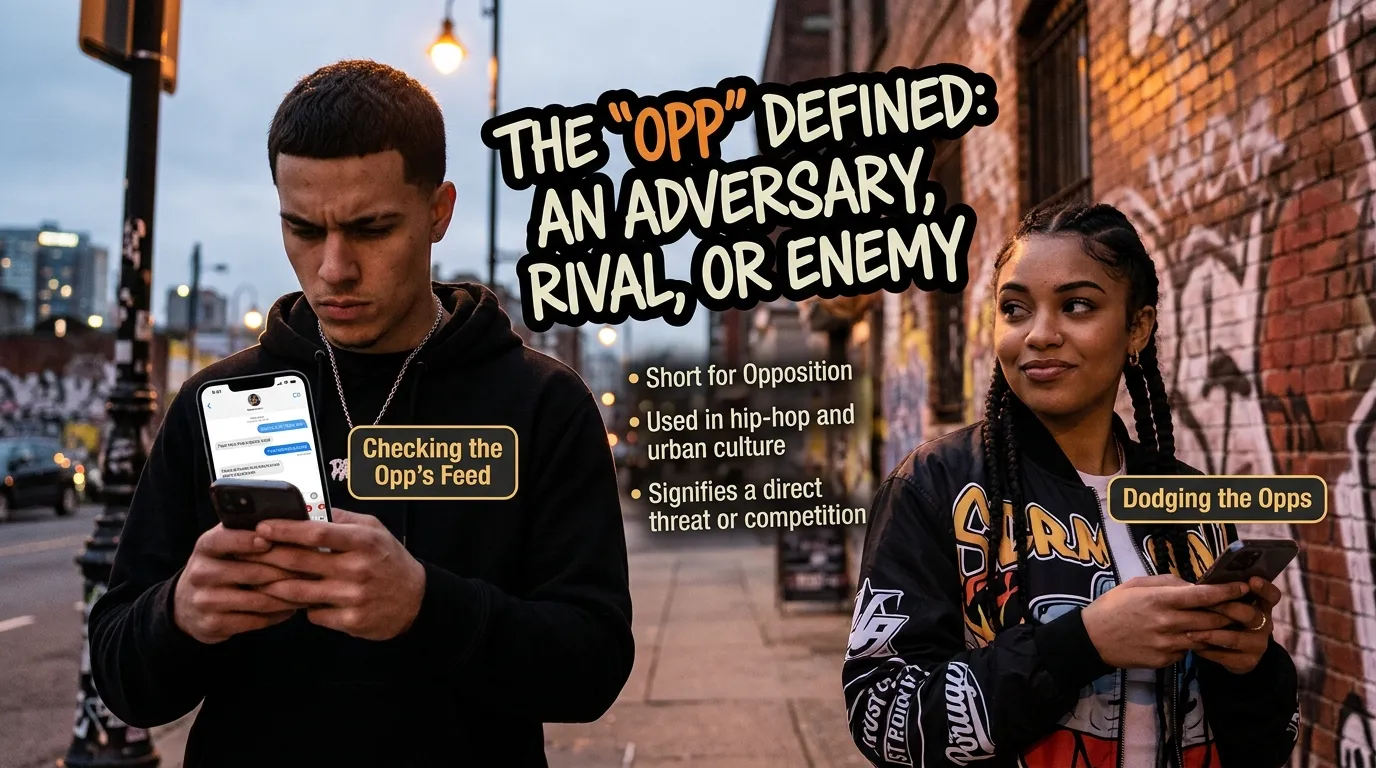
Opp is short for opposition or opponent.
In slang, an opp refers to:
- An enemy
- A rival
- Someone who is against you
- A person you don’t trust
- Someone working against your interests
The plural form is opps, meaning multiple enemies or rivals.
Simple Definition
| Term | Meaning |
|---|---|
| Opp | Enemy, rival, opponent |
| Opps | Multiple enemies or rivals |
| Being an opp | Acting against someone |
| Fake opp | Someone pretending to be friendly but isn’t |
Example
Text Message:
“Don’t tell him our plans. He’s an opp.”
Meaning:
“Don’t tell him our plans. He’s not on our side.”
The Origin of Opp Slang
The slang term opp comes from the word opposition.
The term became widely used in:
- Street culture
- Hip-hop communities
- Rap music
- Urban slang
- Social media platforms
Over time, it spread beyond its original use and became mainstream internet slang.
Today, people use opp casually to describe anyone they dislike, disagree with, or consider a rival.
How Opp Is Used in Modern Slang
The meaning of opp can vary slightly depending on the situation.
1. A Real Enemy
Originally, an opp referred to someone genuinely hostile.
Example:
“Those guys are our opps.”
Meaning:
“Those people are our enemies.”
2. Someone You Don’t Trust
Many people use the term for someone who acts suspiciously.
Example:
“She’s always sharing private information. She’s an opp.”
Meaning:
“She’s not trustworthy.”
3. A Rival
An opp can simply be someone competing against you.
Example:
“The opposing team is our opp.”
Meaning:
“They’re our rivals.”
4. A Joke Between Friends
Sometimes friends jokingly call each other opps.
Example:
Friend steals your fries.
You respond:
“You’re such an opp.”
Meaning:
“You’re acting against me.”
This use is playful rather than serious.
Opp Meaning in Text Messages
When used in texting, opp usually means someone who is not supportive or trustworthy.
Examples
Example 1
Person A:
“Can I tell Jake?”
Person B:
“Nah, he’s an opp.”
Meaning:
Jake cannot be trusted.
Example 2
“She switched sides. Total opp.”
Meaning:
She betrayed someone.
Example 3
“Keep your distance from the opps.”
Meaning:
Avoid the people working against you.
Opp Meaning on TikTok
TikTok helped make the term extremely popular.
Creators often use opp to describe:
- Haters
- Ex-friends
- Rivals
- Ex-partners
- Anyone causing drama
TikTok Example
A creator might post:
“When your opp watches all your stories.”
Meaning:
Someone who dislikes you keeps checking your social media.
This often becomes part of humorous videos and memes.
Opp Meaning on Snapchat
On Snapchat, opp usually refers to:
- Someone who talks negatively about you
- A former friend
- A rival
- Someone spreading gossip
Example
“Why is my opp snapping me?”
Meaning:
Why is someone who doesn’t like me sending me messages?
Opp Meaning on Instagram
Instagram users often use the term in captions and comments.
Examples
- “No opps allowed.”
- “My opps stay watching.”
- “Success is the best revenge on your opps.”
These phrases generally refer to critics, enemies, or jealous people.
Opp Meaning in Rap Music
Rap music played a major role in spreading the term.
Many artists use opp when talking about:
- Rivals
- Competitors
- Enemies
- Opposition
Common Lyrics Themes
Artists may discuss:
- Avoiding opps
- Defeating opps
- Outperforming opps
- Staying alert around opps
Because of rap’s influence, the term entered mainstream internet culture.
Opp Meaning in Gaming
Gamers sometimes use opp differently.
In gaming, an opp may refer to:
- The opposing team
- An enemy player
- A competitor
Example
“The opp squad is pushing our base.”
Meaning:
The enemy team is attacking.
This use is usually harmless and competitive.
Signs Someone Is Considered an Opp
People may label someone an opp if they:
- Spread rumors
- Betray trust
- Compete aggressively
- Act two-faced
- Work against a group
- Support a rival side
- Create unnecessary drama
However, the term is often exaggerated online and used humorously.
Common Opp Slang Phrases
“He’s an Opp”
Means:
He is an enemy or rival.
“The Opps”
Means:
A group of enemies or rivals.
“Opp Behavior”
Means:
Actions that seem disloyal or suspicious.
Example:
“Canceling plans at the last minute is opp behavior.”
“Move Like an Opp”
Means:
Acting against someone’s interests.
Example:
“Why are you moving like an opp?”
Meaning:
Why are you acting against me?
“Fake Opp”
Means:
Someone pretending to be against you.
Sometimes it’s used sarcastically.
Examples of Opp in Everyday Conversation
School
“The other team is our opp.”
Meaning:
They’re our competition.
Friendship
“She told everyone my secret. She’s an opp.”
Meaning:
She betrayed trust.
Social Media
“My opps keep viewing my profile.”
Meaning:
People who dislike me keep checking my account.
Work
“That coworker keeps taking credit for my ideas. Total opp.”
Meaning:
They’re acting against me.
Opp vs Enemy: What’s the Difference?
Many people assume opp and enemy are identical.
While similar, there are differences.
| Opp | Enemy |
|---|---|
| Modern slang term | Traditional term |
| Often casual | Usually serious |
| Common online | Used everywhere |
| Can be joking | Usually genuine hostility |
| Popular among younger users | Universal usage |
Someone can be called an opp jokingly, while “enemy” often sounds more serious.
Opp vs Hater
These words overlap but aren’t exactly the same.
| Opp | Hater |
|---|---|
| Works against you | Criticizes you |
| May be a rival | May simply dislike you |
| Can oppose your goals | Often expresses negativity |
| Broader meaning | More specific meaning |
Not every hater is an opp, but many opps are considered haters.
Related Slang Terms
If you’re learning internet slang, these related terms are useful.
Hater
Someone who constantly criticizes others.
Snake
A disloyal or deceptive person.
Fake Friend
Someone pretending to be your friend.
Rival
A competitor.
Backstabber
Someone who betrays trust.
Clout Chaser
Someone seeking attention through others.
NPC
Internet slang for someone perceived as unoriginal or predictable.
Common Misunderstandings About Opp
Misunderstanding #1: Opp Always Means Criminal Enemy
Not true.
While the term originated in certain communities where it could refer to serious rivals, many people now use it casually online.
Misunderstanding #2: Every Opp Is Dangerous
False.
Many users jokingly call:
- Friends
- Siblings
- Classmates
- Teammates
their opps.
Misunderstanding #3: Only Teenagers Use It
Not anymore.
Thanks to social media and music, people of many ages recognize the term.
Misunderstanding #4: Opp Means the Same Thing Everywhere
Context matters.
An opp in gaming differs from an opp in social drama or real-life conflict.
Why Has Opp Become So Popular?
Several factors contributed to its popularity.
Social Media
TikTok, Instagram, Snapchat, and X spread slang quickly.
Music Culture
Rap artists frequently use the term.
Memes
Funny videos often revolve around “opps.”
Simplicity
The word is short, memorable, and easy to use.
Relatability
Everyone understands the concept of rivals or people working against them.
How to Use Opp Correctly
Here are some examples of proper usage.
Correct
✅ “My opp keeps copying everything I do.”
✅ “The opps are watching.”
✅ “Stop acting like an opp.”
✅ “That’s opp behavior.”
Incorrect
❌ Using it to describe random strangers without context.
❌ Assuming every opp is a dangerous enemy.
❌ Thinking the term always has a serious meaning.
Should You Use the Word Opp?
That depends on your audience.
Good Situations
- Casual conversations
- Social media posts
- Text messages
- Meme culture
- Informal discussions
Less Appropriate Situations
- Academic writing
- Professional emails
- Formal business communication
- Official reports
In professional settings, words like opponent, competitor, critic, or rival are usually better choices.
Examples of Opp in Sentences
Here are more examples to help you understand the slang naturally.
- “My opps keep checking my profile.”
- “Don’t invite him; he’s an opp.”
- “She’s moving like an opp lately.”
- “The opps thought we’d fail.”
- “Why are you acting like an opp?”
- “That was pure opp behavior.”
- “The opps can’t stop our success.”
- “Even my little brother is my opp today.”
Frequently Asked Questions (FAQs)
1. What does opp mean in slang?
Opp is slang for opposition, opponent, enemy, or rival. It describes someone who is against you or not on your side.
2. What does opp mean in texting?
In texting, opp usually means someone who is untrustworthy, competitive, hostile, or working against another person.
3. What are opps?
Opps is simply the plural form of opp, meaning multiple enemies, rivals, critics, or opponents.
4. Is opp a negative term?
Usually yes. It generally refers to someone viewed negatively, although it is often used jokingly among friends.
5. What does “stop acting like an opp” mean?
It means someone is behaving in a disloyal, unhelpful, or suspicious way.
6. Where did the term opp come from?
The term originated from the word opposition and became popular through street slang, hip-hop culture, rap music, and social media.
7. Can friends call each other opps?
Yes. Many people jokingly call friends “opps” when teasing each other or during friendly competition.
Conclusion
The opp meaning slang definition is relatively simple: an opp is someone viewed as an enemy, rival, critic, or person working against you. Originally derived from opposition, the term gained popularity through rap music, street culture, and social media before becoming a mainstream slang expression.
Today, people use opp in many different ways—from serious discussions about rivals to lighthearted jokes among friends. Context is important because the word can range from describing a genuine adversary to playfully calling someone out for minor annoyances.
When you see phrases like “he’s an opp,” “the opps are watching,” or “that’s opp behavior,” you’ll now understand exactly what’s being communicated. As internet slang continues to evolve, opp remains one of the most recognizable and widely used terms in online culture.