In today’s fast-moving digital world, short forms and abbreviations dominate how we communicate. One such popular acronym you’ve probably seen is “TYSM.” But what exactly does it mean, and how should you use it correctly?
If you’ve ever received a message saying “tysm” and wondered what it meant—or if you’re unsure when to use it yourself—this guide will walk you through everything you need to know.
What Does TYSM Mean in Text?
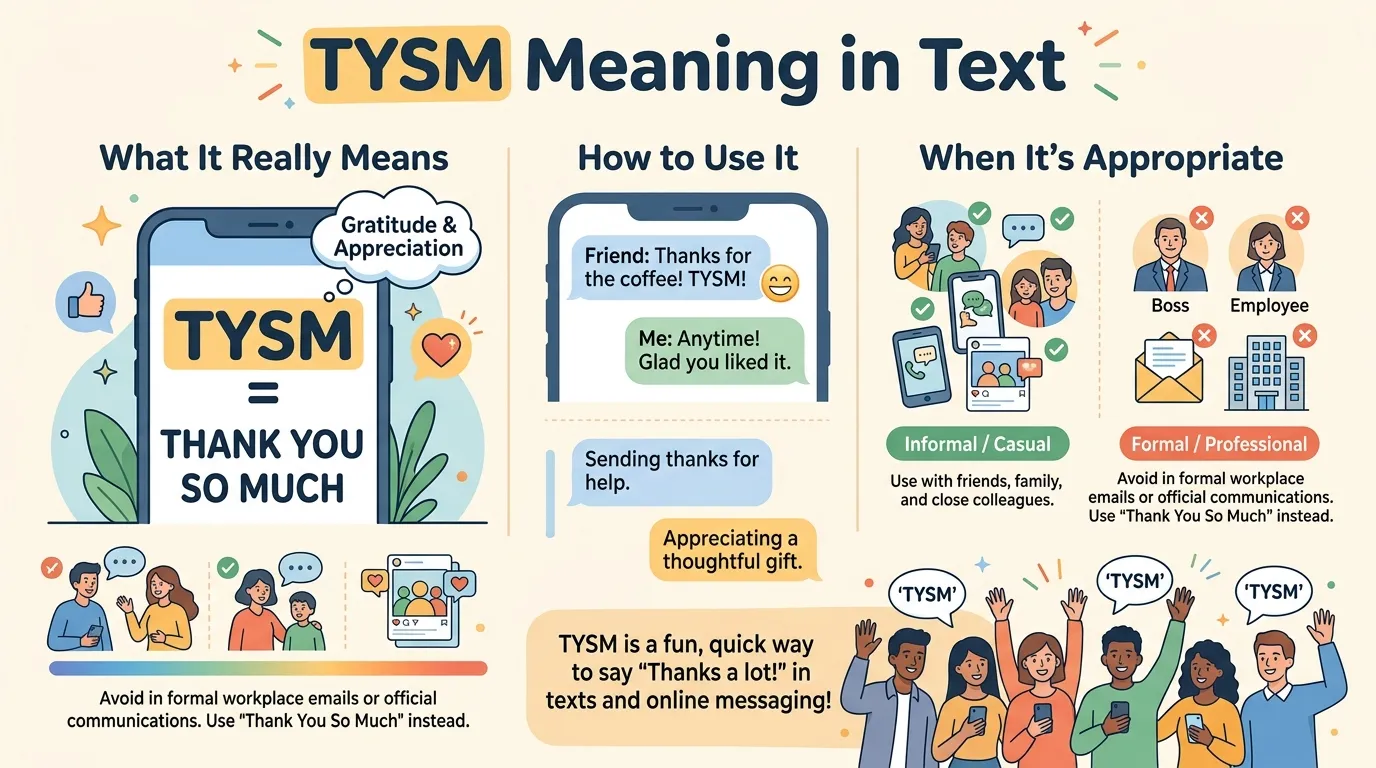
TYSM stands for:
👉 Thank You So Much
It’s a casual, friendly way to express gratitude in text messages, social media, chats, and online conversations.
Simple Definition:
- TYSM = Thank You So Much
- Used to show appreciation quickly and informally
Why TYSM Is So Popular
The rise of texting, social media, and instant messaging has made short forms like TYSM extremely common.
Reasons for its popularity:
- ✅ Saves time while typing
- ✅ Fits well in fast conversations
- ✅ Sounds friendly and warm
- ✅ Common among younger audiences
- ✅ Works across platforms (WhatsApp, Instagram, Snapchat, etc.)
When to Use TYSM
TYSM is best used in informal communication. It’s perfect for everyday chats where a full “thank you so much” might feel too long or formal.
Common situations:
- A friend helps you with something
- Someone gives you a compliment
- You receive a gift or favor
- Someone shares useful information
Example:
- “You helped me finish my assignment tysm!”
- “That was so kind of you, tysm 💖”
When NOT to Use TYSM
While TYSM is convenient, it’s not always appropriate.
Avoid using TYSM in:
- ❌ Formal emails
- ❌ Job applications
- ❌ Professional communication
- ❌ Academic writing
Better alternatives:
- “Thank you very much”
- “I sincerely appreciate it”
- “Much appreciated”
TYSM vs Other Similar Text Abbreviations
Let’s compare TYSM with other commonly used expressions:
| Abbreviation | Meaning | Tone |
|---|---|---|
| TY | Thank You | Casual |
| THX | Thanks | Informal |
| TYS | Thank You So | Incomplete/rare |
| TYSM | Thank You So Much | Friendly & expressive |
| TIA | Thanks In Advance | Polite/formal-ish |
👉 TYSM stands out because it feels more heartfelt than just “TY” or “THX.”
Real-Life Examples of TYSM in Text
Here are some practical ways TYSM is used in conversations:
1. Friendly Chat
- “You remembered my birthday, tysm 😊”
2. Social Media Comment
- “Loved your post tysm for sharing!”
3. Gaming or Online Communities
- “You revived me at the last second tysm!”
4. School/College Chat
- “You sent me the notes tysm 🙌”
Different Ways to Say TYSM
If you want to mix things up, here are some alternatives:
Informal Alternatives:
- Thanks a lot
- Thanks tons
- Appreciate it
- Big thanks
- Much love
Slightly More Polite:
- Many thanks
- I appreciate it
- Grateful for this
Emotional Tone Behind TYSM
Even though TYSM is short, it carries a strong emotional meaning.
It can express:
- 💖 Gratitude
- 😊 Happiness
- 🙏 Appreciation
- 🤝 Kindness
Adding emojis makes it even more expressive:
- “tysm ❤️” → warm and heartfelt
- “tysm 😊” → friendly and happy
- “tysm 🙏” → respectful gratitude
Is TYSM Formal or Informal?
👉 TYSM is 100% informal.
Think of it like speaking casually with friends. It’s not meant for professional or serious settings.
The Evolution of TYSM in Digital Language
Abbreviations like TYSM became popular with:
- SMS texting (limited character space)
- Chat rooms and forums
- Social media platforms
Over time, these shortcuts became part of everyday language, especially among younger users.
Common Misunderstandings About TYSM
1. Thinking It’s Rude
Some people may think abbreviations feel lazy—but in casual chats, TYSM is perfectly acceptable.
2. Using It Everywhere
Not every situation fits TYSM. Using it in formal emails can seem unprofessional.
3. Misreading It
Some beginners confuse TYSM with other acronyms. But once you know it means Thank You So Much, it’s easy to remember.
Should You Use TYSM?
Yes, if:
- You’re chatting casually
- You want to respond quickly
- You’re talking to friends or peers
No, if:
- You’re writing professionally
- You need to sound formal
- The situation is serious
TYSM in Social Media Culture
TYSM is widely used across platforms like:
- Instagram comments
- TikTok replies
- WhatsApp chats
- Snapchat messages
It helps keep communication:
- Quick
- Friendly
- Engaging
Tips for Using TYSM Effectively
To make your messages feel natural and polite:
Do:
- Use it with people you know
- Add emojis for warmth
- Keep tone friendly
Don’t:
- Overuse it in every message
- Use it in formal writing
- Use it without context
FAQ About TYSM Meaning in Text
1. What does TYSM stand for?
TYSM means Thank You So Much. It’s used to express gratitude in a casual way.
2. Is TYSM rude or polite?
It’s polite in informal conversations, but may seem unprofessional in formal settings.
3. Can I use TYSM in emails?
It’s better to avoid TYSM in professional emails. Use full phrases like “Thank you very much.”
4. What’s the difference between TY and TYSM?
- TY = Thank You (simple)
- TYSM = Thank You So Much (more expressive)
5. Is TYSM used worldwide?
Yes, it’s widely understood in English-speaking digital communication around the world.
6. Can adults use TYSM?
Absolutely. Anyone can use it—it’s not limited to a specific age group, though it’s more common among younger users.
7. What are some similar abbreviations?
- THX
- TY
- TIA
- TYVM (Thank You Very Much)
Conclusion: Why TYSM Matters in Modern Communication
TYSM is more than just a shortcut—it reflects how modern communication has evolved to be faster, friendlier, and more expressive.
Key Takeaways:
- TYSM means Thank You So Much
- It’s best for informal conversations
- It adds warmth and appreciation quickly
- Avoid it in professional or formal contexts
Final Tip:
Use TYSM when you want to sound friendly, grateful, and natural—but always match your tone to the situation.