If you have recently seen someone comment “stop glazing,” “bro is glazing,” or “you’re glazing hard” online, you may have wondered what they are talking about. The word sounds harmless because its traditional meaning is associated with donuts, cakes, pottery, and shiny surfaces. But in modern internet slang, glazing has a very different meaning.
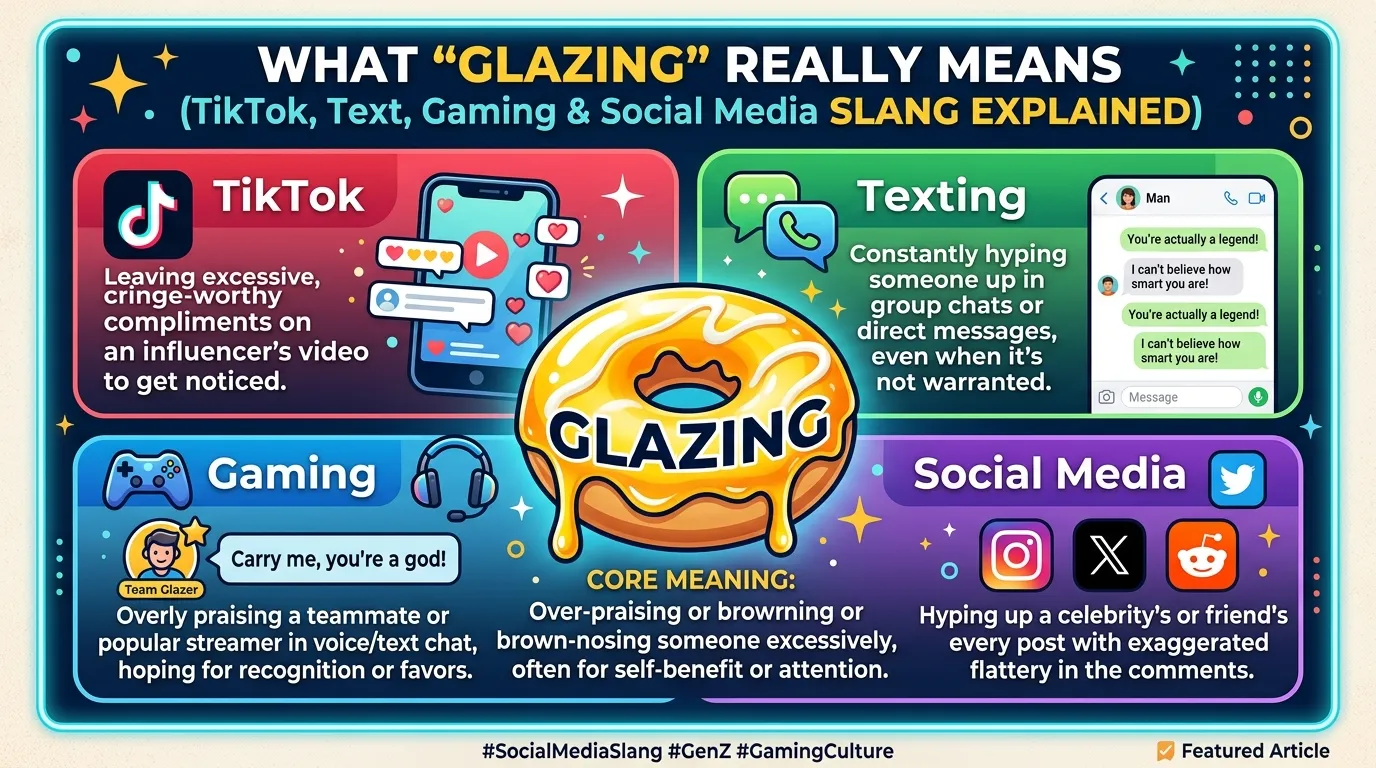
So, what does glazing mean in slang? In most online conversations, glazing means excessively praising, hyping, defending, or complimenting someone or something, often to an exaggerated or embarrassing degree. It is commonly used when someone appears overly devoted to a celebrity, athlete, influencer, streamer, friend, fictional character, or even a video game character.
The term is especially common on TikTok, Twitch, YouTube, Discord, X (Twitter), Reddit, and gaming communities. It can be playful, insulting, sarcastic, or occasionally positive depending on the context.
The slang became increasingly visible online around 2021–2023, spreading from online communities into mainstream social media and everyday conversations.
In this guide, you’ll learn the complete glazing meaning slang, where the expression came from, how people use it, what “glazer” means, whether it is offensive, and how it differs from words such as simping, meat riding, sucking up, hyping, and praising.
What Does “Glazing” Mean in Slang?
Glazing is internet slang for giving someone excessive praise, attention, admiration, or support, especially when that praise seems exaggerated, biased, or unnecessary.
In simple terms:
Glazing = praising someone way too much.
For example, imagine two friends watching a basketball game. One player makes a good shot, and someone says:
“That was a great shot.”
That’s normal praise.
But if someone says:
“Bro is literally the greatest basketball player to ever exist. Nobody has ever touched his level. He’s perfect at everything!”
Another person might respond:
“Bro, stop glazing.”
The accusation means that the speaker believes the praise has gone beyond reasonable admiration.
Modern slang references describe glazing as excessive flattery or hype, frequently used negatively or humorously.
Quick definition
Glazing: Excessively praising, hyping, defending, or admiring someone, usually to the point that it seems exaggerated or embarrassing.
Glazer: A person who does the glazing.
Stop glazing: A way of telling someone to stop excessively praising or defending another person.
Glaze: The verb form, as in “You’re glazing him.”
Glazing Meaning in One Sentence
If you’re looking for the shortest possible answer:
“Glazing” is slang for over-the-top praise or admiration, especially when someone is hyping another person far more than seems reasonable.
It is often used jokingly between friends, but it can also be an insult suggesting that someone’s praise is biased, desperate, or insincere.
What Does “Glazing” Mean on TikTok?
On TikTok, glazing is commonly used when somebody appears to be excessively praising a celebrity, influencer, athlete, creator, fictional character, or another popular figure.
For example:
“He scored one goal and you’re calling him the GOAT. Stop glazing.”
Or:
“Why are you glazing that influencer so hard?”
TikTok helped push the expression into a much broader audience. The term became especially visible through comments, memes, short videos, and creator discussions.
Sometimes TikTok users deliberately exaggerate their admiration for comedic effect. Someone might call a celebrity their “glorious king” or describe an ordinary achievement as the greatest accomplishment in human history. Other users then respond by calling the person a glazer.
The word therefore often works as a form of internet humor rather than a serious accusation.
TikTok example
Person A:
“Her new outfit is actually perfect.”
Person B:
“Okay, you’re glazing.”
Person A:
“I just said I liked the outfit.”
Here, “glazing” may simply mean that Person B thinks Person A is being overly enthusiastic.
What Does “Glazing” Mean on TikTok Comments?
In TikTok comments, you may see short versions such as:
- “Glazing 💀”
- “Bro is glazing.”
- “Stop glazing.”
- “The glazing is obsessed.”
- “Why are you glazing him?”
- “This is nonsensical glaze.”
- “Certified glazer.”
- “Bro cannot stop glazing.”
These comments generally mean:
“You’re praising this person way too much.”
The exact tone depends heavily on the conversation. Sometimes the commenter is genuinely criticizing excessive praise. Other times, it is simply a meme.
What Does “Glazing” Mean on Twitch?
On Twitch, glazing is particularly common in livestream chats.
A streamer might praise another creator repeatedly, defend them during an argument, or talk enthusiastically about their abilities. Chat members may respond:
“Stop glazing.”
or
“The glaze is obsessed.”
Twitch helped popularize the term in online streaming culture, where short expressions can spread rapidly through chat, clips, memes, and creator communities. Sources tracking the slang’s development point to its growth through online communities before it became widespread across TikTok and other platforms.
What Does “Glazing” Mean in Gaming?
Gaming is one of the environments where you’ll encounter glazing slang frequently.
Gamers may accuse someone of glazing when they:
- Constantly praise a particular player
- Defend a favorite character regardless of evidence
- Claim their favorite game is unbeatable
- Overrate a weapon or character
- Treat a streamer as flawless
- Defend a professional player after every mistake
- Argue that their favorite character is stronger than everyone else
Gaming example
Player 1:
“Bro, that character is unbeatable. He has no weaknesses.”
Player 2:
“You’re glazing him so hard.”
The second player is basically saying:
“You’re exaggerating how good this character is.”
Anime and gaming communities
The term is also common in anime, manga, and fictional-character debates.
For example:
“You’re glazing Gojo again.”
or:
“The fandom is glazing this character.”
In these contexts, glazing can mean giving a fictional character an unusually high level of praise, power scaling, or admiration.
What Does “Glazing” Mean on Discord?
On Discord, glazing usually has the same meaning: excessive praise or admiration.
Because Discord has long been home to gaming communities, fan communities, meme groups, and private online servers, the expression fits naturally into casual conversations.
Someone might say:
“Bro has been glazing the admin for 20 minutes.”
That could mean the person has been excessively complimenting the server administrator.
The term’s early online history is associated with Discord communities. Know Your Meme reports that the expression began circulating in a Discord server in late 2021 before spreading more broadly online.
What Does “Glazing” Mean on Reddit?
On Reddit, glazing is often used in debates about celebrities, athletes, musicians, anime characters, movies, video games, and internet personalities.
For example:
“You’re glazing this character. The evidence clearly says otherwise.”
A Reddit user may use the term when they believe someone is being excessively biased toward a favorite.
However, Reddit discussions also demonstrate an important point: the word can become overused. Some users now jokingly accuse others of glazing even when someone is simply giving a sincere compliment.
That means context matters.
A genuine compliment isn’t automatically glazing.
What Does “Glazing” Mean in Texting?
In text messages, glazing usually means overpraising someone.
Common texts include:
- “Bro stop glazing.”
- “Why are you glazing her?”
- “You’re glazing him 😂”
- “I’m not glazing but he’s actually good.”
- “That’s obsessed glaze.”
- “You been glazing all day.”
The expression is particularly useful in texting because it communicates an entire idea in just one word.
Instead of saying:
“I think you’re giving this person an unnecessarily large amount of praise.”
Someone can simply say:
“You’re glazing.”
What Does “Glazer” Mean?
A glazer is a person who constantly or excessively praises someone.
In other words:
Glaze = the behavior
Glazer = the person doing it
For example:
“He’s always talking about how perfect that player is. He’s such a glazer.”
The word is generally teasing or negative.
However, friends sometimes use glazer jokingly without serious hostility.
Example
Friend 1:
“She’s the best singer alive.”
Friend 2:
“Bro is a certified glazer.”
The second friend may simply be making fun of the first friend’s enthusiasm.
What Does “Stop Glazing” Mean?
“Stop glazing” means:
Stop praising or hyping that person so much.
It can be playful, sarcastic, or insulting.
Example 1: Sports
A: “LeBron is literally perfect.”
B: “Bro, stop glazing.”
Example 2: Music
A: “This album has no bad songs.”
B: “You’re glazing.”
Example 3: Dating
A: “She’s absolutely perfect. I don’t see a single flaw.”
B: “My guy is glazing already.”
In all three examples, the speaker believes the praise is excessive.
What Does “No Glazing” Mean?
“No glazing” usually means:
“I’m going to give an honest opinion without excessively praising this person.”
For example:
“No glazing, but that was actually one of the best performances I’ve seen.”
Here, the speaker is trying to distinguish genuine praise from exaggerated fan behavior.
It can also be used humorously.
Example
“No glaze, that burger was actually amazing.”
Meaning:
“I’m not exaggerating or unnecessarily praising it—the burger was genuinely good.”
Is Glazing Always Negative?
No.
Although glazing is usually used negatively, its tone can range from serious criticism to playful teasing.
Negative glazing
Someone genuinely believes the person is being overly flattering:
“You’re glazing him because he didn’t even play well.”
Playful glazing
Friends tease each other:
“Bro, you called him the GOAT after one game. 😂”
Self-aware glazing
Someone knows they are praising excessively:
“I’m about to glaze my favorite artist for a minute.”
This can make the term less insulting.
Positive or ironic usage
Modern internet slang can also be deliberately flipped. Some communities use “glaze” playfully to mean enthusiastic praise without necessarily condemning it. Contemporary slang references note that “self-glazing” can even be used positively to mean hyping yourself up.
Where Did the Slang “Glazing” Come From?
The exact history of internet slang is difficult to establish because slang often develops inside private chats, gaming communities, social groups, and deleted posts before reaching public platforms.
However, available documentation places the modern slang use of glazing around 2021.
Know Your Meme reports that the term was being used in a Discord community in November 2021 and identifies an early public example from November 24, 2021. It later became increasingly visible on Twitch and other platforms.
By 2022 and 2023, the term had spread more widely through streaming culture, TikTok, YouTube, and memes.
Why the word “glazing”?
The slang appears to work as a humorous metaphor: glazing normally means covering something with a sweet or glossy coating.
In internet slang, the idea became associated with metaphorically “laying it on thick”—in other words, putting an excessive amount of praise on someone.
That connection also explains why donut and cake images sometimes appear alongside the slang.
How the Meaning Evolved
The evolution can be roughly understood like this:
- Early online use: The term circulated in smaller internet communities.
- Streaming culture: Twitch and gaming communities helped increase visibility.
- TikTok and short-form video: Memes and comments exposed the term to a much wider audience.
- Mainstream teen slang: Younger users began using it in schools and everyday conversations.
- Broader usage: It became a general-purpose word for excessive praise or favoritism.
By 2025 and 2026, the word had become familiar enough that slang dictionaries and mainstream publications were explaining it to wider audiences.
Glazing vs. Praising: What’s the Difference?
This is one of the most important distinctions.
Praise isn’t automatically glazing.
Normal praise
“That was a really good performance.”
This is a reasonable compliment.
Glazing
“That was the greatest performance in human history, and nobody will ever be as talented as him.”
This is much more exaggerated.
| Normal Praise | Glazing |
|---|---|
| Reasonable compliment | Excessive compliment |
| Usually sincere | May appear exaggerated |
| Based on something specific | Often over-the-top |
| Doesn’t necessarily imply bias | Can suggest extreme bias |
| Generally positive | Often teasing or negative |
The key difference is degree.
Glazing vs. Simping
These words overlap, but they aren’t identical.
Simping generally refers to someone showing excessive attention, devotion, or submissiveness toward a person they are attracted to or strongly interested in.
Glazing is broader.
You can glaze:
- A celebrity
- A friend
- A basketball player
- A video game character
- A streamer
- A movie
- A company
- A fictional character
You don’t necessarily have to be romantically interested in the person.
Example
“He’s simping for his crush.”
This suggests romantic interest.
“He’s glazing that basketball player.”
This suggests excessive praise or admiration.
Glazing vs. Hyping
These words are also closely related.
Hyping someone can be positive. You might genuinely encourage your friend before an important event.
Glazing someone usually suggests that the praise has gone too far.
For example:
“I’m hyping my friend up before his presentation.”
Positive.
“You’re glazing your friend. He hasn’t even presented yet.”
Teasing or negative.
Glazing vs. Sucking Up
Sucking up means trying to gain someone’s approval or favor through excessive friendliness or praise.
That makes it quite similar to glazing.
However, “sucking up” usually implies a motive—getting something from the person.
Glazing does not always require a motive. Someone might simply be an overly enthusiastic fan.
Glazing vs. Meat Riding
“Meat riding” is another slang expression that can overlap heavily with glazing.
Both can describe excessive praise, loyalty, or defense.
However, meat riding is generally more vulgar and sexually suggestive, while “glazing” has become a more common meme-style expression in many online spaces.
If you’re speaking in a professional or family-friendly environment, neither term is ideal, but “glazing” is generally the less explicit expression.
Glazing in Sports Conversations
Sports fans frequently use glazing when discussing athletes.
Imagine someone says:
“That player missed six shots, but you’re still saying he’s the greatest ever.”
A reply might be:
“The glazing is obsessed.”
The expression is particularly common in debates involving:
- NBA players
- NFL players
- Soccer players
- Boxers
- MMA fighters
- Tennis players
- Esports competitors
Why sports fandom creates glazing accusations
Sports naturally create strong loyalties. Fans may defend their favorite players even when those players perform badly.
That creates a perfect environment for the slang.
One person sees loyal fandom.
Another sees unreasonable bias.
The second person calls it glazing.
Glazing in Dating and Relationships
In dating conversations, glazing can mean excessively complimenting someone you’re interested in.
For example:
“She’s perfect. She’s beautiful, smart, funny, talented, and literally has no flaws.”
A friend might respond:
“Bro, you’re glazing.”
It can also describe someone who constantly praises their partner.
However, context matters. Healthy admiration isn’t automatically glazing.
If someone genuinely appreciates their partner, calling it glazing may simply be teasing.
Glazing in the Workplace
This is where you should be more careful.
Someone might jokingly say:
“You’re glazing the boss.”
if a coworker repeatedly compliments a manager.
But using slang such as glazing, meat riding, or similar expressions at work can sound disrespectful or inappropriate.
In professional communication, use clearer language such as:
- “You’re praising them a lot.”
- “That sounds overly complimentary.”
- “You seem very supportive of their work.”
- “That may come across as excessive praise.”
Workplace example
Instead of:
“You’re glazing the manager.”
A professional version would be:
“You seem to be giving the manager unusually strong praise.”
This is especially important in emails, meetings, interviews, and formal documents.
Real-Life Examples of “Glazing”
Here are some realistic examples across different situations.
Example 1: Celebrity
A: “She’s the greatest actress alive.”
B: “Bro, stop glazing.”
Example 2: Athlete
A: “He had one amazing game.”
B: “And now you’re calling him the GOAT? That’s glazing.”
Example 3: Friend
A: “My friend is the smartest person I’ve ever met.”
B: “You’ve been glazing your friend all day.”
Example 4: Gaming
A: “This character is unbeatable.”
B: “You’re glazing the character.”
Example 5: Music
A: “Every song on this album is perfect.”
B: “No way. You’re glazing.”
Example 6: Self-aware
A: “I’m about to glaze my favorite singer.”
Here, the person is openly acknowledging that they’re about to give enthusiastic praise.
Common Forms of Glazing Slang
You may see several variations online.
| Expression | Meaning |
|---|---|
| Glaze | Excessively praise someone |
| Glazing | The act of excessive praise |
| Glazer | Someone who excessively praises |
| Stop glazing | Stop overpraising |
| The glaze | The excessive praise itself |
| obsessed glaze | Very excessive praise |
| No glaze | “I’m being honest, not exaggerating” |
| Glazing hard | Praising someone intensely |
| Certified glazer | Someone known for excessive praise |
| Self-glaze | Praising or hyping yourself |
Why Do People Say “Glazing”?
There are several reasons.
1. It’s short
Instead of explaining that someone is excessively praising another person, users can simply say:
“Glazing.”
2. It’s humorous
The word sounds ridiculous enough to work well as a meme.
3. It fits internet culture
Online communities frequently create shortened, exaggerated, or metaphorical terms.
4. It can call out bias
Calling someone a glazer can mean:
“You’re not being objective.”
5. It works in many situations
The slang can describe praise involving sports, music, gaming, celebrities, relationships, and even fictional characters.
Common Misconceptions About Glazing
Misconception 1: Every compliment is glazing
False.
A normal compliment isn’t automatically glazing.
The slang generally implies excessiveness, exaggeration, or unusual enthusiasm.
Misconception 2: Glazing always means romantic attraction
False.
Someone can glaze a basketball player, video game, musician, friend, or fictional character.
Misconception 3: Glazing is always an insult
Not necessarily.
Friends frequently use it jokingly.
Misconception 4: The word has only one fixed meaning
Not exactly.
Internet slang evolves quickly. The dominant modern meaning is excessive praise, but individual communities may use the term somewhat differently.
Misconception 5: The slang is the same as the traditional word
No.
“Glazing” also has completely ordinary meanings related to applying a glossy coating, installing glass, or finishing food.
Context determines which meaning is intended.
“Glazing” Has Other Meanings Too
Before assuming someone is using internet slang, remember that glazing is an ordinary English word.
Food
A baker may glaze a donut with sugar or chocolate.
“The chef is glazing the donuts.”
Pottery
A ceramic artist can apply glaze to pottery.
“The potter is glazing the bowl before firing it.”
Construction
Glazing can refer to fitting glass into windows or other structures.
“The building needs new window glazing.”
These meanings have nothing to do with internet slang.
If someone says:
“The donuts need glazing.”
They’re probably talking about food—not TikTok slang.
Is “Glazing” a Bad Word?
It depends on how it is used.
The mainstream slang meaning isn’t necessarily profanity. However, some explanations of the slang connect it to more explicit internet expressions, which is one reason the term can carry a vulgar undertone in certain communities.
In everyday online usage, however, many people simply understand glazing as “overpraising.”
If you’re unsure about your audience, use a more neutral word such as:
- Overpraising
- Excessive praise
- Overhyping
- Sucking up
- Excessive admiration
- Being overly complimentary
Should You Use “Glazing” at Work?
Generally, avoid it in formal professional communication.
You might hear coworkers use it casually, especially in younger workplaces, but it isn’t appropriate for:
- Formal emails
- Job applications
- Business proposals
- Academic writing
- Client communications
- Official reports
Instead of:
“You’re glazing the CEO.”
write:
“You’re giving the CEO unusually strong praise.”
The second version is clearer and more professional.
How to Tell If Someone Is Actually Glazing
Ask yourself these questions:
- Is the praise unusually extreme?
- Does the person praise everything the other person does?
- Do they ignore obvious mistakes?
- Are they defending the person without evidence?
- Does their admiration seem exaggerated?
- Are other people joking about how much they praise them?
If several answers are yes, someone might reasonably call the behavior “glazing.”
But remember: the accusation itself can also be exaggerated.
Sometimes people use “glazing” simply because they disagree with someone’s positive opinion.
Is Saying “You’re Glazing” an Insult?
It can be.
Depending on tone, it may mean:
“You’re being ridiculous.”
“You’re too biased.”
“You’re trying too hard to impress them.”
“You’re acting like a fanboy.”
But among friends, it can be completely harmless teasing.
For example:
“Stop glazing your favorite team 😂.”
The laughing emoji can completely change the tone.
How to Respond If Someone Calls You a Glazer
You don’t necessarily need to take it seriously.
You could respond:
- “I’m just giving credit where it’s due.”
- “I’m allowed to like something.”
- “That’s not glazing, that’s facts.”
- “Okay, maybe I’m glazing a little.”
- “You just don’t agree with me.”
- “Let me enjoy my favorite player.”
A humorous response can keep the conversation light.
How to Use “Glazing” Correctly
If you want to use the slang naturally, remember the basic structure.
Verb
“You’re glazing him.”
Continuous form
“Bro is glazing again.”
Noun
“The glaze is obsessed.”
Person
“He’s a glazer.”
Command
“Stop glazing.”
Disclaimer
“No glaze, but that was actually amazing.”
These are all common ways the slang may appear in casual online communication.
Glazing Meaning: Quick Summary Table
| Fact | Explanation |
|---|---|
| Primary slang meaning | Excessively praising or hyping someone |
| Person who does it | Glazer |
| Common phrase | “Stop glazing” |
| Typical tone | Teasing, sarcastic, critical, or humorous |
| Popular platforms | TikTok, Twitch, YouTube, Discord, X, Reddit |
| Common communities | Gaming, sports, fandoms, streaming |
| Modern rise | Became widely visible around 2021–2023 |
| Earlier online roots | Documented in Discord/X communities around 2021 |
| Similar terms | Overhyping, simping, sucking up, meat riding |
| Opposite idea | Criticizing, underhyping, or being objective |
| Formal usage | Not recommended |
| Can be positive? | Sometimes, especially jokingly or as “self-glazing” |
| Traditional meaning | Applying a glossy coating or fitting glass |
The documented history places the modern slang’s emergence around 2021, followed by expansion through Twitch, TikTok, YouTube, and other online communities.
Frequently Asked Questions
1. What does glazing mean in slang?
Glazing means excessively praising, complimenting, hyping, or defending someone. It usually suggests that the praise has become exaggerated or overly enthusiastic.
For example, if someone calls an athlete the greatest person alive after one good performance, another person might say, “Stop glazing.”
2. What does “stop glazing” mean?
“Stop glazing” means stop praising or hyping someone so much.
It can be a serious criticism or simply a joke between friends.
3. What does “glazer” mean?
A glazer is someone who excessively praises or defends another person.
For example:
“He’s such a glazer for that streamer.”
It means the speaker thinks the person is overly devoted to or complimentary toward the streamer.
4. What does glazing mean on TikTok?
On TikTok, glazing usually means excessively praising or hyping someone, particularly a celebrity, influencer, athlete, musician, creator, or fictional character.
It frequently appears in comments such as “bro is glazing” or “stop glazing.”
5. What does glazing mean in gaming?
In gaming, glazing means overrating, excessively praising, or constantly defending a player, character, weapon, streamer, or game.
For example:
“You’re glazing that character. He’s not even that strong.”
6. Is glazing the same as simping?
Not exactly.
Both can involve excessive admiration, but simping is more strongly associated with romantic or sexual interest. Glazing is broader and can apply to almost anyone or anything.
You can glaze an athlete, celebrity, fictional character, friend, or game without being romantically interested in them.
7. Is glazing a bad word?
Usually, glazing is informal slang rather than a standard swear word, but it can have vulgar or insulting undertones depending on the community and context.
For professional or formal communication, it’s better to use “excessive praise,” “overhyping,” or “overly complimentary.”
8. Does glazing always mean someone is lying?
No.
Someone can genuinely believe what they are saying and still be accused of glazing.
The accusation is usually about the degree of praise, perceived bias, or excessive enthusiasm—not necessarily whether the person is deliberately lying.
9. Can glazing be positive?
Yes. Although the term is usually teasing or negative, people sometimes use it playfully to describe enthusiastic praise. Expressions such as “self-glazing” can even refer to confidently hyping yourself up.
10. Why is glazing so popular online?
The word is short, funny, flexible, and easy to use in fast-moving online conversations.
It also fits modern meme culture because people frequently exaggerate their admiration for celebrities, athletes, streamers, musicians, and fictional characters.
Final Takeaway
The most important thing to remember is simple:
Glazing means excessively praising, hyping, defending, or admiring someone.
If someone says:
“Bro, you’re glazing.”
they usually mean:
“You’re praising that person way too much.”
The term is especially common on TikTok, Twitch, YouTube, Discord, Reddit, X, gaming communities, sports discussions, and other online spaces. Its modern internet usage emerged around the early 2020s, with documented early use in online Discord/X communities before spreading into streaming and mainstream social media.
It is also important not to confuse glazing slang with the traditional English meanings of glazing, such as coating a donut, finishing pottery, or installing glass.
Most importantly, not every compliment is glazing. The slang usually implies that praise has become excessive, exaggerated, biased, or unusually enthusiastic.
So when you see “stop glazing,” “glazer,” “the glaze is obsessed,” or “no glaze” online, you can generally understand the conversation as being about too much praise or hype.
In short:
Glaze = excessive praise.
Glazing = the act of excessive praise.
Glazer = the person doing it.
Stop glazing = stop overhyping them.
And if someone calls you a glazer? You can always say:
“I’m not glazing. I’m just speaking facts.”