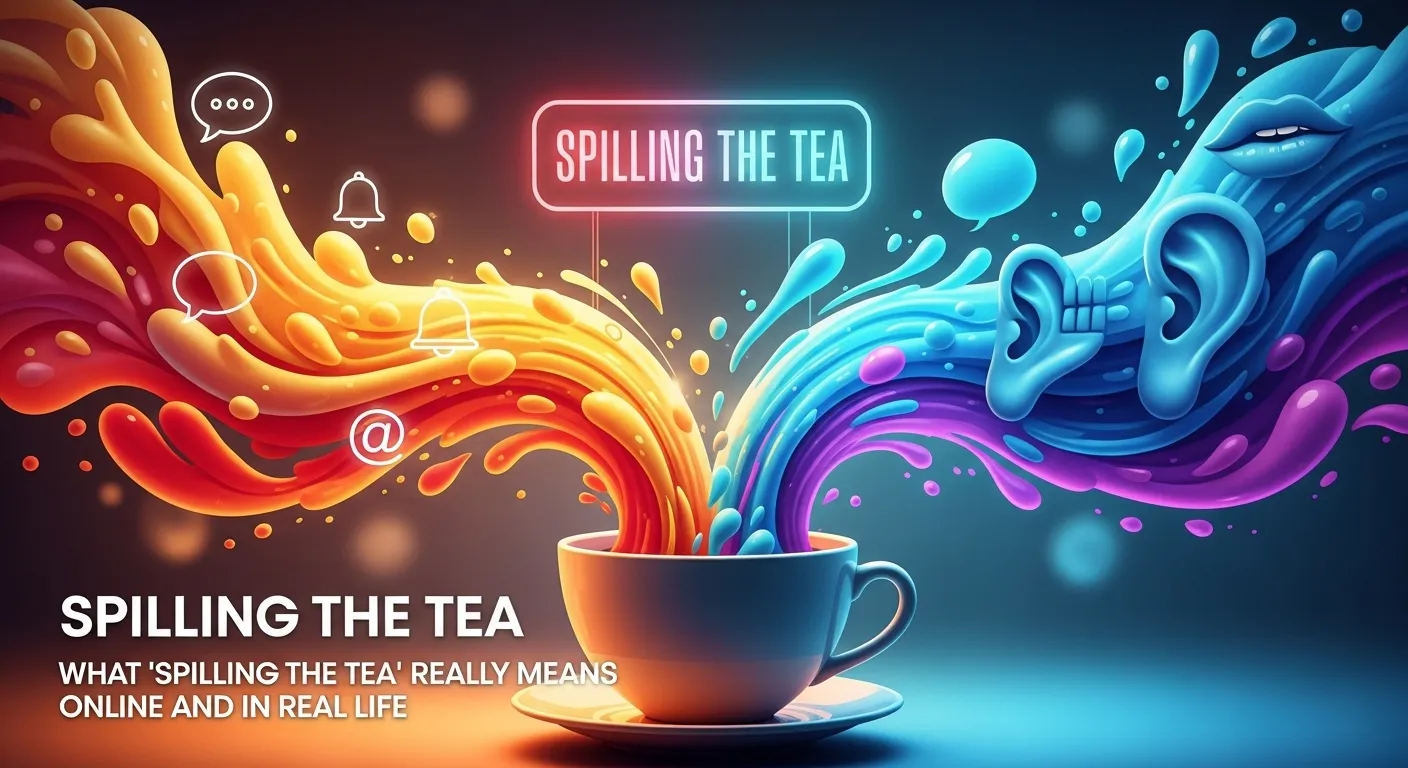
In today’s internet culture, phrases like “spill the tea,” “what’s the tea?”, and “that’s hot tea” appear everywhere — from TikTok comments and memes to celebrity gossip videos and everyday chats. But what exactly does tea meaning slang gossip refer to, and why has this phrase become so popular?
The slang term “tea” is widely used to describe gossip, juicy information, rumors, secrets, or personal drama. Whether someone is sharing celebrity updates, relationship drama, workplace stories, or social media controversies, they may say they are “spilling the tea.”
In this article, you’ll learn:
- The meaning of “tea” in slang
- Where the expression came from
- What “spill the tea” means
- How Gen Z and social media use it
- Examples in texting and conversation
- Related slang words and phrases
- Common misunderstandings
- FAQs and practical usage tips
Let’s dive into the fascinating world of internet slang and gossip culture.
What Does “Tea” Mean in Slang?
In slang, “tea” means gossip, news, secrets, or interesting personal information, especially about drama or controversy.
When someone says:
“What’s the tea?”
They are asking:
“What’s the gossip?” or “What happened?”
Similarly, if someone says:
“Spill the tea.”
They mean:
“Tell me the juicy details.”
The phrase is usually playful, humorous, or dramatic rather than serious.
Quick Definition of “Tea” Slang
| Slang Term | Meaning |
|---|---|
| Tea | Gossip or juicy information |
| Spill the tea | Share gossip or secrets |
| Hot tea | Very juicy or shocking gossip |
| No tea, no shade | Not trying to offend |
| Sip tea | Quietly observe drama |
The Origin of “Tea” Slang
The slang term “tea” has a rich cultural history. It did not originate from modern TikTok or Twitter alone.
Early Origins in Black and LGBTQ+ Culture
The term is believed to have roots in:
- Black drag culture
- Ballroom culture
- LGBTQ+ communities in the United States
Originally, “tea” may have come from the letter “T,” meaning “truth.”
People would say:
“Tell me the T.”
Over time, “T” evolved into “tea.”
The phrase became more mainstream through:
- Drag performances
- Reality TV
- Social media
- Meme culture
- YouTube commentary channels
Shows like RuPaul’s Drag Race helped popularize expressions such as:
- “Spill the tea”
- “That’s the tea”
- “Tea was spilled”
What Does “Spill the Tea” Mean?
The phrase “spill the tea” means:
To reveal gossip, secrets, drama, or exciting information.
It usually happens during conversations about:
- Relationships
- Friend drama
- Celebrity scandals
- Workplace gossip
- Internet controversies
Example Conversations
Example 1
Friend 1:
“I saw Jake with his ex yesterday.”
Friend 2:
“Wait… spill the tea!”
Meaning:
“Tell me everything!”
Example 2
TikTok Comment:
“Girl, the tea is HOT today.”
Meaning:
The gossip or drama is exciting.
Why Is “Tea” So Popular Online?
The slang exploded online because it is:
- Short
- Funny
- Dramatic
- Easy to understand
- Meme-friendly
Social media platforms helped spread the term rapidly.
Platforms Where “Tea” Is Common
TikTok
Creators use “tea” in:
- Storytime videos
- Drama recaps
- Relationship updates
- Celebrity news
Twitter/X
People tweet:
- “The tea today is nonsensical.”
- “I’m here for the tea.”
Tea pages post:
- Influencer gossip
- Breakup rumors
- Viral drama
YouTube
Many commentary channels focus on:
- “Spilling tea”
- Exposing scandals
- Internet drama analysis
Common Tea Slang Phrases Explained
Here are the most popular expressions related to tea slang.
1. Spill the Tea
Meaning:
Share gossip or secrets.
Example:
“Come on, spill the tea already.”
2. That’s the Tea
Meaning:
That’s the truth.
Example:
“He was lying the whole time. That’s the tea.”
3. Sip Tea
Meaning:
Quietly watch drama unfold.
Often paired with memes of someone drinking tea.
Example:
“I’m just sipping tea and watching the comments.”
4. Hot Tea
Meaning:
Extremely juicy or shocking gossip.
Example:
“This breakup drama is HOT tea.”
5. No Tea, No Shade
Meaning:
Not trying to insult or offend someone.
Example:
“No tea, no shade, but that outfit was terrible.”
Tea Slang in Text Messages and Social Media
The slang is especially common in texting.
Text Examples
| Text | Meaning |
|---|---|
| “What’s the tea?” | What’s going on? |
| “Spill tea rn” | Tell me immediately |
| “Tea?” | Any gossip? |
| “The tea is boiling” | Drama is intense |
| “I live for the tea” | I enjoy gossip |
How Gen Z Uses “Tea”
Gen Z often uses the word in exaggerated or humorous ways.
Common Gen Z Uses
- Reacting to drama
- Commenting on celebrity news
- Making jokes about relationships
- Discussing influencers
- Creating memes
Example
“The tea is scalding today.”
This means:
The gossip is extremely dramatic.
Difference Between Tea and Gossip
Although “tea” basically means gossip, there are subtle differences.
| Tea | Gossip |
|---|---|
| Trendy slang | Traditional word |
| Often playful | Can sound negative |
| Popular online | Used everywhere |
| Often dramatic | May be casual or serious |
“Tea” usually sounds:
- More modern
- Funnier
- Less harsh
Is Tea Slang Always Negative?
No. Sometimes “tea” simply means:
- Interesting information
- Exciting updates
- Honest truth
For example:
“The tea is that I got the job!”
This isn’t gossip — it’s just exciting news.
However, most people still associate “tea” with:
- Drama
- Secrets
- Rumors
- Relationship talk
Tea Culture and Internet Drama
Online culture has created entire communities centered around “tea.”
What Are Tea Channels?
Tea channels are social media or YouTube accounts that report on:
- Influencer controversies
- Celebrity scandals
- Social media fights
- Viral rumors
Popular Topics Include
- Breakups
- Exposed messages
- Public feuds
- Apology videos
- TikTok drama
These channels often use titles like:
- “Spilling the Tea”
- “The Internet Tea”
- “Hot Tea Alert”
Celebrity Gossip and Tea Slang
The term is heavily connected to celebrity culture.
Example Situations
Fans may say:
- “What’s the tea with their breakup?”
- “The tea about that celebrity is wild.”
Entertainment blogs and TikTok pages use “tea” because it:
- Sounds trendy
- Attracts attention
- Encourages engagement
Tea Memes and Pop Culture
Tea memes became viral thanks to reaction images and GIFs.
Popular Meme Themes
Kermit the Frog Tea Meme
A famous meme shows Kermit sipping tea with captions like:
“But that’s none of my business.”
This meme humorously comments on drama.
“Sipping Tea” Reaction
Used when:
- Watching arguments
- Observing online chaos
- Staying neutral during drama
Related Slang Terms Similar to Tea
Here are other slang words connected to gossip and internet culture.
| Slang | Meaning |
|---|---|
| Shade | Subtle insult |
| Receipts | Proof/screenshots |
| Drama | Conflict or chaos |
| Exposed | Publicly revealed |
| Clout | Online attention |
| Messy | Full of drama |
| Snatched | Looking amazing |
| Lowkey | Secretly |
| Highkey | Obviously |
Examples of Tea in Everyday Conversation
Friend Group Example
Sarah:
“Did you hear about Mia and Chris?”
Emma:
“No! Spill the tea!”
Workplace Example
Coworker:
“There’s tea about the new manager.”
Meaning:
There’s gossip about them.
Social Media Example
“TikTok tea pages are working overtime today.”
Meaning:
There’s lots of online drama happening.
When NOT to Use Tea Slang
Although popular, “tea” is casual slang and may not fit every situation.
Avoid Using It In
- Professional emails
- Academic writing
- Formal business settings
- Serious legal discussions
- Sensitive personal matters
For example, saying:
“Let me spill the tea about the company meeting”
might sound unprofessional at work.
Common Misunderstandings About Tea Slang
1. It Only Means Lies
False.
Tea can be:
- True
- False
- Rumored
- Exaggerated
2. It’s Only for Young People
Not anymore.
Many age groups now use:
- “Spill the tea”
- “What’s the tea?”
thanks to social media.
3. Tea Always Means Mean Gossip
Not necessarily.
Sometimes it simply means:
- Updates
- News
- Honest truth
Why People Love Gossip and “Tea”
Humans naturally enjoy storytelling and social information.
Psychologists suggest gossip helps people:
- Bond socially
- Understand social dynamics
- Feel connected
- Stay informed
Internet slang like “tea” makes gossip feel:
- Entertaining
- Playful
- Shareable
Tea Slang in Different Generations
Millennials
Often use:
- “Spill the tea”
- “That’s the tea”
Gen Z
Uses more exaggerated forms:
- “The tea is boiling”
- “Scalding tea”
- “Tea overload”
Older Generations
May understand the term from:
- TV shows
- Memes
- Younger relatives
Funny Tea Slang Expressions
Here are some humorous phrases people use online.
- “The tea is piping hot.”
- “I need popcorn for this tea.”
- “Tea has been spilled everywhere.”
- “This tea burned me.”
- “I’m sipping tea quietly.”
These expressions add drama and humor to conversations.
How to Use “Tea” Naturally
If you want to sound modern and casual online, use “tea” lightly and naturally.
Good Examples
- “Okay, what’s the tea?”
- “She spilled all the tea.”
- “This tea is wild.”
- “I’m here for the tea.”
Avoid Overusing It
Using “tea” in every sentence may sound forced or outdated.
FAQs About Tea Meaning Slang Gossip
1. What does “tea” mean in slang?
In slang, “tea” means gossip, secrets, news, or juicy information, especially about drama or relationships.
2. What does “spill the tea” mean?
“Spill the tea” means to reveal gossip, secrets, or interesting details.
3. Is “tea” slang offensive?
Usually no. It is generally playful and humorous, though gossip itself can sometimes hurt feelings.
4. Where did tea slang come from?
The term originated in Black and LGBTQ+ culture, particularly ballroom and drag communities, before becoming mainstream online.
5. What does “sip tea” mean?
“Sip tea” means quietly watching drama or gossip without getting involved.
6. Is tea slang still popular in 2026?
Yes. It remains widely used on TikTok, Instagram, YouTube, and in texting culture.
7. What is “hot tea”?
“Hot tea” refers to especially shocking, juicy, or dramatic gossip.
Final Thoughts on Tea Meaning Slang Gossip
The phrase “tea meaning slang gossip” reflects how internet culture transforms everyday language into fun, expressive communication. Today, words like “tea,” “spill the tea,” and “sip tea” are deeply connected to social media, memes, celebrity culture, and online storytelling.
At its core, “tea” simply means:
- Gossip
- Secrets
- Drama
- Truth
- Interesting updates
Understanding this slang helps you:
- Follow online conversations
- Understand memes
- Communicate casually with younger audiences
- Stay current with internet trends
Whether you’re watching TikTok drama, chatting with friends, or reading celebrity news, chances are you’ll hear someone asking:
“So… what’s the tea?”