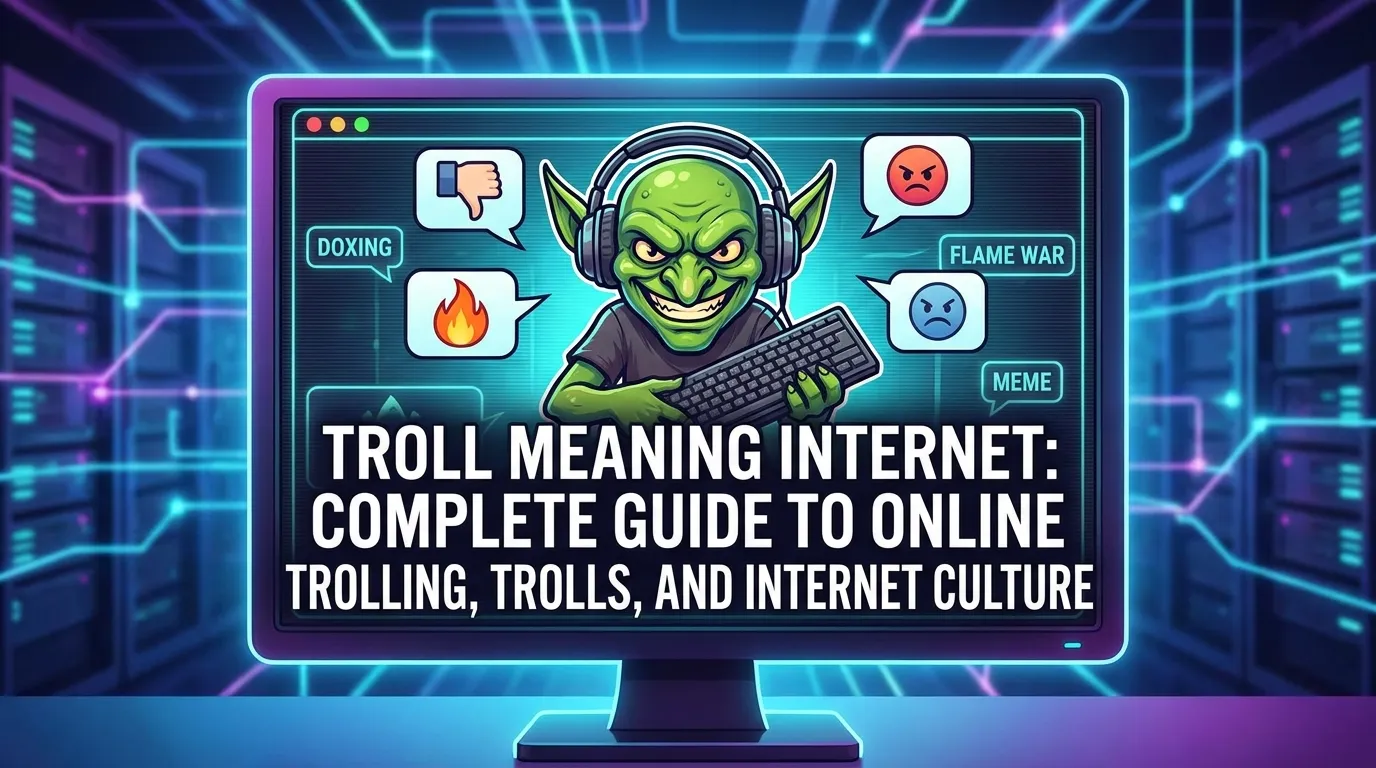
The internet has created countless slang terms, memes, and digital behaviors, but few are as widely recognized as the term troll. If you’ve ever wondered about the troll meaning internet, you’re not alone. Whether you’re active on social media, gaming platforms, forums, or comment sections, you’ve likely encountered internet trolls at some point.
Understanding what a troll is can help you navigate online spaces more effectively, avoid unnecessary conflicts, and recognize when someone is deliberately trying to provoke a reaction. In this guide, we’ll explore the troll meaning internet, its origins, examples, types of trolls, how to respond, and common misconceptions surrounding online trolling.
What Does Troll Mean on the Internet?
The troll meaning internet refers to a person who intentionally posts provocative, misleading, offensive, or disruptive content online to upset others, start arguments, or gain attention.
An internet troll’s primary goal is usually to provoke emotional reactions rather than contribute meaningfully to a conversation.
Simple Definition
Internet Troll: A person who deliberately creates conflict, confusion, or annoyance online for entertainment, attention, or disruption.
Example
Imagine someone posts:
“I just finished my first marathon and I’m so proud!”
A troll might respond:
“Nobody cares. Anyone can run that distance.”
The goal isn’t constructive criticism. The goal is to trigger an emotional reaction.
The Origin of the Term Troll
Many people assume the word comes from the mythical creature found in folklore, but the internet usage actually has another connection.
The online term “trolling” originated from a fishing technique called trolling, where a baited line is dragged through water to attract fish.
Similarly, internet trolls throw out provocative comments as “bait” hoping someone will react.
Over time, the image of the ugly mythical troll also became associated with disruptive online behavior, making the term even more popular.
How Internet Trolling Started
Internet trolling dates back to the early days of online communities.
Early Internet Platforms
Trolling became common on:
- Message boards
- Online forums
- Chat rooms
- Usenet groups
- Early gaming communities
Initially, trolling was often harmless and humorous. People would post jokes or intentionally silly statements to see who would take them seriously.
As social media expanded, trolling evolved into more aggressive behaviors, including harassment, misinformation, and personal attacks.
Common Characteristics of an Internet Troll
Not everyone who disagrees with you is a troll.
Here are some common signs of trolling:
1. Deliberate Provocation
Trolls intentionally say things that are likely to upset people.
2. Attention-Seeking Behavior
They often enjoy becoming the center of discussion.
3. Repetitive Arguments
Even when proven wrong, trolls continue arguing.
4. Off-Topic Comments
They may derail conversations by introducing unrelated controversies.
5. Emotional Manipulation
Many trolls attempt to trigger anger, frustration, or outrage.
6. Lack of Genuine Interest
Their goal isn’t meaningful discussion but reaction.
Types of Internet Trolls
Not all trolls behave the same way.
The Attention Troll
This troll wants visibility and engagement.
Examples include:
- Posting outrageous opinions
- Making controversial statements
- Seeking likes or reactions
The Insult Troll
Their main tactic is attacking people personally.
They may:
- Mock appearances
- Use offensive language
- Harass individuals repeatedly
The Political Troll
These trolls intentionally create conflict around political topics.
They often:
- Spread divisive content
- Provoke heated debates
- Share misleading information
The Gaming Troll
Common in multiplayer games.
Examples include:
- Sabotaging teammates
- Intentionally losing matches
- Harassing players through chat
The Satirical Troll
Some trolls use humor and sarcasm.
Their actions may be:
- Funny
- Clever
- Harmless
However, not everyone recognizes the joke.
The Fake Expert Troll
These individuals spread false information while pretending to be knowledgeable.
They often:
- Claim expertise
- Share misleading advice
- Create confusion
Examples of Trolling on the Internet
Understanding real-world examples makes the concept clearer.
Social Media Example
Someone posts:
“I love reading books.”
A troll replies:
“Reading is a waste of time. Only losers read books.”
The response is designed to start an argument.
Gaming Example
A player intentionally blocks teammates or ruins objectives simply to annoy others.
Forum Example
A discussion about cooking suddenly gets interrupted by someone repeatedly posting unrelated political arguments.
Comment Section Example
A troll posts exaggerated claims just to generate hundreds of angry responses.
Why Do People Troll Online?
Many people wonder why someone would spend time provoking strangers online.
Several psychological factors may contribute.
Seeking Attention
Some trolls enjoy being noticed.
Even negative attention can feel rewarding.
Entertainment
Certain trolls find amusement in watching people react emotionally.
Power and Control
Creating conflict can make trolls feel influential.
Anonymity
The internet allows people to hide behind usernames, reducing accountability.
Boredom
Some individuals troll simply because they have nothing else to do.
Social Validation
In some online communities, trolling may earn approval from peers.
The Psychology Behind Trolling
Research into online behavior suggests trolling often relates to personality traits such as:
- Aggression
- Narcissism
- Impulsivity
- Low empathy
- Desire for dominance
However, not every troll fits the same profile.
Some engage in mild trolling as humor, while others participate in serious harassment campaigns.
Troll vs Bully: What’s the Difference?
Many people confuse trolling with cyberbullying.
Here’s a comparison:
| Troll | Cyberbully |
|---|---|
| Seeks reaction | Seeks to harm |
| Targets anyone | Often targets specific individuals |
| May act randomly | Usually repeated and personal |
| Focuses on disruption | Focuses on intimidation |
| Often anonymous | Can be anonymous or known |
While trolling can become bullying, the two terms are not always interchangeable.
Troll vs Hater
Another common confusion involves trolls and haters.
Troll
- Wants reactions
- May not truly believe what they say
- Enjoys chaos
Hater
- Genuinely dislikes something
- Expresses negative opinions
- Often has a specific target
A troll may pretend to hate something simply to provoke discussion.
Famous Internet Trolling Examples
Throughout internet history, trolling has appeared in many forms.
Common examples include:
- Deliberately misleading posts
- Fake rumors
- Viral hoaxes
- Clickbait comments
- Meme-based pranks
Many viral internet trends began as trolling experiments before spreading across social media platforms.
What Does “Don’t Feed the Trolls” Mean?
One of the oldest internet rules is:
“Don’t feed the trolls.”
Meaning
The phrase means:
Do not give trolls the attention they want.
Responding often encourages further trolling.
Why It Works
Trolls thrive on reactions.
Ignoring them removes their reward.
How to Deal with Internet Trolls
If you encounter a troll, consider these strategies.
Ignore Them
The most effective response is often no response.
Use Platform Tools
Most websites allow users to:
- Block accounts
- Mute users
- Report abuse
- Filter comments
Avoid Emotional Reactions
Trolls specifically seek emotional responses.
Verify Information
Don’t automatically believe provocative claims.
Protect Personal Information
Never share sensitive details during online arguments.
Focus on Constructive Discussions
Engage with people interested in genuine conversations.
Common Misconceptions About Internet Trolls
Myth 1: Every Disagreement Is Trolling
False.
People can disagree respectfully without trolling.
Myth 2: Trolls Always Use Insults
False.
Some trolls use subtle manipulation or sarcasm.
Myth 3: Trolls Are Always Anonymous
False.
Many trolls use real identities.
Myth 4: Trolling Is Always Harmless
False.
Some forms of trolling can cause emotional distress or spread harmful misinformation.
Myth 5: Trolls Always Believe Their Statements
False.
Many trolls intentionally say things they don’t actually believe.
Internet Slang Related to Troll
If you’re learning internet culture, you may also encounter these terms:
Ragebait
Content designed specifically to make people angry.
Flame War
A prolonged online argument.
Shitposting
Posting intentionally low-quality or absurd content.
Bait
A comment intended to lure people into reacting.
Meme
Humorous content shared widely online.
Keyboard Warrior
Someone who acts aggressively online but may not behave similarly offline.
How Social Media Has Changed Trolling
Modern social media platforms have transformed trolling significantly.
Increased Reach
A single troll can now reach millions of users.
Algorithm Influence
Controversial content often receives more engagement.
Viral Outrage
Trolling can spread rapidly through shares and reposts.
Community Moderation
Platforms increasingly use moderation tools to reduce harmful behavior.
As a result, trolling remains a major aspect of online culture while platforms continue developing ways to manage it.
Is Trolling Illegal?
Most trolling itself is not illegal.
However, certain behaviors can cross legal boundaries, including:
- Threats of violence
- Harassment
- Stalking
- Hate speech (depending on jurisdiction)
- Defamation
- Doxxing
The legality depends on local laws and the specific behavior involved.
FAQ About Troll Meaning Internet
What does troll mean in internet slang?
A troll is someone who intentionally posts provocative, offensive, or misleading content online to generate reactions, arguments, or attention.
Why are people called trolls online?
The term comes from a fishing technique called trolling, where bait is used to attract fish. Online trolls similarly use provocative comments as bait to attract responses.
Is trolling the same as cyberbullying?
No. Trolling focuses on provoking reactions, while cyberbullying typically involves repeated and targeted harassment intended to harm a specific person.
How do you identify an internet troll?
Signs include deliberate provocation, repetitive arguments, off-topic comments, attention-seeking behavior, and attempts to create emotional reactions.
What should I do if someone trolls me online?
Avoid responding emotionally, use blocking or reporting tools, and remember the classic internet advice: “Don’t feed the trolls.”
Can trolling be harmless?
Sometimes. Lighthearted pranks or humorous trolling may be harmless, but aggressive trolling can cause real harm and distress.
Why do trolls enjoy provoking people?
Motivations vary and may include entertainment, attention-seeking, boredom, anonymity, social validation, or a desire for control.
Conclusion
Understanding the troll meaning internet helps you navigate today’s digital world more confidently. An internet troll is someone who intentionally provokes, disrupts, or annoys others online, usually to gain attention or generate reactions. While trolling began as playful online mischief in early internet communities, it has evolved into a wide range of behaviors that can vary from harmless jokes to serious harassment.
The key takeaway is that not every disagreement is trolling. Genuine discussion, criticism, and debate are normal parts of online communication. True trolling is characterized by deliberate provocation and a desire to create conflict rather than meaningful conversation.
When dealing with trolls, remember these practical tips:
- Don’t feed the trolls.
- Stay calm and avoid emotional reactions.
- Use block, mute, and report features.
- Verify information before responding.
- Focus on productive discussions.
By recognizing trolling behavior and responding wisely, you can enjoy a healthier, safer, and more positive online experience while avoiding unnecessary digital drama.