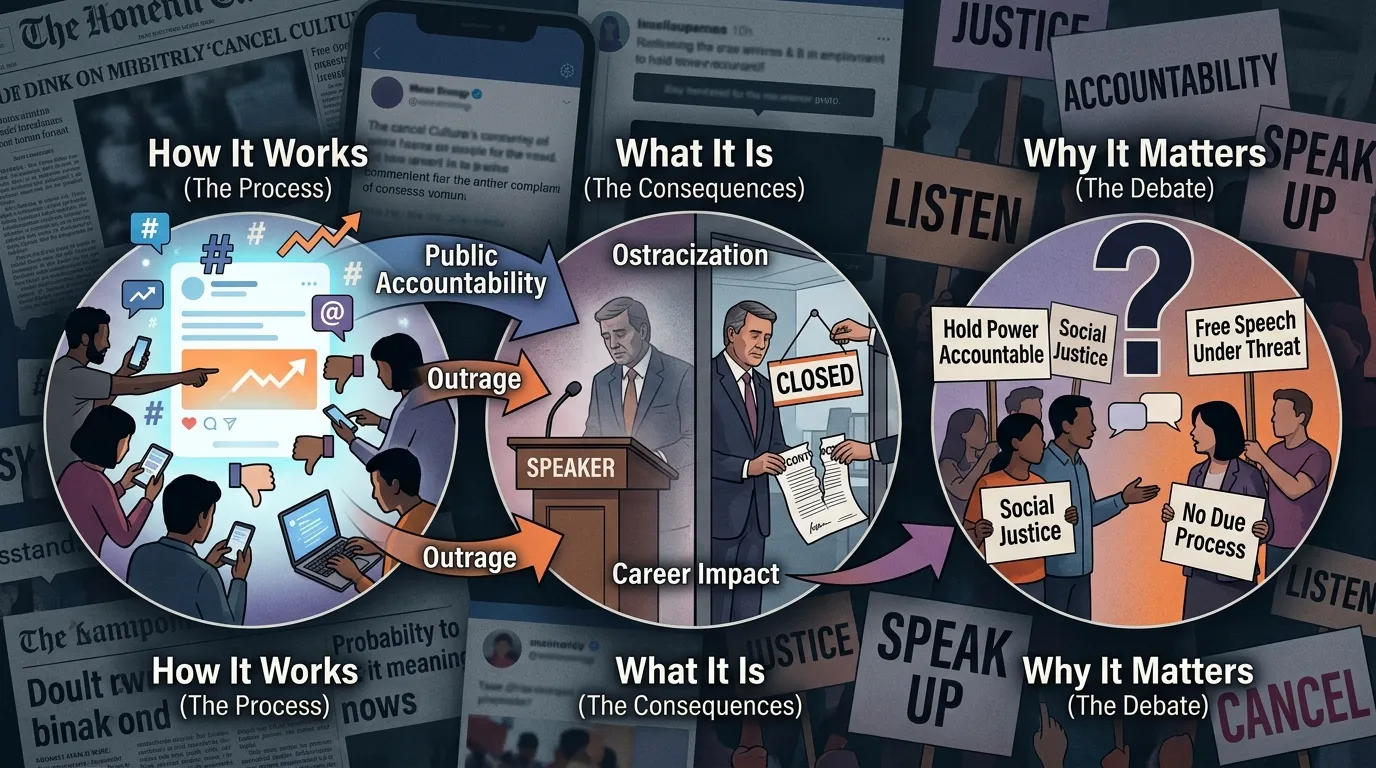
In today’s digital world, few social phenomena have sparked as much debate as cancel culture. Whether you see it as a way to hold people accountable or as a form of online punishment, the term has become a major part of conversations on social media, politics, entertainment, and everyday life.
Understanding the cancel culture meaning is important because it affects how individuals, brands, celebrities, influencers, and even ordinary social media users interact online. From viral controversies to public apologies, cancel culture has reshaped the way society responds to controversial behavior and statements.
This comprehensive guide explains the meaning of cancel culture, its origins, examples, benefits, criticisms, and how it influences modern society.
What Is the Meaning of Cancel Culture?
Cancel culture refers to the practice of publicly withdrawing support from a person, company, organization, or public figure after they have said or done something considered offensive, harmful, inappropriate, or controversial.
The term “cancel” generally means to reject, boycott, or stop supporting someone. In modern internet culture, being “canceled” often involves:
- Public criticism
- Social media backlash
- Calls for boycotts
- Loss of followers or supporters
- Damage to reputation
- Professional consequences
Simple Definition
Cancel culture is the collective act of publicly criticizing and withdrawing support from individuals or organizations because of perceived wrongdoing.
Understanding Cancel Culture in Simple Terms
Imagine a celebrity posts an offensive comment online. Thousands of people respond by criticizing the comment, unfollowing the celebrity, contacting sponsors, and demanding accountability.
This process is often described as cancel culture.
However, opinions differ widely:
- Supporters view it as accountability.
- Critics view it as public shaming.
- Others believe it can be both, depending on the situation.
The Origin and History of Cancel Culture
Although the term became popular in recent years, the concept has existed for a long time.
Early Forms of Public Accountability
Before social media, people could face public consequences through:
- Boycotts
- Protests
- Community disapproval
- Media criticism
Historical examples include:
- Consumer boycotts against companies
- Political protests
- Public campaigns against unethical behavior
Rise of the Internet
Social media platforms transformed public accountability by giving everyone a voice.
Platforms such as:
- Twitter (X)
- TikTok
- YouTube
allowed users to quickly spread information and organize responses to controversial actions.
Popularization of the Term
The phrase “cancel culture” gained mainstream attention in the late 2010s as online communities increasingly discussed public accountability, social justice movements, and digital activism.
How Does Cancel Culture Work?
Cancel culture often follows a recognizable pattern.
| Stage | Description |
|---|---|
| Incident | A controversial statement, action, or behavior occurs |
| Exposure | Information spreads online |
| Public Reaction | Users discuss and criticize the issue |
| Accountability Demands | Calls for apologies or consequences emerge |
| Consequences | Reputation, career, or business impacts occur |
| Resolution | Apology, change, forgiveness, or continued controversy |
Not every controversy leads to cancellation, but many follow this general process.
Examples of Cancel Culture
Cancel culture appears in many areas of society.
Celebrity Controversies
Celebrities may face cancellation when:
- Offensive tweets resurface
- Inappropriate comments become public
- Legal issues arise
- Harmful behavior is exposed
Example
A celebrity’s old social media posts containing offensive language are rediscovered. Fans criticize the posts and demand accountability.
Influencer Backlash
Social media influencers often rely on public trust.
Reasons influencers may be canceled include:
- Misleading advertising
- Offensive behavior
- Scandals
- Dishonesty
Because their careers depend heavily on followers, online backlash can have significant effects.
Corporate Cancellation
Businesses can also experience cancel culture.
Examples include:
- Controversial advertising campaigns
- Ethical violations
- Poor treatment of employees
- Environmental concerns
Consumers may respond through:
- Boycotts
- Negative reviews
- Social media campaigns
Everyday Social Media Users
Cancel culture isn’t limited to celebrities.
Ordinary individuals may face online criticism if content they post is viewed as offensive or harmful.
Why Does Cancel Culture Exist?
Several factors contribute to cancel culture.
Desire for Accountability
Many people believe public figures should be held responsible for their actions.
Supporters argue that cancel culture:
- Encourages accountability
- Promotes ethical behavior
- Gives marginalized groups a voice
Social Media Amplification
Social media allows information to spread quickly.
Features such as:
- Sharing
- Retweeting
- Commenting
- Hashtags
make it easier for large groups to coordinate reactions.
Changing Social Standards
Societal expectations evolve over time.
Behaviors once tolerated may now be viewed as:
- Offensive
- Discriminatory
- Harmful
Cancel culture often reflects these changing standards.
The Difference Between Cancel Culture and Accountability
One of the biggest debates involves whether cancel culture is simply accountability.
Accountability
Accountability means:
- Acknowledging mistakes
- Accepting responsibility
- Making corrections
- Learning from actions
Example
A public figure apologizes sincerely and changes their behavior.
Cancel Culture
Critics argue cancel culture sometimes goes beyond accountability and becomes:
- Excessive punishment
- Harassment
- Public humiliation
- Permanent reputation damage
Example
Someone loses career opportunities over a single mistake made years ago despite showing growth.
Arguments in Favor of Cancel Culture
Supporters believe cancel culture serves important social functions.
Encourages Responsibility
People may think more carefully before posting harmful content.
Benefits include:
- Greater awareness
- More respectful communication
- Improved public conduct
Gives Power to Ordinary People
In the past, influential figures often avoided consequences.
Social media enables communities to:
- Raise concerns
- Share experiences
- Demand accountability
Supports Social Justice
Many social justice movements use online activism to draw attention to:
- Racism
- Discrimination
- Harassment
- Abuse
Supporters argue cancel culture can help expose harmful behavior.
Criticisms of Cancel Culture
Cancel culture also has many critics.
Lack of Due Process
Critics worry that public judgment often happens before all facts are known.
Potential issues include:
- Misinformation
- Rumors
- Incomplete evidence
Fear of Speaking Freely
Some people believe cancel culture creates an environment where individuals fear expressing opinions.
Critics argue it may:
- Discourage debate
- Limit discussion
- Increase self-censorship
Disproportionate Consequences
Not all mistakes are equal.
A common criticism is that punishment sometimes exceeds the offense.
Questions often raised include:
- Should a decade-old tweet ruin a career?
- Can people grow and change?
- Is forgiveness possible?
Online Harassment
In some cases, cancellation campaigns can escalate into:
- Threats
- Doxxing
- Bullying
- Harassment
Many observers believe these actions cross ethical lines.
Common Misconceptions About Cancel Culture
Misconception 1: Every Criticism Is Cancel Culture
Not all criticism is cancellation.
People can disagree, criticize, or debate without attempting to “cancel” someone.
Misconception 2: Cancellation Is Always Permanent
Many individuals recover from cancellation.
Some rebuild their careers through:
- Apologies
- Personal growth
- Positive actions
- Time
Misconception 3: Only Celebrities Get Canceled
Businesses, politicians, influencers, and ordinary users can also experience public backlash.
Misconception 4: Cancel Culture Started With Social Media
Public accountability existed long before social media.
The internet simply accelerated the process.
Related Concepts and Alternatives
Several related terms are often confused with cancel culture.
Call-Out Culture
Call-out culture involves publicly pointing out problematic behavior.
Unlike cancellation, it may focus primarily on criticism rather than withdrawal of support.
Accountability Culture
Accountability culture emphasizes:
- Education
- Growth
- Responsibility
- Positive change
Many people prefer this approach because it balances consequences with learning.
Boycott Culture
Boycotts involve refusing to support a person, company, or organization.
Boycotts have existed for centuries and are often connected to social activism.
Consequence Culture
Some advocates prefer the phrase “consequence culture,” arguing that actions naturally lead to consequences.
Cancel Culture and Social Media
Social media plays a central role in modern cancel culture.
Why Social Media Matters
Platforms provide:
- Instant communication
- Massive audiences
- Viral sharing
- Public visibility
A single post can reach millions of people within hours.
Hashtag Campaigns
Hashtags help users organize movements and spread awareness.
Examples include campaigns focused on:
- Social justice
- Consumer activism
- Workplace accountability
The Role of Algorithms
Algorithms often promote content that generates engagement.
Controversial stories frequently attract:
- Comments
- Shares
- Reactions
This can amplify cancellation events rapidly.
Real-World Effects of Cancel Culture
The impact of cancel culture varies significantly.
Positive Effects
Potential benefits include:
- Increased accountability
- Greater awareness of social issues
- Support for marginalized communities
- Pressure for ethical behavior
Negative Effects
Potential drawbacks include:
- Public shaming
- Mental health stress
- Online harassment
- Polarization
- Reduced open dialogue
How to Respond If You Face Online Backlash
If someone faces significant online criticism, experts often recommend:
Assess the Situation
Understand:
- What happened
- Why people are upset
- Whether criticism is valid
Take Responsibility
If a mistake occurred:
- Acknowledge it
- Avoid excuses
- Apologize sincerely
Learn and Improve
Demonstrating genuine growth often matters more than issuing a statement alone.
Avoid Escalating Conflict
Responding emotionally can sometimes worsen public reactions.
The Future of Cancel Culture
The debate surrounding cancel culture continues to evolve.
Future trends may include:
- Greater focus on accountability rather than punishment
- More discussions about forgiveness and redemption
- Increased digital literacy
- Better systems for addressing online disputes
As society navigates online communication, questions about fairness, accountability, and free expression will remain central.
Frequently Asked Questions (FAQs)
What is the simple meaning of cancel culture?
Cancel culture refers to publicly criticizing and withdrawing support from someone because of behavior, statements, or actions considered offensive or harmful.
Is cancel culture the same as accountability?
Not exactly. Accountability involves taking responsibility for actions, while cancel culture often refers to public campaigns that can lead to social or professional consequences.
Where did cancel culture come from?
The concept evolved from older forms of public accountability and boycotts but became widely recognized through social media platforms during the late 2010s.
Can businesses be canceled?
Yes. Companies may face boycotts, criticism, and loss of customer support if consumers disagree with their actions or policies.
Is cancel culture always negative?
Opinions differ. Some view it as a tool for accountability and social change, while others believe it can become excessive or unfair.
Can someone recover after being canceled?
Yes. Many people rebuild trust through sincere apologies, personal growth, corrective actions, and time.
Why is cancel culture controversial?
It raises important questions about free speech, accountability, fairness, forgiveness, and the appropriate consequences for harmful behavior.
Conclusion
Understanding the cancel culture meaning is essential in today’s connected world. At its core, cancel culture involves public criticism and withdrawal of support from individuals or organizations accused of wrongdoing. Supporters see it as a powerful tool for accountability and social justice, while critics argue it can lead to excessive punishment and public shaming.
The reality is often more nuanced. Cancel culture exists at the intersection of accountability, free expression, social responsibility, and digital communication. As social media continues to shape public discourse, learning how to engage thoughtfully, verify information, and encourage constructive dialogue becomes increasingly important.
Whether you support or criticize cancel culture, understanding its history, impact, and complexities can help you navigate modern online conversations more effectively and make informed decisions about the content you consume and share.