The internet has created countless new words and phrases, and one of the most common is keyboard warrior. Whether you’re scrolling through social media, reading comment sections, or participating in online forums, you’ve probably seen someone referred to as a keyboard warrior.
But what exactly does keyboard warrior meaning refer to? Is it always an insult? Can someone be a keyboard warrior without realizing it? And why has this term become so popular in modern online culture?
In this comprehensive guide, we’ll explore the meaning of keyboard warrior, its origins, examples, characteristics, common misconceptions, and how it relates to today’s digital world.
What Does Keyboard Warrior Mean?
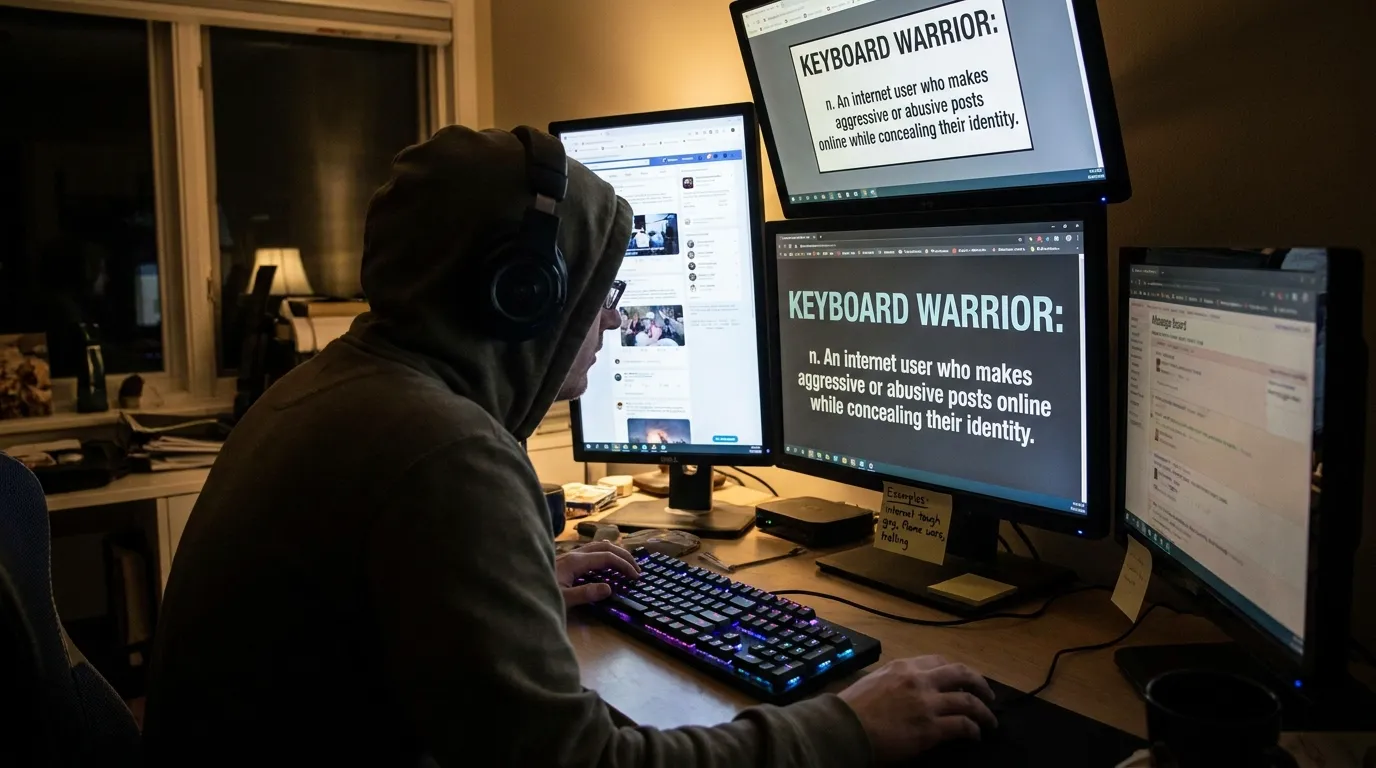
A keyboard warrior is a person who aggressively expresses strong opinions, arguments, criticisms, or threats online while remaining relatively passive or less confrontational in real-life situations.
The term is usually used in a negative or mocking way to describe someone who:
- Starts arguments online frequently
- Acts overly brave behind a screen
- Insults or attacks others on social media
- Engages in heated debates without taking real-world action
- Makes bold statements they may not make face-to-face
Simple Definition
A keyboard warrior is someone who appears tough, aggressive, or highly opinionated online but may not behave the same way in person.
Keyboard Warrior Meaning in Simple Words
In everyday language, a keyboard warrior is someone who:
- Types angry comments on the internet
- Gets involved in online fights
- Criticizes people from behind a screen
- Feels confident because of online anonymity
Example
Imagine someone posting:
“I could easily beat anyone who disagrees with me!”
But in real life, they avoid confrontation completely.
Many people would call that person a keyboard warrior.
Origin and History of the Term Keyboard Warrior
The phrase keyboard warrior emerged during the rise of internet forums, chat rooms, and online discussion boards in the 1990s and early 2000s.
The term combines:
| Word | Meaning |
|---|---|
| Keyboard | Represents online communication |
| Warrior | Represents a fighter or combatant |
Together, the phrase humorously describes someone who “fights battles” using a keyboard rather than through real-world actions.
As social media platforms like:
- Twitter (X)
- YouTube
became more popular, the use of the term increased significantly.
Today, it is widely recognized across many countries and internet communities.
Why Are People Called Keyboard Warriors?
People are often labeled keyboard warriors because online environments create conditions that encourage bold behavior.
Several factors contribute to this phenomenon.
Anonymity
When people feel anonymous online, they may:
- Speak more aggressively
- Express extreme opinions
- Take fewer social risks
Without face-to-face accountability, some individuals become more confrontational.
Physical Distance
Online interactions remove many real-world consequences.
People can:
- Comment from home
- Hide behind usernames
- Avoid immediate reactions
This distance can make some individuals feel more confident.
Social Validation
Many users seek:
- Likes
- Shares
- Retweets
- Attention
Posting controversial comments often attracts engagement, which may encourage keyboard warrior behavior.
Common Characteristics of a Keyboard Warrior
Not every active online debater is a keyboard warrior. However, many keyboard warriors display similar traits.
Frequently Starts Arguments
They often jump into discussions looking for conflict.
Examples include:
- Political debates
- Sports rivalries
- Celebrity controversies
- Gaming disputes
Uses Aggressive Language
They may:
- Insult others
- Mock opposing opinions
- Use personal attacks
rather than discussing ideas respectfully.
Rarely Changes Their Mind
Many keyboard warriors focus on “winning” arguments rather than learning from others.
Acts Tough Online
They may make:
- Threats
- Bold claims
- Extreme statements
that they would be unlikely to make in person.
Constantly Comments on Controversial Topics
Some individuals seem drawn to online drama and conflict.
Examples of Keyboard Warrior Behavior
Understanding real-world examples makes the concept easier to recognize.
Example 1: Social Media Argument
Person A posts:
“I enjoyed that movie.”
Person B responds:
“Only an idiot would enjoy that movie.”
The aggressive response could be viewed as keyboard warrior behavior.
Example 2: Gaming Communities
A player loses an online match and writes:
“You’re all terrible. I could destroy every one of you.”
This type of hostile comment is commonly associated with keyboard warriors.
Example 3: Celebrity Discussions
Someone repeatedly attacks celebrities online with insulting comments while having no direct involvement in the situation.
This can also be considered keyboard warrior activity.
Keyboard Warrior vs Internet Troll
Many people confuse these terms.
Although similar, they are not exactly the same.
| Keyboard Warrior | Internet Troll |
|---|---|
| Usually believes their opinions | Often provokes people for entertainment |
| Engages in arguments | Intentionally creates conflict |
| May be emotionally invested | Often enjoys reactions |
| Wants to appear tough | Wants attention and chaos |
A keyboard warrior may sincerely believe what they are saying.
A troll may simply enjoy upsetting others.
Keyboard Warrior vs Cyberbully
Another common misconception is that keyboard warriors and cyberbullies are identical.
There is overlap, but they are different.
Keyboard Warrior
- Often argues online
- May be rude or hostile
- Focuses on debates and opinions
Cyberbully
- Repeatedly targets individuals
- Causes emotional harm
- Engages in harassment
While some keyboard warriors become cyberbullies, not all keyboard warriors engage in bullying.
Is Being a Keyboard Warrior Always Bad?
Not necessarily.
The term is usually negative, but context matters.
Positive Uses
Sometimes people use the phrase jokingly.
For example:
“I became a keyboard warrior defending my favorite football team.”
In this context, the person is simply passionate online.
Negative Uses
The term becomes negative when someone:
- Harasses others
- Uses insults
- Spreads hate
- Refuses respectful discussion
The problem isn’t having opinions—it’s how those opinions are expressed.
The Psychology Behind Keyboard Warriors
Psychologists have studied why people behave differently online.
One important concept is the online disinhibition effect.
This refers to the tendency for people to:
- Say things online they wouldn’t say in person
- Behave more aggressively
- Share stronger opinions
Factors include:
- Anonymity
- Lack of eye contact
- Reduced social consequences
- Emotional distance
These factors can transform ordinary users into temporary keyboard warriors.
Social Media and Keyboard Warrior Culture
Modern social media platforms have amplified keyboard warrior behavior.
Fast Reactions
Users can instantly respond to posts without taking time to reflect.
Viral Controversies
Arguments spread quickly across:
- X (Twitter)
- TikTok
Echo Chambers
People often interact with others who share similar beliefs.
This can make users more confident and more aggressive toward opposing viewpoints.
Signs You Might Be Acting Like a Keyboard Warrior
Many people occasionally display keyboard warrior tendencies without realizing it.
Ask yourself:
- Do I argue with strangers regularly?
- Do I post comments when angry?
- Do I insult people instead of discussing ideas?
- Do I spend hours in online debates?
- Would I say the same thing face-to-face?
If the answer is “yes” to several of these questions, it may be worth reconsidering your online communication style.
How to Avoid Becoming a Keyboard Warrior
Healthy online communication benefits everyone.
Think Before Posting
Ask:
- Is this helpful?
- Is it respectful?
- Is it necessary?
Avoid Emotional Responses
When angry:
- Pause before commenting
- Re-read your message
- Consider the consequences
Focus on Ideas, Not People
Instead of attacking individuals:
❌ “You’re ignorant.”
Try:
✅ “I disagree because of these reasons.”
Respect Different Opinions
Healthy discussions allow room for disagreement.
Not every debate requires a winner.
Limit Online Arguments
Sometimes the most productive response is choosing not to engage.
Examples of Better Online Communication
Keyboard Warrior Response
“You’re clueless. Stop talking.”
Respectful Response
“I see your point, but I interpret the situation differently.”
Keyboard Warrior Response
“Anyone who believes that is an idiot.”
Respectful Response
“I understand why some people think that, though I have a different perspective.”
Small changes in wording can dramatically improve online conversations.
Related Internet Slang Terms
If you’re learning about keyboard warrior meaning, you may also encounter these terms.
Troll
Someone who deliberately provokes reactions online.
Hater
A person who consistently criticizes others.
Cyberbully
Someone who harasses or intimidates people online.
Flamer
A user who posts hostile or inflammatory messages.
Social Justice Warrior (SJW)
A separate term often used in online discussions regarding social or political activism.
Lurker
Someone who reads online discussions but rarely participates.
Keyboard Warrior Meaning in Popular Culture
The term has become part of everyday internet vocabulary.
You’ll often see it used:
- On social media
- In YouTube comments
- In gaming communities
- On discussion forums
- In news articles about online behavior
Memes and viral posts frequently mock keyboard warriors by contrasting online bravado with real-life behavior.
Why the Term Remains Relevant Today
The internet continues to play a major role in daily communication.
As online interactions increase, discussions about:
- Digital etiquette
- Online behavior
- Cyberbullying
- Social media culture
remain important.
The phrase keyboard warrior serves as a reminder that online communication should be approached responsibly.
Frequently Asked Questions (FAQs)
What is the exact keyboard warrior meaning?
A keyboard warrior is a person who behaves aggressively, confrontationally, or excessively brave online, often in ways they might not behave in real-life situations.
Is keyboard warrior an insult?
Usually, yes. It is often used to criticize someone for acting tough or argumentative behind a screen. However, it can sometimes be used humorously.
Are keyboard warriors the same as trolls?
No. Keyboard warriors usually believe their opinions, while trolls often provoke people purely for amusement or attention.
Can anyone become a keyboard warrior?
Yes. Many people occasionally display keyboard warrior behavior when emotional, frustrated, or highly invested in a topic.
Why do people act differently online?
Factors such as anonymity, distance, and reduced social consequences can make people feel more comfortable expressing strong opinions online.
Is being active in debates the same as being a keyboard warrior?
No. Respectful debate and discussion are normal. A keyboard warrior typically engages in aggressive, hostile, or overly confrontational behavior.
How can I avoid keyboard warrior behavior?
Think before posting, stay respectful, avoid personal attacks, and focus on constructive discussion rather than winning arguments.
Conclusion
Understanding keyboard warrior meaning helps us navigate today’s digital world more effectively. A keyboard warrior is generally someone who acts overly aggressive, confrontational, or fearless online, often from the safety of a screen. While the term is usually negative, it highlights an important aspect of internet culture: people often communicate differently online than they do face-to-face.
The best approach to online interaction is to remain respectful, thoughtful, and open-minded. Before posting, consider whether your comment adds value to the conversation. Focus on discussing ideas rather than attacking individuals, and remember that real people are behind every username.
By practicing better digital communication habits, you can avoid keyboard warrior behavior and contribute to healthier, more productive online communities.