If you’ve been following workplace trends, higher education, corporate policies, or social media discussions, you’ve probably come across the term DEI. But what does DEI meaning actually refer to, and why has it become one of the most talked-about topics in recent years?
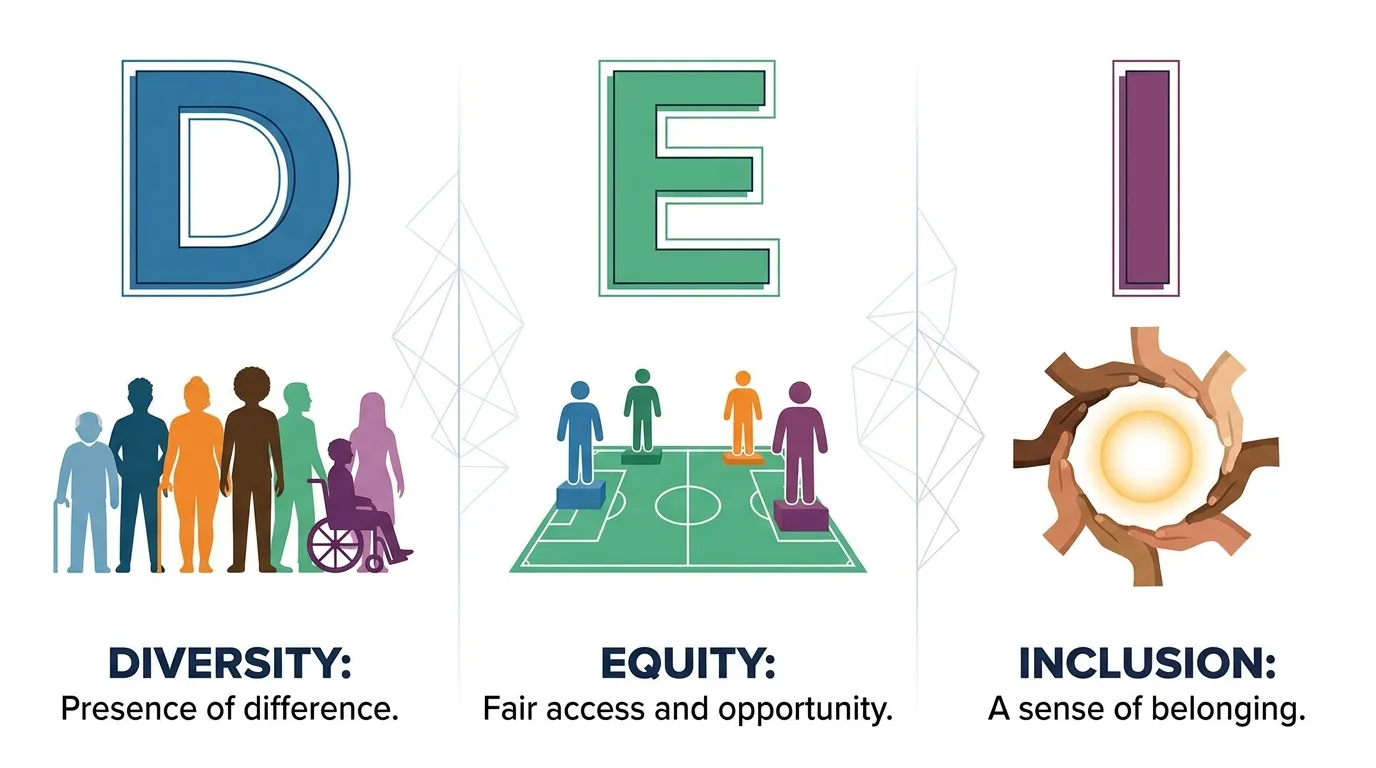
DEI stands for Diversity, Equity, and Inclusion. These three concepts are designed to help organizations, schools, governments, and communities create environments where people from different backgrounds have fair opportunities to succeed and feel valued. While the acronym is widely recognized, its interpretation, implementation, and public perception vary significantly depending on the context.
Today, searches for DEI meaning, what does DEI stand for, DEI definition, DEI in the workplace, DEI programs, diversity equity and inclusion meaning, DEI initiatives, and DEI examples continue to grow as people seek a better understanding of this important concept.
In this comprehensive guide, you’ll learn exactly what DEI means, where it came from, why organizations use it, how it applies in everyday life, common misconceptions, practical examples, and how the term is used in modern conversations. Whether you’re a student, employee, business owner, or simply curious about the topic, this guide will help you understand DEI meaning from every angle.
What Does DEI Mean?
DEI stands for:
- D = Diversity
- E = Equity
- I = Inclusion
Together, these principles focus on creating environments where people from all backgrounds can participate, contribute, and succeed.
Quick Definition
DEI refers to policies, practices, and values that promote diversity, ensure equitable opportunities, and foster inclusive environments where everyone feels respected and supported.
Although the three words are often grouped together, each has its own unique meaning.
DEI Meaning at a Glance
| Feature | Description |
|---|---|
| Full Form | Diversity, Equity, and Inclusion |
| Category | Workplace, Education, Social Policy |
| Purpose | Promote fairness and belonging |
| Common Usage | Companies, schools, nonprofits, governments |
| Popularity | Very high worldwide |
| Tone | Professional, educational, social |
| Related Terms | Belonging, Accessibility, Equality, Inclusion, Diversity |
| First Widely Popular | Early 2000s, especially after 2020 |
What Does Diversity Mean?
The first part of DEI is diversity.
Diversity refers to the presence of differences among people within a group or organization.
These differences may include:
- Race
- Ethnicity
- Gender
- Age
- Religion
- Nationality
- Disability
- Sexual orientation
- Socioeconomic background
- Education
- Military experience
- Language
- Cultural background
A diverse workplace includes people with different experiences and perspectives.
Example
A company hires employees from multiple countries, different age groups, and varied educational backgrounds.
That organization has workplace diversity.
What Does Equity Mean?
Equity is often confused with equality, but they are not the same.
Equity means giving people the specific support they need to have a fair chance of success.
Instead of treating everyone exactly the same, equity recognizes that people start from different circumstances.
Equity Example
Imagine three students taking the same exam.
- One has a learning disability.
- One speaks English as a second language.
- One has no barriers.
Providing extra time or language support is an example of equity because it helps create fair opportunities.
What Does Inclusion Mean?
Inclusion means making sure everyone feels welcomed, respected, heard, and valued.
An organization can be diverse without being inclusive.
For example:
A company may hire people from different backgrounds but ignore their ideas or exclude them from leadership opportunities.
An inclusive environment encourages participation from everyone.
Signs of inclusion include:
- Respectful communication
- Equal participation
- Fair leadership opportunities
- Accessible workplaces
- Open collaboration
- Psychological safety
Why Is DEI Important?
Organizations often invest in DEI because they believe it can help create healthier, more productive environments.
Potential benefits include:
- Better teamwork
- More creative ideas
- Improved employee satisfaction
- Stronger customer relationships
- Broader talent recruitment
- Better understanding of diverse markets
- Increased innovation
- Greater employee retention
Many educational institutions also use DEI principles to improve student experiences.
The History of DEI
Although the acronym DEI became especially popular in recent years, the ideas behind it have existed for decades.
Early Civil Rights Movement
Many DEI principles developed from efforts to reduce discrimination and expand equal opportunities.
Key historical influences include:
- Civil Rights Movement
- Women’s rights movement
- Disability rights movement
- Equal employment legislation
- Anti-discrimination laws
Growth in Corporate America
During the 1990s and early 2000s, many organizations shifted from focusing only on diversity hiring toward creating inclusive workplace cultures.
This led to:
- Diversity training
- Employee resource groups
- Inclusive leadership programs
- Bias awareness education
Increased Popularity After 2020
Following major social events in 2020, many organizations expanded DEI initiatives.
This caused the acronym to become one of the most searched workplace terms online.
DEI in the Workplace
The workplace is where DEI is discussed most frequently.
Examples include:
Hiring
Organizations may try to attract applicants from a wide range of backgrounds.
Training
Companies may provide education on respectful communication and inclusive leadership.
Accessibility
Employers may improve buildings, software, and communication for people with disabilities.
Career Development
Companies may review promotion practices to ensure employees have fair opportunities.
DEI in Education
Schools and universities may apply DEI principles by:
- Supporting students from different backgrounds
- Improving accessibility
- Reducing barriers to learning
- Encouraging respectful classrooms
- Celebrating cultural diversity
- Providing inclusive learning materials
DEI in Healthcare
Healthcare organizations may use DEI practices to improve patient care.
Examples include:
- Language interpretation services
- Cultural awareness training
- Accessible facilities
- Inclusive medical research
- Better communication with patients
DEI in Government
Government agencies sometimes incorporate DEI into:
- Hiring practices
- Public services
- Community outreach
- Accessibility initiatives
- Public education
Policies and approaches vary widely depending on the country, region, and political priorities.
DEI in Everyday Conversations
Although DEI is a professional term, people increasingly use it in daily conversations.
Examples include:
“Our company is expanding its DEI initiatives.”
“The university hired a new DEI director.”
“They’re discussing DEI policies this week.”
DEI on Social Media
You may see DEI discussed on:
- X (formerly Twitter)
- TikTok
Posts often focus on:
- Workplace experiences
- Leadership
- Company culture
- Accessibility
- Inclusive hiring
- Current events
- Public policy debates
Is DEI Used in Text Messages?
Unlike slang abbreviations such as LOL or BRB, DEI is usually written in professional conversations.
Example:
Manager:
“We’re updating our DEI training next month.”
Employee:
“I’d like to attend.”
Common Examples of DEI
Here are practical examples.
Example 1
A company ensures interview panels include people with different backgrounds.
Example 2
A website becomes fully accessible for screen readers.
Example 3
A school provides learning accommodations for students with disabilities.
Example 4
An organization celebrates cultural holidays from multiple communities.
Example 5
A meeting encourages participation from quieter team members.
DEI vs Equality
Many people confuse these terms.
| Equality | Equity |
|---|---|
| Everyone receives the same resources. | People receive the support they need. |
| Focuses on identical treatment. | Focuses on fairness. |
| One solution fits everyone. | Solutions depend on individual needs. |
Both concepts can exist together.
DEI vs Diversity
| Diversity | Inclusion |
|---|---|
| Who is present | Who feels welcomed |
| Representation | Participation |
| Hiring | Belonging |
| Numbers | Experience |
Common Misconceptions About DEI
DEI Only Means Hiring
Not true.
Hiring is only one part of DEI.
It also includes:
- Leadership
- Accessibility
- Communication
- Workplace culture
- Career development
DEI Only Applies to Large Companies
Small businesses, nonprofits, schools, and community organizations may also use DEI principles.
Diversity Alone Equals Inclusion
A diverse organization is not automatically inclusive.
Employees also need opportunities to contribute and grow.
DEI Has One Universal Definition
While the core concepts remain consistent, organizations may define and implement DEI differently based on their goals, legal requirements, and organizational culture.
Benefits of Strong DEI Practices
Organizations often report benefits such as:
- Greater collaboration
- Better innovation
- Stronger employee engagement
- Wider talent pools
- Improved customer relationships
- Better problem solving
- Enhanced reputation
- Increased employee satisfaction
Actual outcomes vary depending on how thoughtfully DEI initiatives are designed and implemented.
Challenges Organizations May Face
Implementing DEI can present challenges, including:
- Resistance to organizational change
- Limited resources
- Difficulty measuring outcomes
- Communication barriers
- Balancing different perspectives
- Ensuring long-term commitment rather than one-time initiatives
Successful efforts often require clear goals, leadership support, and ongoing evaluation.
Related Terms
People searching for DEI often also encounter these terms:
- Belonging
- Accessibility
- Inclusive leadership
- Employee resource groups (ERGs)
- Equal opportunity
- Anti-discrimination
- Psychological safety
- Cultural competence
- Representation
- Workplace culture
How to Use DEI Correctly
Correct examples:
✔ “The company introduced new DEI initiatives.”
✔ “She works in DEI consulting.”
✔ “Our organization values DEI.”
Incorrect examples:
✘ “He’s very DEI.”
✘ “That building is DEI.”
Remember that DEI generally refers to policies, practices, initiatives, or organizational values rather than describing a person or object.
Why Is DEI Frequently in the News?
DEI has become a prominent topic because organizations, educational institutions, and governments continue to debate how diversity, equity, and inclusion initiatives should be designed, funded, and evaluated. Supporters often argue that these efforts help create fairer and more inclusive environments, while critics may raise concerns about implementation, effectiveness, costs, or legal considerations. As a result, DEI remains a significant subject in business, education, and public policy discussions.
Frequently Asked Questions
What does DEI stand for?
DEI stands for Diversity, Equity, and Inclusion.
What is the main purpose of DEI?
The goal is to create environments where people from different backgrounds have fair opportunities, feel respected, and can fully participate.
Is DEI only about race?
No. DEI can also include age, disability, gender, religion, culture, socioeconomic background, veteran status, and many other dimensions of diversity.
What’s the difference between equality and equity?
Equality means providing the same resources to everyone, while equity focuses on providing support based on individual circumstances to promote fairness.
Is DEI required by law?
Legal requirements vary by country and jurisdiction. Some anti-discrimination and accessibility laws are mandatory, while many specific DEI programs are voluntary organizational initiatives.
What are DEI initiatives?
Examples include inclusive hiring practices, accessibility improvements, employee resource groups, leadership development, mentoring, and diversity training.
Can small businesses benefit from DEI?
Yes. Many small organizations adopt inclusive practices to improve workplace culture, attract talent, and better serve diverse customers.
Why do some people debate DEI?
People may have differing views on how DEI should be implemented, measured, or prioritized. These discussions often involve questions about organizational goals, legal frameworks, and public policy.
Is DEI only used in workplaces?
No. DEI concepts are also applied in education, healthcare, nonprofit organizations, government agencies, and community groups.
Final Thoughts
Understanding DEI meaning goes beyond simply knowing that it stands for Diversity, Equity, and Inclusion. It represents a framework used by many organizations to encourage representation, promote fairness, and foster environments where people from different backgrounds can contribute and feel valued.
While approaches to DEI differ across industries and opinions about its implementation vary, the underlying concepts of diversity, equitable opportunity, and inclusion continue to shape conversations in workplaces, schools, healthcare systems, and communities around the world. By understanding what each part of DEI means—and how they work together—you’ll be better equipped to engage thoughtfully in discussions, interpret workplace policies, and recognize the role DEI plays in modern organizational culture.