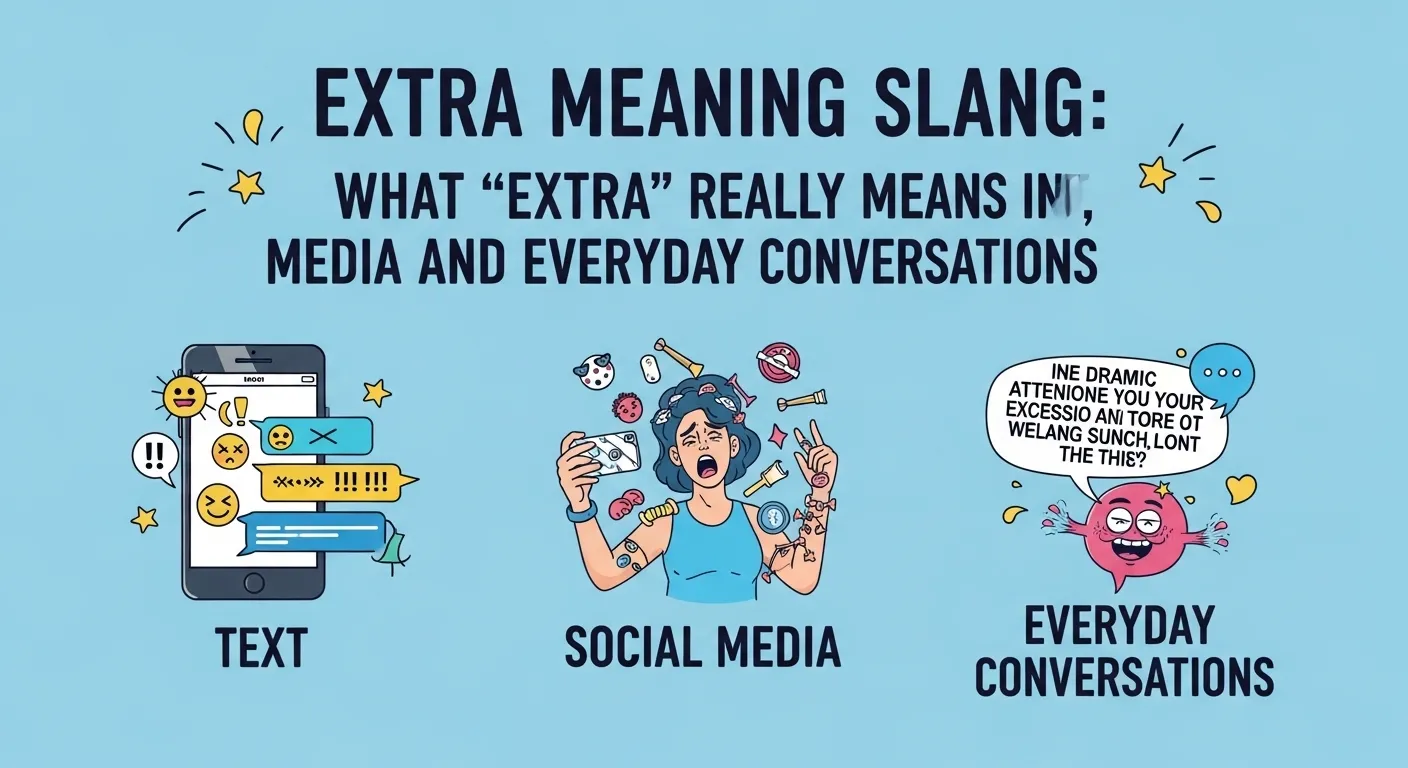
In today’s world of social media slang, viral memes, and online trends, words often take on completely new meanings. One popular slang term you’ve probably heard on TikTok, Instagram, Snapchat, or in everyday conversations is “extra.” But what does extra meaning slang actually refer to?
If someone says, “You’re being extra,” they usually don’t mean “additional” in the traditional dictionary sense. Instead, they’re talking about behavior that feels over-the-top, dramatic, attention-grabbing, or excessive. Depending on the context, calling someone “extra” can be funny, playful, complimentary, or even slightly insulting.
In this guide, you’ll learn:
- The full extra slang meaning
- Where the term came from
- How people use it online and in real life
- Examples in texting and social media
- Whether it’s positive or negative
- Similar slang words and expressions
- Common misunderstandings
- FAQs about “extra”
Let’s dive into the trendy world of modern slang and uncover why everyone keeps saying someone is “so extra.”
What Does “Extra” Mean in Slang?
In slang, “extra” means:
Acting in an exaggerated, dramatic, excessive, or over-the-top way.
It describes someone who does more than necessary emotionally, physically, socially, or stylistically.
Simple Definition
If a person is called “extra,” they are usually:
- Dramatic
- Loud
- Attention-seeking
- Overreacting
- Going too far
- Doing the most
However, the word isn’t always negative. Sometimes it’s used affectionately to describe someone who is entertaining, stylish, confident, or hilariously dramatic.
Example of “Extra” in a Sentence
Here are some common examples:
- “She wore a glitter dress and a crown to brunch. She’s so extra.”
- “Why are you crying over a meme? That’s extra.”
- “He brought fireworks to a birthday dinner. Extra behavior.”
- “I love how extra she is on TikTok.”
In all these examples, the person is doing more than what’s expected.
The Traditional Meaning vs. Slang Meaning
Many people get confused because “extra” already exists as a normal English word.
Here’s the difference:
| Traditional Meaning | Slang Meaning |
|---|---|
| Additional or more | Overdramatic or excessive |
| “Do you want extra cheese?” | “You’re being extra.” |
| Neutral | Often humorous or emotional |
So context matters a lot.
Where Did the Slang Term “Extra” Come From?
The slang version of extra became popular through:
- African American Vernacular English (AAVE)
- Reality TV culture
- Internet memes
- Twitter and TikTok
- Celebrity culture
The term gained mainstream attention during the 2010s as social media exploded. Influencers, comedians, and meme pages helped spread it globally.
Reality TV personalities often displayed dramatic reactions, and viewers started describing them as “extra.”
Eventually, the term became part of everyday internet language.
Why Is “Extra” So Popular Online?
The internet loves expressive behavior. Social platforms reward attention-grabbing content, which makes “extra” the perfect slang word.
People use it because it’s:
- Funny
- Relatable
- Easy to understand
- Short and catchy
- Meme-friendly
TikTok trends, reaction videos, dramatic storytelling, and viral posts all helped make the term even more common.
Different Ways “Extra” Is Used
The meaning changes slightly depending on the situation.
1. Extra as Dramatic Behavior
This is the most common use.
Example
- “He wrote a five-page apology text. That’s extra.”
Meaning: He overdid it emotionally.
2. Extra as Fashion or Style
Sometimes “extra” refers to flashy or bold fashion choices.
Example
- “Her makeup is extra today.”
Meaning: Very glamorous or exaggerated.
This can actually be a compliment.
3. Extra as Funny or Entertaining
People often use “extra” positively for someone who is hilarious or energetic.
Example
- “Your friend is extra but so funny.”
Meaning: Their dramatic personality is entertaining.
4. Extra in Relationships
The term is common in dating and friendship conversations.
Example
- “My boyfriend got jealous because I liked a photo. He’s extra.”
Meaning: Overreacting emotionally.
5. Extra on Social Media
Online creators are often intentionally “extra” to gain attention.
Example
- “Her TikTok reactions are extra.”
Meaning: Exaggerated for entertainment value.
Is Calling Someone “Extra” an Insult?
Not always.
The tone matters a lot.
Positive Uses
Sometimes “extra” means:
- Fun
- Bold
- Confident
- Stylish
- Entertaining
Example
- “I love her extra energy.”
Negative Uses
Other times it can mean:
- Annoying
- Attention-seeking
- Immature
- Overly emotional
Example
- “Stop being extra.”
This usually suggests someone is making a situation bigger than it needs to be.
Signs Someone Is Being “Extra”
Here are common behaviors people associate with being extra:
- Overreacting to small problems
- Making dramatic social media posts
- Wearing extremely flashy outfits
- Posting emotional captions constantly
- Turning simple events into huge productions
- Speaking loudly for attention
- Acting theatrically
Of course, being “extra” can also simply mean someone has a big personality.
“Extra” in Texting and Online Chats
The term appears constantly in text conversations.
Common Text Examples
| Text | Meaning |
|---|---|
| “You’re so extra 😂” | You’re overdoing it |
| “That reaction was extra” | Dramatic response |
| “Extra AF” | Extremely excessive |
| “Why you gotta be extra?” | Why are you acting dramatically? |
What Does “Extra AF” Mean?
You may see people say:
- Extra AF
- Extra as hell
- Mad extra
These phrases intensify the meaning.
Example
- “She brought a smoke machine to karaoke night. Extra AF.”
Meaning: Extremely over-the-top.
Popular Social Media Uses of “Extra”
The slang became huge on:
TikTok
Creators exaggerate reactions for humor and views.
Example
- Dramatic “get ready with me” videos
- Overly emotional storytelling
- Loud reaction clips
People use “extra” to describe:
- Luxury lifestyles
- Elaborate photoshoots
- Glamorous outfits
Twitter/X
The word often appears in memes and jokes.
Example
- “People who send 20 texts in a row are extra.”
Examples of “Extra” in Everyday Life
Here are relatable real-world situations.
At School
- Bringing a full ring light for a class presentation
- Crying because a teacher moved your seat
At Work
- Decorating your desk like a movie set
- Sending long dramatic emails
In Friend Groups
- Planning a birthday party with fireworks and dancers
- Making emotional speeches at casual dinners
In Relationships
- Posting cryptic breakup quotes online
- Getting upset over tiny issues
Generational Use of “Extra”
Younger generations use the term most often.
Gen Z
Uses “extra” constantly online and in memes.
Millennials
Popularized the term during the Twitter and Vine era.
Older Generations
May misunderstand the slang or only know the traditional meaning.
Related Slang Words Similar to “Extra”
Several slang terms have similar meanings.
| Slang Word | Meaning |
|---|---|
| Dramatic | Overly emotional |
| Over-the-top | Excessive behavior |
| Doing the most | Trying too hard |
| Bougie | Fancy or luxurious |
| Cringe | Embarrassingly excessive |
| Attention-seeking | Wanting notice |
| High maintenance | Demanding behavior |
Difference Between “Extra” and “Dramatic”
People often use these interchangeably, but there’s a slight difference.
| Extra | Dramatic |
|---|---|
| Can be funny or stylish | Usually emotional |
| Often playful | More serious |
| Includes appearance and actions | Mainly emotional reactions |
Someone can be extra without being emotionally dramatic.
Is Being “Extra” Always Bad?
Absolutely not.
In fact, many people proudly embrace being extra.
Positive Side of Being Extra
Being extra can mean someone is:
- Creative
- Confident
- Expressive
- Entertaining
- Passionate
- Stylish
Social media culture often celebrates bold personalities.
Why People Love Extra Personalities
Extra people are often:
- More memorable
- Fun at parties
- Great entertainers
- Confident trendsetters
Many influencers build entire brands around exaggerated humor and dramatic storytelling.
When Being Extra Becomes a Problem
Like anything, too much can become unhealthy.
Being constantly extra may:
- Exhaust relationships
- Create unnecessary drama
- Feel emotionally manipulative
- Make situations stressful
Balance matters.
Psychological Perspective on “Extra” Behavior
Sometimes “extra” behavior comes from:
- Wanting attention
- Expressing creativity
- Seeking validation
- Strong emotions
- Humor and entertainment
Not everyone who acts extra is trying to annoy others. Some people naturally have expressive personalities.
Cultural Influence of “Extra”
Different cultures view expressive behavior differently.
In some places, dramatic behavior is seen as:
- Funny
- Passionate
- Socially engaging
In others, it may seem:
- Rude
- Excessive
- Immature
Social media has helped blend these perspectives globally.
Famous Celebrity Examples of “Extra”
Many celebrities are known for being extra in entertaining ways.
Examples include:
- Elaborate red carpet outfits
- Dramatic interviews
- Viral reaction moments
- Luxurious lifestyles
- Over-the-top performances
Fans often celebrate celebrities specifically because they’re extra.
Memes and Viral Trends About Being Extra
The internet loves jokes about extra behavior.
Common meme themes include:
- Overreacting to small inconveniences
- Dramatic relationship posts
- Luxury lifestyle exaggerations
- Pet owners treating animals like royalty
These memes keep the slang relevant and trending.
How to Respond When Someone Calls You Extra
Your response depends on the context.
Playful Responses
- “And proud of it.”
- “I know 😂”
- “Life’s too short to be boring.”
Defensive Responses
If it feels insulting:
- “I’m just expressive.”
- “I care a lot.”
Tone matters heavily in conversations.
Common Misunderstandings About “Extra”
Myth 1: Extra Always Means Bad
False. It can be affectionate or complimentary.
Myth 2: Only Women Get Called Extra
False. Anyone can be extra regardless of gender.
Myth 3: Being Extra Means Being Fake
Not necessarily. Some people genuinely have energetic personalities.
Myth 4: Extra Only Refers to Emotions
Wrong. It can describe fashion, style, actions, spending habits, and more.
How Brands and Influencers Use “Extra”
Marketing campaigns now embrace the term.
Examples include:
- “Extra flavor”
- “Extra glam”
- “Extra spicy”
- “Be extra”
Brands use the word to suggest excitement, boldness, and uniqueness.
Should You Use the Word “Extra”?
Yes — if you understand the context.
It works well in:
- Casual conversations
- Social media captions
- Text messages
- Friendly jokes
But avoid using it in:
- Formal writing
- Professional emails
- Serious conversations
Examples of “Extra” Captions for Social Media
Need ideas? Here are some trendy captions.
- “Too glam to not be extra.”
- “A little extra never hurt anybody.”
- “Main character energy.”
- “Extra and thriving.”
- “Doing the most since forever.”
FAQs About Extra Meaning Slang
1. What does “extra” mean in slang?
“Extra” means acting overly dramatic, excessive, exaggerated, or over-the-top in behavior, emotions, style, or reactions.
2. Is “extra” a compliment or insult?
It can be either. Sometimes it’s playful and positive, while other times it criticizes dramatic behavior.
3. What does “extra AF” mean?
“Extra AF” means extremely over-the-top or dramatically excessive.
4. Where did the slang term “extra” come from?
The slang developed through AAVE, pop culture, reality TV, memes, and social media platforms like Twitter and TikTok.
5. Is being extra bad?
Not always. Being extra can show confidence, creativity, humor, and personality. It only becomes negative when it creates unnecessary drama or stress.
6. What’s the difference between extra and dramatic?
“Extra” is broader and can include fashion, behavior, and personality, while “dramatic” mainly refers to emotional reactions.
7. Why do Gen Z people use “extra” so much?
Gen Z uses the term because it fits internet culture, meme humor, and expressive social media behavior.
Final Thoughts on Extra Meaning Slang
The slang term “extra” has become one of the most recognizable expressions in modern internet culture. Whether it’s used to describe dramatic reactions, flashy outfits, emotional texting, or hilarious social media content, the word captures the idea of doing more than necessary in a bold and noticeable way.
Sometimes being extra is annoying. Sometimes it’s entertaining. And sometimes it’s exactly what makes someone unforgettable.
The key is understanding the context and tone behind the word. In many cases, calling someone “extra” is less about criticism and more about recognizing their big personality, expressive energy, or dramatic flair.