Juneteenth is one of the most important commemorative holidays in American history. It celebrates freedom, emancipation, and the end of slavery in the United States while honoring the resilience, achievements, and contributions of African Americans. Over the past several years, interest in Juneteenth meaning, Juneteenth history, what Juneteenth celebrates, Juneteenth National Independence Day, and why Juneteenth is important has grown dramatically as more people seek to understand its historical and cultural significance.
Although the Emancipation Proclamation was issued in 1863, not every enslaved person immediately gained freedom. It wasn’t until June 19, 1865—more than two years later—that thousands of enslaved African Americans in Texas finally learned they were free. That historic day became known as Juneteenth, combining the words June and nineteenth.
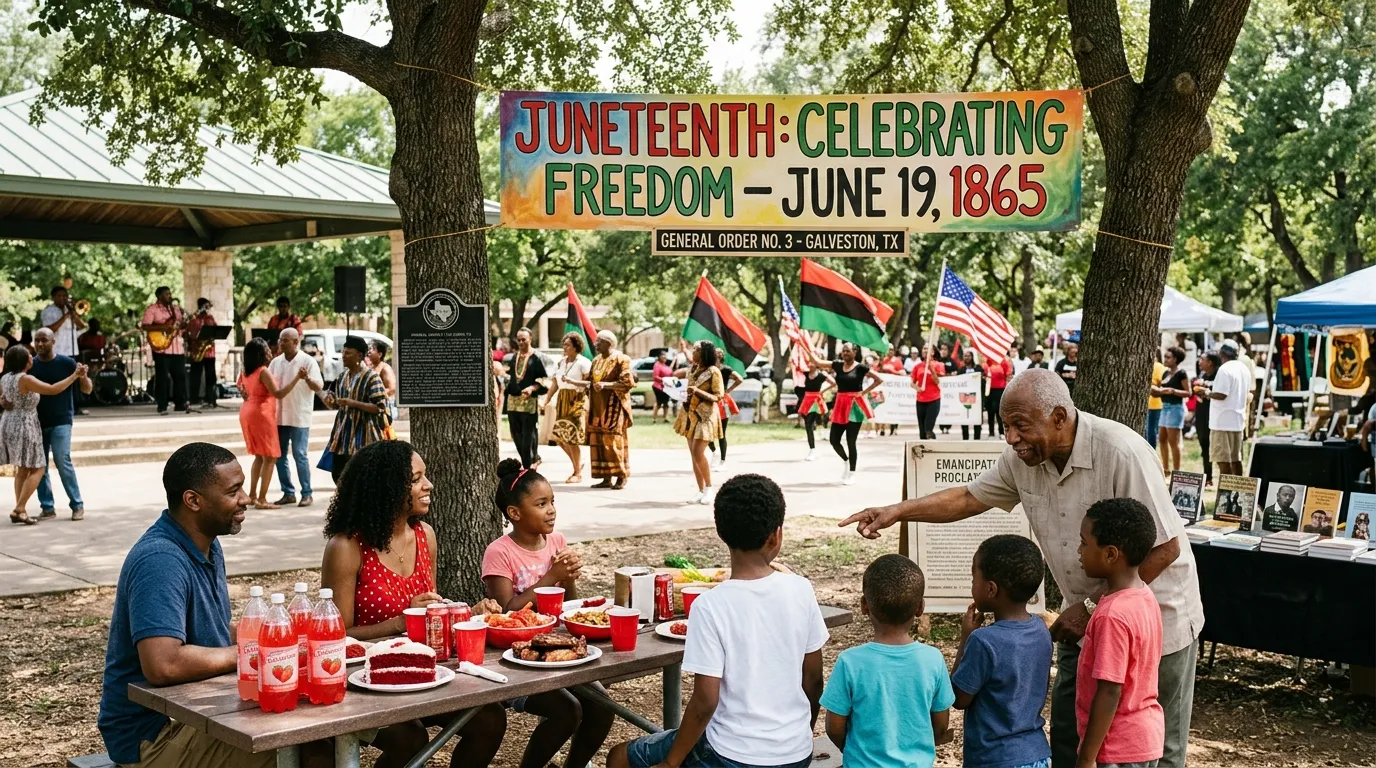
Today, Juneteenth is much more than a historical anniversary. It is a day of remembrance, education, celebration, reflection, and continued commitment to equality and justice. Communities across the United States mark the occasion through festivals, educational events, family gatherings, cultural performances, volunteer activities, and discussions about American history.
This comprehensive guide explains the meaning of Juneteenth, its origins, history, symbolism, traditions, misconceptions, and modern relevance so you can fully understand why this holiday continues to shape conversations about freedom and civil rights.
What Does Juneteenth Mean?
Quick Answer
Juneteenth is the annual holiday observed on June 19 that commemorates the day in 1865 when enslaved African Americans in Galveston, Texas, were informed that they were free following the Civil War.
The name Juneteenth combines:
- June
- Nineteenth
Together, they form the word Juneteenth, referring specifically to June 19th.
Today, Juneteenth represents:
- Freedom
- Emancipation
- Justice
- Equality
- Hope
- African American history
- Cultural heritage
- Progress toward civil rights
Juneteenth at a Glance
| Fact | Details |
|---|---|
| Meaning | Celebration of freedom and the end of slavery in the U.S. |
| Date | June 19 every year |
| Origin | Galveston, Texas |
| First Celebration | 1866 |
| Federal Holiday | Since 2021 |
| Official Name | Juneteenth National Independence Day |
| Historical Event | General Order No. 3 announced freedom for enslaved people in Texas |
| Main Themes | Freedom, remembrance, education, equality |
| Common Activities | Parades, festivals, family gatherings, music, educational events |
| Related Terms | Emancipation, Civil War, Freedom Day, Black History |
The Origin of Juneteenth
Understanding Juneteenth begins with the history of slavery in the United States.
For centuries, millions of African people were enslaved and forced into labor throughout the Americas.
During the American Civil War (1861–1865), the fight over slavery became one of the central issues dividing the nation.
On January 1, 1863, President Abraham Lincoln issued the Emancipation Proclamation, declaring that enslaved people in Confederate states “shall be then, thenceforward, and forever free.”
However, enforcement depended largely on the advance of Union troops. In many Confederate areas, slavery continued until Union authority was established.
Why Didn’t Freedom Reach Everyone Immediately?
One of the biggest misconceptions is that slavery ended instantly when Lincoln signed the Emancipation Proclamation.
The reality was much more complicated.
Reasons include:
- Limited Union military control in Confederate territory
- Ongoing Civil War battles
- Resistance from slaveholders
- Communication delays
- Geographic isolation in parts of the South
Texas, in particular, had relatively few Union troops during much of the war. Many slaveholders relocated there, believing it was safer from Union forces.
As a result, thousands of enslaved people remained in bondage even after the Emancipation Proclamation.
What Happened on June 19, 1865?
On June 19, 1865, Union Major General Gordon Granger arrived in Galveston, Texas, with federal troops.
He announced General Order No. 3, informing the people that:
- The Civil War had ended.
- Enslaved people were free.
- The relationship between former enslavers and formerly enslaved people had legally changed.
For many enslaved African Americans in Texas, this was the first official notification that they were free.
That historic announcement became the foundation of Juneteenth celebrations.
The Meaning Behind Juneteenth
Juneteenth symbolizes much more than one historical event.
It represents:
Freedom
The end of legalized slavery for many African Americans.
Justice
Recognition that freedom delayed was still freedom worth celebrating.
Hope
A reminder that positive change is possible even after long struggles.
Education
Learning the complete history of America, including difficult chapters.
Community
Families and communities gathering to honor their ancestors.
Resilience
Celebrating generations who overcame extraordinary hardship.
How Juneteenth Was First Celebrated
The first Juneteenth celebrations took place in 1866.
Communities organized:
- Church services
- Prayer meetings
- Family reunions
- Community picnics
- Music
- Dancing
- Educational programs
- Public readings
These celebrations became annual traditions throughout Texas before gradually spreading across the country.
How Juneteenth Grew Across America
Initially, Juneteenth remained largely a Texas tradition.
Over time:
- African American families carried the tradition to other states.
- Civil rights organizations promoted wider recognition.
- Schools began teaching more about Juneteenth.
- Businesses started observing the holiday.
- State governments officially recognized it.
- National awareness increased through media and education.
In 2021, Juneteenth became a federal holiday in the United States.
Why Juneteenth Is Important Today
Juneteenth remains relevant because it encourages reflection on both the nation’s progress and the work that remains.
It serves several important purposes:
Remembering History
The holiday ensures that the history of slavery and emancipation is not forgotten.
Celebrating Freedom
It recognizes the expansion of liberty to millions of Americans.
Encouraging Education
Many schools, museums, and organizations use Juneteenth to teach U.S. history.
Inspiring Unity
People from diverse backgrounds participate in events that promote understanding and inclusion.
Honoring African American Contributions
Juneteenth celebrates achievements in culture, science, business, education, politics, sports, and the arts.
Common Juneteenth Traditions
Celebrations vary across communities, but common traditions include:
Family Gatherings
Families often reunite for meals, storytelling, and honoring ancestors.
Parades
Cities organize colorful parades celebrating African American culture.
Community Festivals
These often feature:
- Live music
- Gospel performances
- Jazz
- Food vendors
- Educational exhibits
- Children’s activities
Historical Readings
Many events include readings of:
- General Order No. 3
- Speeches
- Poetry
- Historical documents
Educational Programs
Museums and libraries host:
- Lectures
- Workshops
- History exhibits
- Panel discussions
Why Is Red Food Associated with Juneteenth?
Many Juneteenth celebrations feature red foods and drinks.
Examples include:
- Red velvet cake
- Strawberry soda
- Watermelon
- Hibiscus drinks
- Red punch
- Barbecue with red sauces
The color red is often associated with:
- Strength
- Sacrifice
- Resilience
- Celebration
- Cultural traditions rooted in West African heritage
While interpretations vary, red foods have become a recognizable part of many Juneteenth gatherings.
Juneteenth vs. Independence Day
| Juneteenth | Independence Day |
|---|---|
| Celebrated June 19 | Celebrated July 4 |
| Marks the end of slavery for many enslaved people in Texas | Marks U.S. independence from Great Britain |
| Focuses on emancipation | Focuses on national independence |
| Honors African American history | Honors the founding of the United States |
| Established as a federal holiday in 2021 | Celebrated since the nation’s founding |
Many Americans observe both holidays because they commemorate different milestones in the nation’s history.
Common Misconceptions About Juneteenth
“Juneteenth ended slavery everywhere.”
Not exactly.
While June 19, 1865, marked freedom for many enslaved people in Texas, slavery formally ended nationwide later that year with the ratification of the Thirteenth Amendment, which abolished slavery and involuntary servitude except as punishment for a crime.
“Juneteenth is a new holiday.”
False.
Communities have celebrated Juneteenth since 1866.
Its recognition as a federal holiday is recent, but the tradition is more than 150 years old.
“Only African Americans celebrate Juneteenth.”
Not true.
People of many backgrounds participate in educational events, volunteer opportunities, festivals, and community celebrations.
“Juneteenth replaces the Fourth of July.”
No.
The holidays commemorate different historical events and are observed separately.
How People Celebrate Juneteenth Today
Modern celebrations may include:
- Volunteering
- Supporting Black-owned businesses
- Reading books about African American history
- Visiting museums
- Attending concerts
- Family cookouts
- Educational workshops
- Watching documentaries
- Community service
- Art exhibitions
- Poetry readings
Many people also take time for reflection and meaningful conversations about freedom and equality.
How Schools Teach Juneteenth
Educational programs often explore:
- Slavery in American history
- The Civil War
- The Emancipation Proclamation
- General Order No. 3
- The Thirteenth Amendment
- Reconstruction
- Civil rights history
- African American achievements
The goal is to provide students with a fuller understanding of U.S. history.
Juneteenth Around the United States
Today, celebrations occur in cities and towns across the country.
Common events include:
- Music festivals
- Charity walks
- Museum exhibitions
- Local history tours
- Faith services
- Community picnics
- Public speeches
- Educational conferences
Some celebrations attract thousands of attendees each year.
The Lasting Legacy of Juneteenth
Juneteenth reminds Americans that freedom has been shaped by struggle, perseverance, and legal change over time.
Its legacy includes:
- Honoring those who endured slavery
- Recognizing the importance of civil rights
- Encouraging historical literacy
- Inspiring civic engagement
- Celebrating cultural heritage
- Promoting ongoing conversations about equality
Related Terms
Understanding these terms helps provide context for Juneteenth:
| Term | Meaning |
|---|---|
| Emancipation | The act of being set free from legal, social, or political restrictions |
| Civil War | Conflict fought in the U.S. from 1861–1865 |
| Reconstruction | Period following the Civil War focused on rebuilding the nation and integrating formerly enslaved people into civic life |
| Freedom Day | Another name used in some communities for Juneteenth |
| General Order No. 3 | Military order announcing freedom in Texas |
| Thirteenth Amendment | Constitutional amendment abolishing slavery in the United States |
Practical Ways to Observe Juneteenth
If you want to recognize Juneteenth meaningfully, consider:
- Learn about African American history.
- Visit a local museum or historical site.
- Attend a community celebration.
- Support Black-owned businesses.
- Read books by African American authors.
- Volunteer with local organizations.
- Watch educational documentaries.
- Have conversations about history with family and friends.
- Reflect on the meaning of freedom and civic responsibility.
- Encourage respectful learning and dialogue.
Frequently Asked Questions
1. What is the simple meaning of Juneteenth?
Juneteenth is the annual holiday celebrated on June 19 that commemorates the day enslaved African Americans in Texas learned they were free in 1865. It symbolizes freedom, emancipation, and the ongoing pursuit of equality.
2. Why is Juneteenth celebrated on June 19?
It marks June 19, 1865, when Union troops arrived in Galveston, Texas, and announced that enslaved people were free under General Order No. 3.
3. Is Juneteenth a federal holiday?
Yes. Juneteenth National Independence Day became an official U.S. federal holiday in 2021.
4. What is the difference between Juneteenth and the Emancipation Proclamation?
The Emancipation Proclamation was issued on January 1, 1863, declaring freedom for enslaved people in Confederate states. Juneteenth commemorates the announcement of freedom to enslaved people in Texas on June 19, 1865, after Union forces established control there.
5. Why are red foods eaten on Juneteenth?
Many families and communities include red foods and beverages as part of Juneteenth traditions. The color red is commonly associated with resilience, sacrifice, joy, and cultural heritage, though specific interpretations can vary.
6. Who can celebrate Juneteenth?
Anyone can participate respectfully by learning about history, attending community events, supporting educational initiatives, and honoring the significance of the holiday.
7. Why is Juneteenth important for American history?
Juneteenth commemorates a pivotal moment in the nation’s journey toward ending slavery and expanding freedom. It also encourages a fuller understanding of U.S. history and the experiences of African Americans.
8. Is Juneteenth the day slavery officially ended everywhere?
No. While June 19, 1865, marked freedom for many enslaved people in Texas, slavery was formally abolished nationwide later that year through the ratification of the Thirteenth Amendment.
9. How is Juneteenth celebrated today?
People celebrate through festivals, educational events, museum visits, parades, music, family reunions, volunteer work, community discussions, and cultural performances.
10. Why should everyone learn about Juneteenth?
Understanding Juneteenth helps people appreciate the complexity of American history, recognize the importance of freedom and equality, and engage in informed conversations about the nation’s past and future.
Final Thoughts
The Juneteenth meaning goes far beyond a date on the calendar. It represents a defining moment in American history when the promise of freedom reached thousands of formerly enslaved people in Texas, more than two years after the Emancipation Proclamation. Over time, Juneteenth has evolved into a national day of remembrance, education, celebration, and reflection.
By learning about the origins, history, traditions, and significance of Juneteenth, we gain a deeper understanding of the ongoing pursuit of liberty and equal opportunity in the United States. Whether you commemorate the day by attending a local event, exploring historical resources, supporting community initiatives, or simply having meaningful conversations with family and friends, observing Juneteenth offers an opportunity to honor the past while looking toward a more informed and inclusive future.