In today’s digital world, you’ve probably heard people say, “This topic is trending,” or seen labels like “Trending Now” on platforms such as TikTok, Instagram, X (formerly Twitter), YouTube, and Facebook. But what exactly does trending meaning on social media involve, and why is it so important?
Understanding trending on social media can help users stay informed, creators gain visibility, and businesses reach larger audiences. Whether it’s a viral dance challenge, a breaking news story, a popular hashtag, or a meme spreading across platforms, trends shape what people see, discuss, and share online.
In this guide, we’ll explore the meaning of trending on social media, how trends are created, why they matter, common misconceptions, examples, and how you can use trends effectively to grow your online presence.
What Does Trending Mean on Social Media?
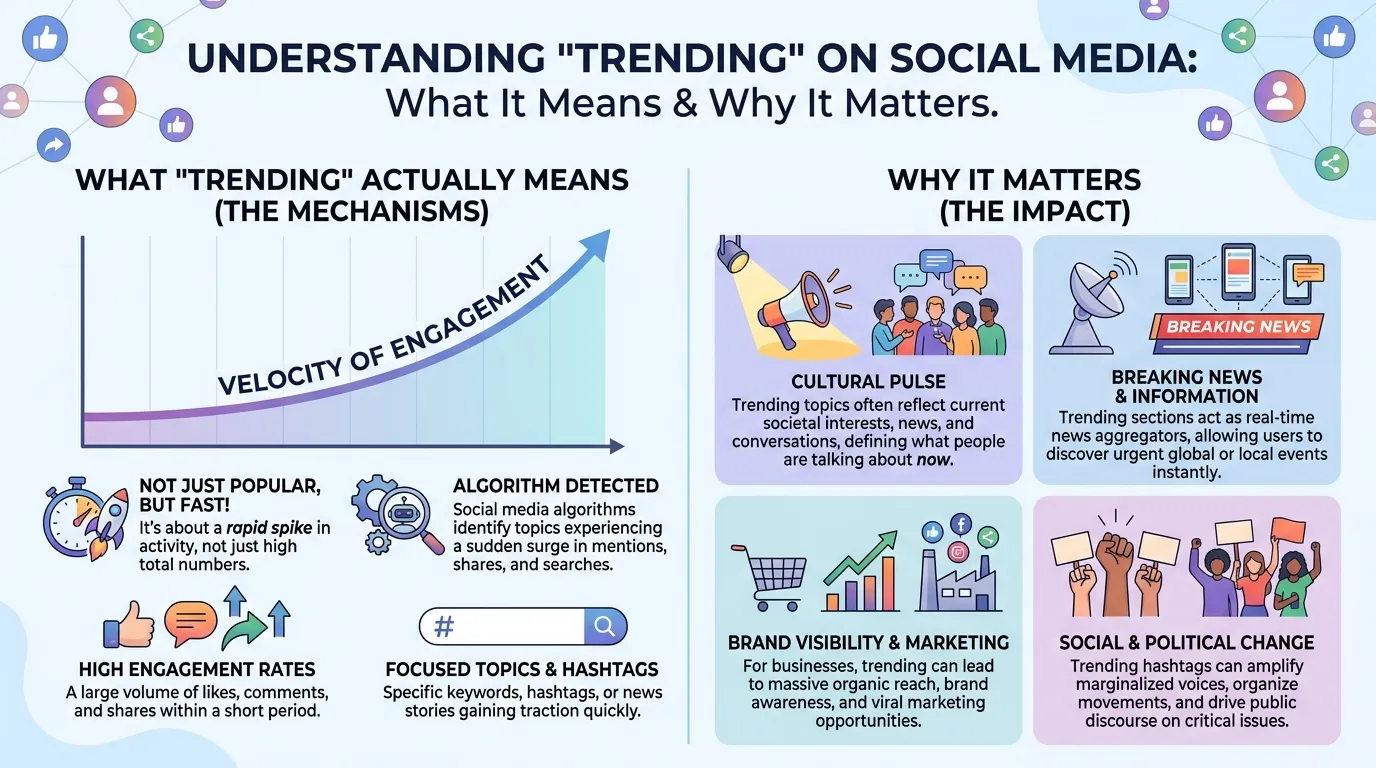
The term trending refers to a topic, hashtag, post, video, challenge, or conversation that is rapidly gaining attention and engagement from a large number of users within a short period.
Simply put:
A trend is something that many people are currently talking about, searching for, liking, sharing, or engaging with online.
When content becomes popular enough, social media algorithms may place it in a special “Trending” section, making it visible to even more users.
Simple Definition
Trending on social media means a topic, hashtag, video, meme, or discussion that experiences a sudden increase in popularity and engagement among users.
The Origin of the Word “Trending”
The word trend originally referred to a general direction in which something develops or changes.
Before social media, trends were commonly associated with:
- Fashion
- Consumer behavior
- Technology
- Business markets
- Cultural movements
With the rise of social media platforms, the term evolved to describe content that becomes popular quickly and captures widespread public attention.
How Does Something Become Trending?
Many people assume that content becomes trending simply because it gets a lot of likes. In reality, social media platforms use complex algorithms.
Several factors influence whether something trends:
1. High Engagement
Posts that receive:
- Likes
- Comments
- Shares
- Reposts
- Saves
often gain momentum quickly.
2. Rapid Growth
A post receiving 10,000 interactions in one hour may trend more easily than a post receiving 50,000 interactions over several weeks.
3. User Interest
Platforms monitor what users are:
- Searching for
- Watching
- Discussing
- Sharing
If many users suddenly engage with the same topic, it may trend.
4. Hashtag Usage
Popular hashtags can help content gain visibility.
Example:
- #WorldCup
- #MondayMotivation
- #ThrowbackThursday
5. Geographic Relevance
Some trends are local, while others become global.
For example:
- A local election may trend in one country.
- A major sporting event may trend worldwide.
What Does “Trending” Look Like on Different Social Media Platforms?
Each platform identifies trends differently.
| Platform | How Trends Appear |
|---|---|
| TikTok | Trending sounds, hashtags, challenges |
| Popular Reels, hashtags, and viral content | |
| X (Twitter) | Trending topics and hashtags |
| YouTube | Trending videos and Shorts |
| Popular posts and discussions | |
| Industry discussions and professional topics | |
| Popular posts within communities |
Although the methods differ, the goal remains the same: highlighting content people are actively engaging with.
Types of Social Media Trends
Not all trends are the same. Here are the most common categories.
Viral Hashtags
Hashtags often become trending when large numbers of users adopt them.
Examples include:
- #BlackFriday
- #Oscars
- #EarthDay
Trending Challenges
Challenges encourage participation and sharing.
Examples:
- Dance challenges
- Fitness challenges
- Photo challenges
Viral Memes
Memes spread rapidly because they are humorous, relatable, or timely.
Examples include:
- Reaction memes
- Internet jokes
- Pop culture references
Breaking News Trends
Major events can trend within minutes.
Examples:
- Elections
- Sports championships
- Celebrity announcements
- Global events
Audio Trends
Particularly on TikTok and Instagram Reels, certain sounds and songs can trend.
Creators often use trending audio to increase reach.
Product Trends
Sometimes products become viral overnight.
Examples:
- New gadgets
- Beauty products
- Fashion items
- Food trends
Why Are Trends Important on Social Media?
Trending topics influence what millions of people see every day.
Increased Visibility
Trending content often receives:
- More impressions
- More engagement
- More followers
Audience Growth
Creators who participate in relevant trends may attract new audiences.
Brand Awareness
Businesses use trends to:
- Promote products
- Increase recognition
- Reach target customers
Community Participation
Trends create shared experiences.
Users feel connected when participating in popular conversations.
Cultural Influence
Many social media trends shape:
- Language
- Entertainment
- Fashion
- Consumer behavior
Examples of Trending Content
Here are some real-world examples of social media trends.
Example 1: Dance Challenges
A new dance routine becomes popular on TikTok.
Thousands of users create their own versions.
Soon:
- The hashtag trends
- News outlets discuss it
- Celebrities participate
Example 2: Major Sports Events
Events like the:
- FIFA World Cup
- Olympics
- Super Bowl
often dominate social media discussions worldwide.
Example 3: Viral Memes
A funny image or phrase spreads rapidly across platforms.
Users modify and share it, creating countless variations.
Example 4: Trending News Stories
Breaking news can trend within minutes as people:
- Share updates
- Post opinions
- Discuss developments
How Social Media Algorithms Detect Trends
Social media companies use algorithms to analyze user behavior.
These systems track:
- Engagement levels
- Search activity
- Sharing patterns
- Viewing duration
- Interaction speed
When activity spikes significantly, the algorithm may identify the topic as trending.
Key Signals
Algorithms often look for:
✅ Sudden popularity
✅ User interaction
✅ Freshness of content
✅ Audience interest
✅ Content relevance
Trending vs Viral: What’s the Difference?
Many people use these terms interchangeably, but they are slightly different.
| Trending | Viral |
|---|---|
| Gaining significant attention | Spreading extremely fast |
| Often platform-specific | Can spread across multiple platforms |
| May be temporary | Often reaches massive audiences |
| Driven by engagement patterns | Driven by rapid sharing |
Example
A hashtag trending in one country may not go viral globally.
A viral video, however, may spread worldwide across multiple platforms.
Common Misconceptions About Trending
Myth 1: Trending Means Most Likes
Not necessarily.
A post with fewer likes but rapid engagement may trend more easily than an older post with higher totals.
Myth 2: Only Celebrities Can Trend
Anyone can create trending content.
Many trends start with ordinary users.
Myth 3: Trends Last a Long Time
Most social media trends are short-lived.
Some disappear within hours or days.
Myth 4: All Trends Are Positive
Not always.
Negative events and controversies can also trend.
Myth 5: Using a Trending Hashtag Guarantees Success
Trending hashtags may help visibility, but quality content still matters.
How Businesses Use Trending Topics
Brands often monitor trends to stay relevant.
Marketing Campaigns
Businesses create content related to trending conversations.
Product Promotion
Brands connect products to current interests.
Customer Engagement
Responding to trends can increase interaction with audiences.
Real-Time Marketing
Companies often react quickly to:
- Sporting events
- Holidays
- Viral moments
- Pop culture discussions
This strategy is known as real-time marketing.
How Content Creators Benefit From Trends
Creators often leverage trends to expand their reach.
Benefits include:
- More views
- Higher engagement
- Increased followers
- Better discoverability
- Improved algorithm performance
Tips for Creators
- Follow industry trends daily.
- Use trending sounds appropriately.
- Add unique perspectives.
- Stay authentic.
- Participate early.
Risks of Chasing Every Trend
While trends can be beneficial, blindly following them can create problems.
Potential Drawbacks
- Loss of authenticity
- Audience confusion
- Short-term growth only
- Reputational risks
- Trend fatigue
Successful creators balance trends with original content.
Related Terms You Should Know
Viral
Content spreading rapidly across large audiences.
Hashtag
A keyword preceded by the # symbol used for categorization.
Meme
A humorous or culturally relevant piece of content shared online.
Engagement
Interactions such as likes, comments, shares, and saves.
Algorithm
The system platforms use to determine what content users see.
Influencer
A person who can affect audience behavior through their online presence.
How to Find Trending Topics on Social Media
Check Platform Trend Sections
Most platforms provide trend discovery tools.
Examples:
- Trending page on X
- YouTube Trending tab
- TikTok Discover page
Monitor Hashtags
Popular hashtags can reveal emerging trends.
Follow Industry Leaders
Influencers often identify trends early.
Use Trend Tracking Tools
Many marketers use:
- Google Trends
- Social listening tools
- Analytics platforms
Watch Competitors
Competitor activity can reveal what’s gaining traction.
Signs a Trend Is About to Explode
Experienced creators often notice early indicators.
Watch for:
- Sudden increases in shares
- Growing hashtag usage
- Influencer participation
- Rising search volume
- Increased media coverage
Early adoption can significantly increase visibility.
The Future of Social Media Trends
Social media trends continue to evolve as technology changes.
Future trends may be shaped by:
- Artificial intelligence
- Augmented reality
- Personalized algorithms
- Interactive content
- Short-form video growth
As platforms become smarter, trend detection will likely become even more personalized and dynamic.
Frequently Asked Questions (FAQs)
What does trending mean on social media?
Trending means a topic, hashtag, video, or discussion is experiencing a rapid increase in popularity and engagement among users.
How long does a social media trend last?
It varies. Some trends last only a few hours, while others remain popular for weeks or months.
Can anyone create a trending post?
Yes. Ordinary users, influencers, brands, and organizations can all create content that becomes trending.
Does trending mean something is viral?
Not always. Trending indicates growing popularity, while viral content spreads extremely rapidly across large audiences.
Why do hashtags trend?
Hashtags trend when many users start posting, sharing, and interacting with content using the same tag.
Are trends different on each platform?
Yes. TikTok, Instagram, YouTube, X, Facebook, and LinkedIn each use different algorithms and criteria for identifying trends.
Should businesses use trending topics?
Yes, when relevant. Participating in appropriate trends can increase visibility, engagement, and brand awareness.
Conclusion
Understanding the trending meaning on social media is essential in today’s digital landscape. A trend represents a topic, hashtag, video, meme, or conversation that rapidly gains attention and engagement from users. Trends influence what people discuss, what content gets discovered, and how information spreads across the internet.
Whether you’re a casual social media user, content creator, marketer, or business owner, recognizing and leveraging trends can help you stay relevant and reach wider audiences. However, success comes from combining trending topics with authenticity, quality content, and meaningful engagement.
The next time you see something labeled “Trending,” you’ll know it’s more than just popularity—it’s a signal that a large number of people are actively participating in a shared online conversation. By understanding how trends work and using them strategically, you can make smarter decisions and maximize your impact on social media.