In today’s internet culture, few slang words are used as often as “cringe.” Whether you’re scrolling through TikTok, reading memes on X, watching YouTube reactions, or chatting with friends, you’ve probably seen someone say, “That’s so cringe.”
But what does cringe meaning slang actually refer to? Is it an insult? A joke? A reaction? And why has this word become such a huge part of online communication?
This guide breaks down everything you need to know about the slang term cringe, including its meaning, origin, examples, social media use, Gen Z culture, related slang words, and common misunderstandings. By the end, you’ll fully understand how and when people use the word “cringe” in conversations online and offline.
What Does “Cringe” Mean in Slang?
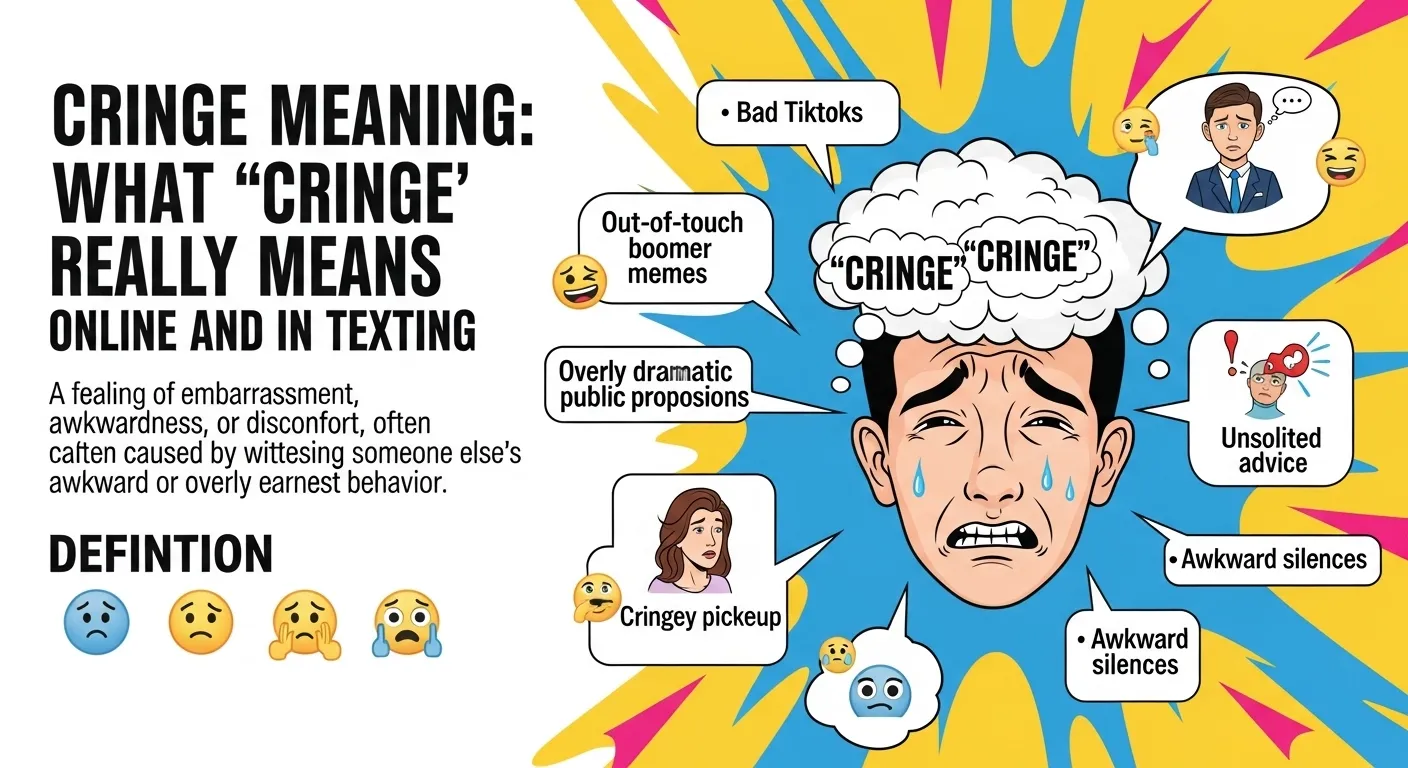
In slang, cringe describes something that feels awkward, embarrassing, uncomfortable, fake, or socially embarrassing.
When people say something is “cringe,” they usually mean:
- It caused secondhand embarrassment
- It felt forced or awkward
- It looked try-hard or unnatural
- It made them emotionally recoil
Simple Definition
Cringe (slang): Something so awkward, embarrassing, or uncomfortable that it makes people feel embarrassed for someone else.
Why Is the Word “Cringe” So Popular?
The internet thrives on reactions, memes, and emotional responses. “Cringe” became popular because it perfectly describes that uncomfortable feeling people get while watching awkward behavior online.
Social media platforms helped spread the term quickly:
- TikTok
- YouTube reaction videos
- Twitch streams
- Instagram Reels
- Reddit memes
- Gaming communities
Today, “cringe” is part of everyday online vocabulary, especially among Gen Z and younger millennials.
The Original Meaning of “Cringe”
Before it became slang, the word cringe already existed in English.
Traditionally, “to cringe” meant:
- To shrink back in fear
- To recoil physically or emotionally
- To react with discomfort
Example of Traditional Use
- “He cringed when he heard the loud noise.”
- “She cringed at the embarrassing memory.”
Over time, internet users transformed the word into a slang adjective and reaction.
Now people say:
- “That video is cringe.”
- “I’m cringing so hard.”
- “Cringe behavior.”
Cringe Meaning in Text and Social Media
In texting and online chats, “cringe” is often used as a quick reaction to awkward content.
Common Ways People Use “Cringe”
| Phrase | Meaning |
|---|---|
| “That’s cringe” | That’s embarrassing or awkward |
| “So cringe” | Extremely awkward |
| “I cringed” | I felt embarrassed watching it |
| “Cringe af” | Very embarrassing |
| “Cringey” | Awkward or embarrassing |
Examples of Cringe Slang in Sentences
Understanding slang is easier with examples.
Everyday Examples
- “His fake motivational video was cringe.”
- “I accidentally waved at the wrong person. So cringe.”
- “That pickup line made everyone cringe.”
- “The acting in that scene felt cringey.”
- “She posted a breakup paragraph online and people called it cringe.”
What Makes Something “Cringe”?
Not everything awkward is considered cringe. Usually, cringe content includes behaviors people see as socially uncomfortable or overly forced.
Common Types of Cringe Behavior
1. Trying Too Hard
People often label someone cringe when they appear desperate for attention.
Example:
- Fake influencer behavior
- Forced jokes
- Pretending to be cool
2. Oversharing Online
Some users consider excessive personal posting cringe.
Examples:
- Public relationship drama
- Emotional oversharing
- Attention-seeking posts
3. Fake Confidence or Acting
When behavior feels unnatural, audiences may call it cringe.
Examples:
- Overacting in videos
- Forced “alpha male” behavior
- Fake luxury lifestyles
4. Old Trends or Outdated Memes
Internet culture moves quickly.
Sometimes older trends become “cringe” simply because they feel outdated.
5. Awkward Social Situations
Secondhand embarrassment is a major part of cringe culture.
Examples:
- Bad flirting
- Public rejection
- Embarrassing dancing videos
The Psychology Behind Cringe
Why do humans experience cringe?
Psychologists believe cringe happens because people instinctively react to social discomfort and embarrassment.
Secondhand Embarrassment
Cringe is closely tied to empathetic embarrassment.
This means:
- You feel embarrassed for someone else
- Even if they don’t realize it themselves
Example
Watching someone confidently tell a bad joke to a silent room can trigger cringe because your brain imagines the social discomfort.
Cringe Culture on the Internet
“Cringe culture” became a major internet trend during the 2010s and 2020s.
What Is Cringe Culture?
Cringe culture refers to:
- Mocking awkward behavior online
- Sharing embarrassing clips
- Calling out socially awkward content
At times, cringe culture became toxic because people mocked harmless hobbies or socially awkward individuals.
When “Cringe” Becomes Bullying
Not everything labeled cringe deserves ridicule.
Sometimes people unfairly mock:
- Innocent enthusiasm
- Autism-related social differences
- Creative self-expression
- Beginner content creators
This led to a newer internet phrase:
“Cringe culture is dead.”
This means people should stop mocking harmless enjoyment and individuality.
“Cringe” vs “Cringey”
Many people confuse these terms.
Cringe
Usually used as:
- A noun
- A reaction
- An adjective in slang
Example:
- “That was cringe.”
Cringey
An adjective meaning awkward or embarrassing.
Example:
- “That speech was cringey.”
Both are widely accepted in casual online language.
Is Calling Someone “Cringe” Offensive?
It depends on context.
Sometimes It’s Playful
Friends often jokingly tease each other:
- “Bro, that was cringe.”
- “Your dance moves are cringe.”
In these cases, it’s lighthearted.
Sometimes It’s Mean-Spirited
Calling someone cringe publicly can:
- Embarrass them
- Humiliate them
- Encourage online bullying
Tone matters a lot.
Cringe in Gen Z Slang
Gen Z uses “cringe” constantly in internet communication.
Popular Gen Z Cringe Phrases
- “Ultra cringe”
- “Maximum cringe”
- “Cringe af”
- “Certified cringe”
- “Cringe compilation”
These phrases are common in:
- Meme culture
- Gaming streams
- TikTok comments
- Reaction videos
Cringe Meaning on TikTok
TikTok heavily popularized cringe slang.
Common TikTok Uses
Cringe Videos
Videos intentionally or unintentionally awkward.
Cringe Compilations
Collections of embarrassing clips.
Self-Aware Cringe
Creators sometimes intentionally act cringe for comedy.
Example:
- Overdramatic lip-syncs
- Intentionally awkward dances
- Fake motivational speeches
“Cringe but Free” Meaning
A newer phrase online is:
“Cringe but free.”
This means:
- Something may look embarrassing
- But the person is confidently enjoying themselves
It’s often used positively.
Example
- Singing loudly in public
- Enjoying nerdy hobbies openly
- Dancing without caring about judgment
The phrase encourages confidence over social approval.
Related Slang Words Similar to “Cringe”
Internet slang evolves quickly. Several related terms connect with cringe culture.
Awkward
Basic term for socially uncomfortable situations.
Ick
A sudden feeling of disgust or attraction loss.
Example:
- “Watching him brag gave me the ick.”
Corny
Overly cheesy or unoriginal.
Example:
- “That motivational quote is corny.”
Try-Hard
Someone forcing attention or approval.
NPC
Used online to describe someone acting generic or fake.
Delulu
Short for “delusional.”
Often jokingly used for unrealistic behavior.
Cringe in Gaming Communities
Gamers use cringe slang constantly.
Examples in Gaming
- Toxic voice chat behavior
- Fake “pro gamer” attitudes
- Overreacting during matches
- Excessive trash talk
Example:
- “That rage quit was cringe.”
Streaming culture on platforms like Twitch helped normalize the word even more.
Cringe Memes and Internet Humor
Cringe itself became a meme category.
Types of Cringe Humor
Intentional Cringe
People purposely act awkward for laughs.
Unintentional Cringe
Content creators accidentally become memes.
Reaction Cringe
Viewers record themselves reacting to awkward clips.
How Older Generations Use “Cringe”
Originally popular with younger internet users, the term has spread widely.
Now:
- Millennials use it casually
- Brands use it in marketing
- Even mainstream media references it
However, younger users sometimes call adults “cringe” when they overuse Gen Z slang.
Common Misunderstandings About Cringe
Misunderstanding #1: Cringe Always Means Hate
Not true.
Sometimes people use it affectionately or jokingly.
Misunderstanding #2: Cringe Means Bad
Not necessarily.
Something can be cringe and entertaining at the same time.
Example:
- Reality TV
- Funny fails
- Dad jokes
Misunderstanding #3: Only Kids Use Cringe
The term is now mainstream across many age groups.
When You Should Avoid Using “Cringe”
Because the word can sound judgmental, it’s good to use it carefully.
Avoid Using It When:
- Someone is being sincere
- Someone is learning something new
- The joke could hurt feelings
- It encourages bullying
The internet is shifting toward more supportive attitudes around harmless self-expression.
Positive Side of Cringe
Surprisingly, embracing cringe can be healthy.
Why?
Fear of embarrassment stops many people from:
- Creating content
- Speaking publicly
- Trying new hobbies
- Being authentic
Learning to tolerate cringe can build confidence.
“Don’t Kill the Cringe Part of You”
A popular online quote says:
“Don’t kill the cringe part of you. Kill the part that cringes.”
The message encourages:
- Confidence
- Creativity
- Authenticity
- Self-expression
This reflects a growing backlash against toxic internet judgment.
Cringe Slang Across Different Platforms
TikTok
Fast-paced cringe humor and trends.
YouTube
Reaction channels and cringe compilations.
Discussion-heavy cringe communities.
Discord
Gaming and meme slang use.
Comment reactions and ironic humor.
Table: Cringe Slang Quick Reference
| Term | Meaning |
|---|---|
| Cringe | Embarrassing or awkward |
| Cringey | Awkward in an uncomfortable way |
| Cringe af | Extremely embarrassing |
| Secondhand embarrassment | Feeling embarrassed for others |
| Cringe culture | Mocking awkward online behavior |
| Try-hard | Someone forcing attention |
| Corny | Cheesy or overly predictable |
How Brands Use Cringe Marketing
Some companies intentionally use cringe humor to go viral.
Why It Works
- People share awkward content
- It feels relatable
- Younger audiences enjoy irony
This style is called:
- Irony marketing
- Self-aware marketing
- Meme marketing
Sometimes intentionally cringe ads become highly successful online.
The Evolution of Internet Slang
“Cringe” is part of a bigger trend where internet slang evolves rapidly.
Similar slang examples include:
- Rizz
- Mid
- Delulu
- Sus
- Ick
- NPC
- Ratio
Social media accelerates how quickly slang spreads globally.
FAQs About Cringe Meaning Slang
1. What does cringe mean in slang?
Cringe means something awkward, embarrassing, uncomfortable, or socially awkward that causes secondhand embarrassment.
2. Is cringe a bad word?
No, it’s not a profanity. However, it can sound insulting depending on context and tone.
3. What does “cringey” mean?
“Cringey” describes something awkward or embarrassing in a way that makes people uncomfortable.
4. Why do people say “that’s cringe”?
People use it as a reaction to behavior, videos, jokes, or situations they find socially embarrassing or awkward.
5. What is cringe culture?
Cringe culture refers to online communities or trends focused on mocking awkward behavior or embarrassing content.
6. Is cringe slang used by Gen Z?
Yes. Gen Z popularized modern cringe slang through TikTok, memes, gaming, and internet culture.
7. Can cringe be positive?
Sometimes. Self-aware cringe humor and confident self-expression can actually be admired online.
Final Thoughts
The slang term cringe has evolved from a simple emotional reaction into one of the internet’s most recognizable cultural expressions. Today, it describes everything from awkward social moments to ironic humor and online embarrassment.
While calling something cringe can be funny and relatable, it’s important to remember that internet culture changes constantly. What one person sees as embarrassing, another may see as authentic, creative, or confident.
Understanding cringe meaning slang helps you better navigate:
- Social media conversations
- TikTok trends
- Meme culture
- Text messaging
- Modern internet humor
The next time someone says, “That’s cringe,” you’ll know exactly what they mean — and why this tiny slang word became such a massive part of online culture.