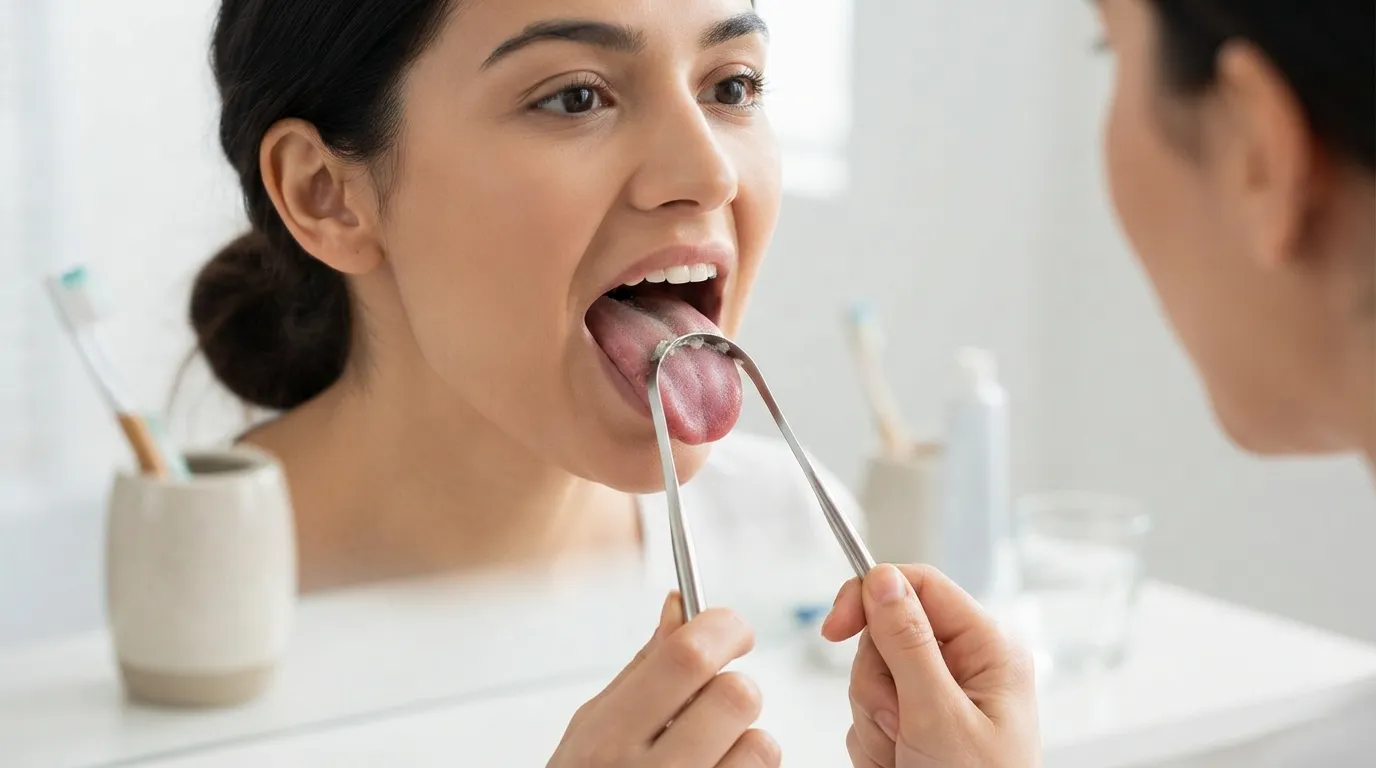
Every morning, millions of people diligently brush their teeth, floss, and rinse with mouthwash — yet skip one crucial step hiding in plain sight: cleaning the tongue. It’s easy to overlook, but your tongue is home to millions of bacteria, trapped food particles, and dead skin cells that build up in its tiny grooves throughout the day. This buildup isn’t just unpleasant to look at; it’s one of the leading causes of persistent bad breath, and it can throw off the delicate balance of your mouth’s microbiome.
The good news? Cleaning your tongue takes less than a minute and can make a noticeable difference in your breath, your sense of taste, and your overall oral health. In this guide, we’ll break down exactly why tongue cleaning matters, the tools and techniques that work best, and the simple habits that will keep your mouth feeling genuinely fresh — not just minty for an hour.
Understanding Tongue Anatomy & Why Buildup Happens
To understand why tongue cleaning matters, it helps to know what’s actually happening on the surface of your tongue. Your tongue isn’t smooth — it’s covered in thousands of tiny bumps called papillae. Some of these contain taste buds, while others simply add texture. This uneven, textured surface is incredibly effective at one thing: trapping stuff.
Throughout the day, food particles, dead skin cells, mucus, and bacteria settle into the grooves between papillae. Saliva normally helps wash some of this away, but it can’t reach everywhere, especially toward the back of the tongue where saliva flow is naturally weaker. Over time, this debris accumulates into a visible film — often white, yellowish, or slightly gray — commonly referred to as “tongue coating.”
The back third of the tongue tends to accumulate the most buildup for a few reasons: it’s harder to reach with a toothbrush, it experiences less natural abrasion from chewing, and it sits closer to the throat, where bacteria involved in breath odor tend to thrive. This is also why simply brushing the front of your tongue while brushing your teeth often isn’t enough to make a real difference.
Understanding this anatomy explains why tongue cleaning isn’t just a hygiene trend — it’s addressing a very real, physical buildup that your toothbrush alone doesn’t fully solve. Recognizing where and why this coating forms sets the stage for understanding its effects, which we’ll explore next.
The Science: What’s Living on Your Tongue
Your mouth is home to hundreds of species of bacteria, and the tongue — thanks to its textured, moist surface — happens to be one of their favorite places to live. While many of these bacteria are harmless or even beneficial, some produce compounds that directly affect your breath and oral health.
The main culprits behind bad breath are anaerobic bacteria that thrive in low-oxygen environments, like the deep grooves of the tongue’s surface. As these bacteria break down proteins from food particles and dead cells, they release volatile sulfur compounds (VSCs) — the same type of compounds responsible for the smell of rotten eggs. This is why a heavily coated tongue is often linked to noticeably worse breath, regardless of how well someone brushes their teeth.
Beyond breath, tongue bacteria are part of a larger ecosystem known as the oral microbiome, which also includes bacteria living on your teeth, gums, and cheeks. When this ecosystem is balanced, it can actually help protect against harmful pathogens. But when bacteria overgrow — often due to poor hygiene, dry mouth, or diet — it can tip the balance, potentially contributing to issues like gum inflammation, plaque buildup, and even cavities over time.
Some emerging research has also explored connections between oral bacteria and broader systemic health, though this is still an evolving area of study. What’s clear, though, is that keeping tongue bacteria in check is a meaningful part of maintaining a healthy mouth.
Health Benefits of Regular Tongue Cleaning
Once you understand what’s living on your tongue, the benefits of cleaning it regularly become easy to appreciate. The most immediate and noticeable one is fresher breath. Since a large portion of bad breath originates from bacteria on the tongue rather than the teeth, removing that buildup can make a dramatic difference — often more than mouthwash alone, which tends to mask odor rather than eliminate its source.
Tongue cleaning can also sharpen your sense of taste. A thick coating on the tongue can dull your taste buds, making food seem less flavorful than it actually is. Many people who start cleaning their tongue regularly report that food tastes noticeably more vivid within days.
There are oral health benefits too. By reducing the overall bacterial load in your mouth, tongue cleaning may help lower your risk of plaque buildup, cavities, and gum irritation, since bacteria from the tongue can migrate to teeth and gums throughout the day. It also supports a more balanced oral microbiome, which plays a role in keeping harmful bacteria in check.
Some people also notice a simple aesthetic benefit: a clean tongue often looks pinker and healthier, versus one covered in a persistent white or yellow film.
While tongue cleaning isn’t a substitute for brushing and flossing, it’s a complementary habit that rounds out a truly thorough oral care routine — targeting bacteria and buildup that brushing your teeth alone simply can’t reach.
Signs Your Tongue Needs Cleaning
While tongue cleaning is a habit best done daily regardless of appearance, there are clear signs that indicate buildup has reached a point where it’s actively affecting your breath, taste, or oral health.
The most obvious sign is a visible coating on the tongue’s surface. This can range from a thin, barely-there film to a thick, white or yellowish layer that’s easy to spot in the mirror. In more extreme cases — often linked to dehydration, smoking, or certain medications — this coating can appear darker or even take on a fuzzy texture.
Persistent bad breath that doesn’t improve with brushing and mouthwash is another strong indicator. If you’ve ruled out other causes like gum disease or dietary factors, a buildup on the tongue is often the missing piece of the puzzle, especially toward the back of the tongue where brushing rarely reaches.
A dulled or altered sense of taste can also signal it’s time to clean your tongue. Since taste buds are embedded among the papillae, a thick layer of debris can physically block your ability to fully taste food, leaving flavors muted or slightly “off.”
Finally, textural changes are worth noting. A healthy tongue is typically pink with a slightly rough, even texture. If your tongue feels unusually slick, sticky, or textured differently than normal, it may be a sign that buildup — or in some cases, an underlying issue — needs attention.
Recognizing these signs early makes it easier to stay ahead of buildup before it becomes a bigger problem.
Tools for Cleaning Your Tongue
Once you’re ready to make tongue cleaning part of your routine, choosing the right tool makes a real difference in both comfort and effectiveness.
Tongue scrapers are widely considered the gold standard. These small, curved tools are designed specifically to conform to the tongue’s shape, allowing them to remove buildup in a single smooth motion. They come in a few materials: stainless steel (durable and easy to sanitize), copper (naturally antimicrobial, though it may require more frequent replacement), and plastic (affordable and lightweight, though less long-lasting).
Toothbrushes are a convenient alternative if you don’t have a dedicated scraper. Many toothbrushes even include a ridged or textured pad on the back of the brush head designed for tongue cleaning. While not quite as effective as a scraper at removing deep buildup, a toothbrush is a reasonable starting point, especially combined with light brushing strokes.
Tongue cleaning gels and sprays aren’t replacements for scraping, but they can enhance the process. Some are formulated to help loosen debris before scraping, while others focus on neutralizing odor-causing bacteria afterward.
Electric or automatic tongue cleaners have also entered the market, offering vibration or suction-based cleaning for those who want a more hands-off approach, though they tend to be pricier and aren’t necessary for most people.
Natural or DIY approaches — like a clean spoon or diluted salt water — can work in a pinch, though they lack the precision and gentleness of purpose-built tools and should be used cautiously.
Ultimately, the best tool is the one you’ll use consistently.
Step-by-Step Cleaning Method
Regardless of which tool you choose, technique matters just as much as consistency. Here’s how to clean your tongue properly, from start to finish.
1. Start with a dry or slightly damp tongue. Some people prefer scraping before drinking water or eating, as buildup tends to be more concentrated and easier to remove first thing in the morning.
2. Stick your tongue out fully and look in the mirror to identify the coated areas, which usually appear white or yellowish and are most concentrated toward the back.
3. Position the scraper (or toothbrush) as far back on the tongue as is comfortable, without pushing so far that it triggers a strong gag reflex.
4. Gently pull the tool forward, from the back of the tongue toward the tip, using light, even pressure. Avoid pressing too hard — the goal is to lift debris off the surface, not scrub aggressively.
5. Rinse the tool after each pass under running water to remove the collected buildup before going over the same area again.
6. Repeat 3–5 times, slightly shifting position each pass to cover the entire width of the tongue, from one side to the other.
7. Finish with a rinse. Swish water or a mild mouthwash to clear away any loosened debris and leave your mouth feeling fully clean.
The entire process takes less than a minute once it becomes routine, and most people find it gets noticeably easier — and less gag-inducing — after the first few tries.
How Often & When to Clean Your Tongue
Consistency is what makes tongue cleaning effective, so building it into your existing routine is more important than any single technique.
Daily cleaning is the general recommendation from most dental professionals. Since bacteria and debris accumulate continuously throughout the day, a once-a-week or occasional cleaning simply isn’t enough to keep buildup — and the bad breath that comes with it — under control.
Morning is generally considered the ideal time. While you sleep, saliva production slows significantly, allowing bacteria to multiply and buildup to accumulate overnight. This is why many people notice “morning breath” and a visibly coated tongue upon waking. Cleaning your tongue as part of your morning routine clears away this overnight buildup right when it’s most concentrated.
That said, some people also clean their tongue at night, either in addition to or instead of a morning cleaning, particularly if they eat foods throughout the day that tend to leave residue (like dairy, sugary foods, or coffee). There’s no strict rule — what matters most is finding a time that fits reliably into your day.
As for before or after brushing your teeth, either order works, though many dentists suggest cleaning your tongue before brushing. This way, any loosened bacteria and debris get rinsed away as you brush and spit, rather than sitting in your mouth afterward.
Ultimately, the “best” schedule is the one you’ll actually stick to. Even a single, well-executed daily cleaning session is enough to see meaningful benefits in breath and taste.
Common Mistakes & Risks
Tongue cleaning is simple, but a few common mistakes can reduce its effectiveness or cause unnecessary discomfort.
Scraping too aggressively is the most frequent mistake. It’s tempting to press hard in an effort to remove stubborn buildup, but the tongue’s surface is delicate. Excessive pressure can irritate the tissue, cause minor bleeding, and even damage taste buds over time — ironically dulling your sense of taste rather than restoring it. Light, consistent pressure repeated a few times is far more effective than one forceful pass.
Only cleaning the front of the tongue is another common shortcoming. Since the back of the tongue harbors the most bacteria and buildup, avoiding that area — often due to gag reflex sensitivity — significantly limits the benefits. Working gradually toward the back over time, rather than avoiding it altogether, tends to improve results.
Using unsanitary or worn-out tools can undermine the whole process. A scraper or toothbrush that isn’t rinsed and dried properly between uses can harbor its own bacteria, which then gets reintroduced to the tongue with each use. Replacing tools regularly, especially plastic ones, is important.
Overdoing it is also possible. Cleaning too many times per day or scraping excessively long can cause ongoing irritation, sensitivity, or a raw feeling. Once or twice daily, with a gentle technique, is sufficient for most people.
Being mindful of these pitfalls ensures tongue cleaning remains a beneficial habit rather than one that causes more harm than good.
Special Considerations
Tongue cleaning isn’t one-size-fits-all — a few situations call for extra care or adjusted techniques.
Sensitive gag reflex: Many people avoid cleaning the back of the tongue because it triggers gagging. Breathing steadily through the nose, starting with shorter strokes, and gradually working further back over several days can help desensitize the reflex over time.
Braces, piercings, or dental work: Those with braces should be mindful of scraper positioning to avoid catching on brackets, while tongue piercings require extra gentleness around the jewelry to avoid irritation or infection. People with recent dental work should check with their dentist before resuming vigorous tongue cleaning.
Children: Kids can typically start using a soft-bristled toothbrush to gently clean their tongue once they’re old enough to spit reliably and follow instructions, usually around ages 6–8. Dedicated pediatric tongue scrapers with softer materials are also available.
Smokers and heavy coffee or tea drinkers: These habits tend to cause heavier tongue staining and buildup, meaning more frequent or thorough cleaning may be beneficial to manage both odor and discoloration.
Dry mouth conditions: Reduced saliva flow — whether from medication, dehydration, or medical conditions — allows bacteria to accumulate more easily. People with chronic dry mouth may need to clean more consistently and stay especially hydrated.
Geographic tongue or oral thrush: These conditions can make the tongue’s surface more sensitive or irregular. Anyone with a diagnosed oral condition should consult a dentist or doctor before adjusting their cleaning routine.
Tongue Coating as a Health Indicator
Beyond hygiene, the appearance of your tongue can sometimes offer clues about what’s going on inside your body. While not a diagnostic tool on its own, noticeable or persistent changes are worth paying attention to.
White coating is the most common and is usually just a buildup of bacteria, food debris, and dead cells — nothing concerning, especially if it improves with regular cleaning. However, a thick white coating that doesn’t go away can sometimes be linked to dehydration or, in some cases, oral thrush, a yeast infection that requires medical treatment.
Yellow tinting often points to a slightly heavier bacterial buildup or mild dehydration, and typically resolves with more consistent cleaning and water intake.
Black or “hairy” tongue looks alarming but is usually harmless. It happens when papillae grow longer than normal and trap stains from food, coffee, tobacco, or certain medications. It generally resolves with a period of thorough tongue cleaning.
Red or unusually smooth patches can sometimes indicate a nutritional deficiency (such as low vitamin B12 or iron) or, in some cases, an underlying oral or medical condition, so persistent redness is worth mentioning to a healthcare provider.
When to see a doctor or dentist: If a coating persists despite consistent cleaning, is accompanied by pain, or comes with other symptoms like unusual sores, swelling, or a change in texture that doesn’t resolve, it’s worth getting evaluated rather than assuming it’s just buildup.
Product Recommendations / Buying Guide
With so many tongue-cleaning tools on the market, knowing what to look for makes it easier to choose one that’s effective and comfortable to use long-term.
Material matters
Stainless steel scrapers are a popular choice for their durability, ease of cleaning, and resistance to bacterial buildup on the tool itself. Copper scrapers offer natural antimicrobial properties, though they can tarnish over time and typically need more frequent replacement. Plastic scrapers are the most budget-friendly and widely available, but tend to wear out faster and can harbor bacteria in small surface scratches if not replaced regularly.
Shape and size matter too
Look for a scraper with a gentle curve that matches the natural shape of your tongue, wide enough to cover a good surface area per pass but not so large that it feels unwieldy or triggers gagging.
Handles and grip are worth considering if you have limited dexterity — some scrapers have wider, ergonomic handles that make the motion easier to control.
Budget vs. premium options
Basic plastic or stainless steel scrapers are inexpensive and perform the core job well. Premium options may include added features like antimicrobial coatings, ergonomic designs, or travel cases, but these are conveniences rather than necessities.
A general rule of thumb
Replace plastic scrapers every 3 months, and inspect metal scrapers periodically for any rough edges or wear. Whichever option you choose, prioritize one that feels comfortable enough to use every single day — consistency matters more than the specific product.
Myths vs. Facts
There’s a lot of misinformation floating around about tongue cleaning. Here’s a closer look at some common claims.
Myth: “Brushing your tongue with a toothbrush is just as effective as scraping.”
Fact: While a toothbrush is better than nothing, studies comparing the two methods generally show that scrapers remove more buildup in fewer strokes. A toothbrush’s bristles tend to redistribute debris across the tongue’s surface rather than lifting and removing it entirely, the way a scraper’s flat edge does.
Myth: “Mouthwash alone eliminates the need for tongue cleaning.”
Fact: Mouthwash can temporarily reduce bacteria and mask odor, but it doesn’t physically remove the coating sitting on the tongue’s surface. Without scraping or brushing, that buildup remains a continuous source of bacteria and odor, even after rinsing.
Myth: “Tongue cleaning permanently cures bad breath.”
Fact: Tongue cleaning significantly reduces one major source of bad breath, but it isn’t a permanent, one-time fix. Since bacteria regenerate daily, tongue cleaning needs to be a consistent habit — not a one-off solution — to keep breath fresh long-term. Other factors, like gum health, diet, and hydration, also play a role.
Myth: “The more you scrape, the cleaner your tongue gets.”
Fact: Excessive scraping doesn’t equal a cleaner tongue — it just increases the risk of irritation and tissue damage. A few gentle passes, done consistently, are far more effective than aggressive or repeated scraping in a single session.
FAQs
Does tongue cleaning hurt?
It shouldn’t. A little sensitivity is normal when you’re first starting out, especially toward the back of the tongue, but sharp pain or bleeding usually means you’re applying too much pressure. Ease up and use lighter strokes.
Can you clean your tongue too much?
Yes. Cleaning once or twice a day is sufficient for most people. Scraping too many times daily, or too vigorously, can lead to irritation, sensitivity, or a raw feeling on the tongue’s surface.
Is a little bleeding normal?
Occasional, very light bleeding when you’re new to tongue cleaning (or using a metal scraper for the first time) isn’t unusual, but it shouldn’t happen regularly. If bleeding continues past the first few uses, you’re likely scraping too hard or too aggressively — ease up on pressure or switch to a softer tool.
Do tongue scrapers work better than toothbrushes?
Generally, yes. Scrapers are specifically designed to lift and remove buildup in one motion, while toothbrush bristles tend to spread debris around rather than fully removing it. That said, a toothbrush is still far better than skipping tongue cleaning altogether.
Can kids use tongue scrapers?
Yes, once they’re old enough to reliably spit and follow instructions, typically around ages 6–8. Softer, pediatric-specific scrapers are available, or a soft-bristled toothbrush works well for younger children just starting the habit.
How long until I notice a difference?
Many people notice fresher breath and improved taste within just a few days of consistent daily cleaning.
Conclusion
Tongue cleaning is one of the simplest, most overlooked additions you can make to your oral care routine. In under a minute a day, you can significantly reduce bad breath, sharpen your sense of taste, and support a healthier balance of bacteria in your mouth — benefits that brushing and flossing alone simply can’t fully deliver.
Whether you choose a dedicated tongue scraper, the back of your toothbrush, or a combination of tools, the key is consistency. Start gently, work your way toward the back of the tongue as you build tolerance, and make it a non-negotiable part of your morning or nightly routine.
Small habits compound over time, and tongue cleaning is a perfect example: a tiny daily effort that pays off in fresher breath, better taste, and a cleaner, healthier mouth. Tonight — or tomorrow morning — is a great time to start.
That completes the full article! Would you like me to compile all the sections into a single polished Word or Markdown document, or make any edits first?