The internet creates new slang words almost every day, and one term that has recently confused many people is “acoustic.” If you’ve seen comments like “Is he acoustic?” or memes using the word in unusual ways, you may be wondering what it actually means.
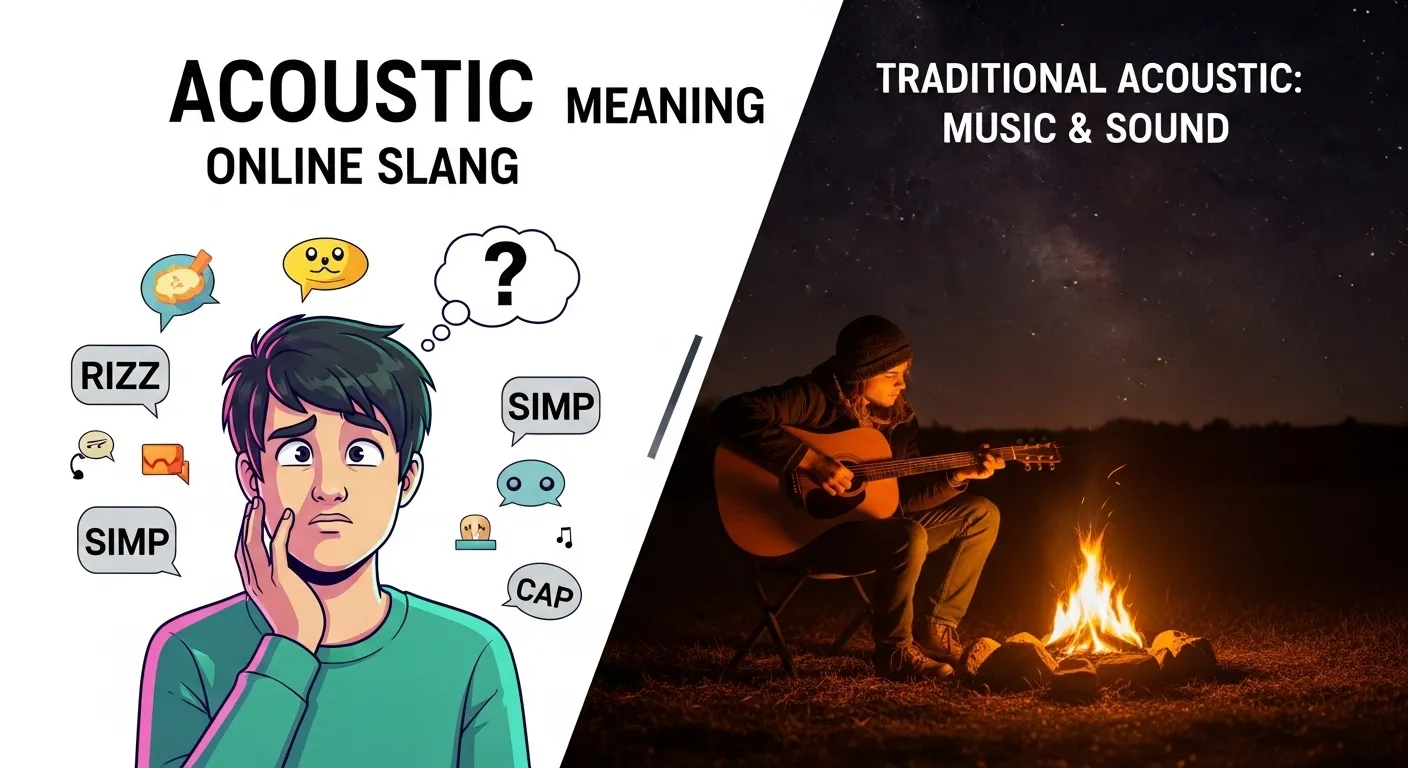
In modern internet culture, the acoustic meaning slang has little to do with guitars or sound systems. Instead, it has become a viral online expression used in memes, jokes, TikTok videos, gaming chats, and social media conversations. While some people use it humorously, others view it as offensive or insensitive because of the way it is connected to discussions about autism.
This guide explains everything you need to know about the slang meaning of “acoustic,” including:
- Where the term came from
- What it means online
- Why people use it
- Whether it is offensive
- Examples from TikTok and social media
- Safer alternatives to use instead
By the end, you’ll fully understand the trend and know how to use—or avoid—the term appropriately.
What Does “Acoustic” Mean in Slang?
In internet slang, “acoustic” is often used as a joking substitute for the word “autistic.”
People intentionally replace “autistic” with “acoustic” because the two words sound somewhat similar. The term became popular in memes, TikTok captions, gaming communities, and comment sections.
For example:
- “Bro is acoustic 💀”
- “Why are you acting so acoustic today?”
- “That gameplay was absolutely acoustic.”
In these examples, the speaker is usually joking that someone is behaving awkwardly, obsessively, socially unusual, or overly focused on something.
However, the slang can easily cross into disrespectful territory because it indirectly mocks autism or autistic traits.
The Original Meaning of Acoustic
Before understanding the slang version, it helps to know the real definition.
The word acoustic traditionally relates to:
| Term | Meaning |
|---|---|
| Acoustic music | Music made with non-electric instruments |
| Acoustic guitar | A guitar that produces sound naturally |
| Acoustics | The science of sound |
So when people first encounter the slang usage, it can sound confusing or random.
Example:
- “I bought an acoustic guitar.”
- “The room has good acoustics.”
These are the standard meanings—not slang.
How Did “Acoustic” Become Slang?
The slang likely grew from internet meme culture, especially on platforms like:
- TikTok
- Discord
- Instagram Reels
- Gaming communities
- YouTube comments
Users began replacing sensitive or controversial words with similar-sounding alternatives to avoid:
- Content moderation
- Algorithm filters
- Demonetization
- Social backlash
This practice is common online.
Similar Examples of Altered Internet Slang
| Original Word | Internet Replacement |
|---|---|
| Dead | Unalive |
| Suicide | Self-delete |
| Sex | Seggs |
| Autism/Autistic | Acoustic |
Over time, “acoustic” became a meme phrase on its own.
Why Do People Say “Acoustic” Instead of “Autistic”?
There are several reasons people use the term.
1. To Be Funny or Ironic
Many users think the unexpected substitution sounds absurd and humorous.
Example:
- “My friend spent 8 hours organizing Minecraft chests. He’s acoustic.”
The humor comes from the intentionally incorrect wording.
2. To Avoid Platform Filters
Some social media apps limit certain words in comments or videos.
Users may say:
- “Acoustic”
- “Restarted”
- “Special”
- “Neurospicy”
instead of directly mentioning autism or neurodivergence.
3. Meme Culture Loves Randomness
Internet humor often depends on randomness and absurdity.
Replacing a serious term with something unrelated creates meme-style humor.
That randomness helped “acoustic” spread quickly online.
Is “Acoustic” Slang Offensive?
This is where the topic becomes important.
For some people, the term seems harmless or playful. But many autistic individuals and advocates consider it disrespectful.
Why Some People Find It Offensive
The slang is often used to:
- Mock unusual behavior
- Insult intelligence
- Tease social awkwardness
- Make fun of neurodivergent traits
Because of this, it can reinforce negative stereotypes about autism.
Why Others Defend It
Some users argue that:
- It’s just meme humor
- It’s not meant seriously
- They use it jokingly among friends
- Some autistic creators use it themselves humorously
Context matters a lot online.
Still, many people recommend avoiding the term in professional, educational, or unfamiliar settings.
Examples of “Acoustic” Slang Online
Here are common ways the slang appears online.
TikTok Example
“He memorized every Pokémon stat? Bro is acoustic.”
Meaning: The person is obsessively knowledgeable about something.
Gaming Example
“That strategy was acoustic.”
Meaning: Strange, chaotic, or irrational gameplay.
Meme Example
“My sleep schedule is acoustic.”
Meaning: Weird, broken, or dysfunctional.
Common Misunderstandings About Acoustic Slang
Many people misunderstand the trend.
Misconception 1: It Means “Cool”
It usually does not mean cool or positive directly.
Instead, it often implies unusual or socially awkward behavior.
Misconception 2: It Always Refers to Autism
Not always.
Sometimes people use it loosely to describe:
- Chaotic behavior
- Weird habits
- Extreme obsession
- Random internet energy
Still, the connection to autism remains widely understood.
Misconception 3: Everyone Finds It Funny
Not true.
Some people laugh at the meme, while others see it as insensitive or ableist.
The Connection Between “Acoustic” and Internet Humor
Modern meme culture often transforms serious topics into jokes through wordplay.
This style of humor relies on:
- Misspellings
- Mispronunciations
- Deliberate substitutions
- Absurd comparisons
Examples include:
| Meme Slang | Meaning |
|---|---|
| Delulu | Delusional |
| Rizz | Charisma |
| Gyatt | Expression of surprise/admiration |
| Skibidi | Random meme phrase |
| Acoustic | Meme substitute for autistic |
The internet constantly evolves language, especially among younger users.
How TikTok Helped Popularize the Term
TikTok played a major role in spreading the slang.
Reasons It Went Viral
Short-form comedy
Quick jokes spread fast.
Comment culture
Funny comments often become trends themselves.
Algorithm-friendly language
Alternative spellings avoid moderation.
Reaction videos
Creators repeat viral phrases for engagement.
Soon, “acoustic” became recognizable across multiple platforms.
Acoustic Slang vs Real Autism Discussions
It’s important not to confuse memes with real conversations about autism.
Autism Is a Real Neurodevelopmental Condition
Autism affects:
- Communication
- Social interaction
- Sensory processing
- Behavioral patterns
It exists on a spectrum, meaning experiences vary widely.
Using “acoustic” carelessly can sometimes trivialize these experiences.
Should You Use the Term “Acoustic”?
That depends on your audience and intent.
Situations Where It May Cause Problems
Avoid using it:
- At work
- In school settings
- Around people you don’t know well
- In serious discussions
- When discussing actual autism
Situations Where People Commonly Use It
People often use it:
- Among close friends
- In meme communities
- In gaming chats
- On TikTok
- In ironic humor
Even then, it’s wise to consider how others may feel.
Better Alternatives to “Acoustic” Slang
If you want playful internet slang without risking offense, there are safer options.
Fun Alternatives
| Alternative | Meaning |
|---|---|
| Chaotic | Wild or unpredictable |
| Goofy | Silly |
| Unhinged | Extremely chaotic |
| Weirdcore | Strange aesthetic vibe |
| Brainrot | Obsessive internet behavior |
| Delulu | Unrealistic thinking |
Example:
- “My friend is completely unhinged after drinking coffee.”
This keeps the joke without referencing autism.
How Gen Z and Gen Alpha Use Slang Differently
Younger internet users constantly reshape language.
Gen Z Slang Traits
- Heavy irony
- Self-aware humor
- Random phrasing
- Meme references
- Fast-changing vocabulary
Gen Alpha Trends
Even more absurd humor:
- Nonsensical phrases
- Chaotic editing
- Hyper-fast meme cycles
- AI-generated jokes
“Acoustic” fits into this modern meme ecosystem.
Why Slang Evolves So Quickly Online
Internet language spreads faster than traditional slang ever did.
Reasons Online Slang Changes Rapidly
Viral algorithms
One video can create a worldwide trend overnight.
Global audiences
Millions see new phrases instantly.
Meme remixing
Users constantly adapt old jokes.
Community identity
Slang helps groups feel connected.
Because of this, terms like “acoustic” can explode in popularity within weeks.
Regional and Cultural Differences
Not everyone interprets the slang the same way.
In Some Communities
The term is seen as:
- Harmless humor
- Meme language
- Playful irony
In Other Communities
It is viewed as:
- Ableist
- Insensitive
- Mocking neurodivergence
Online language always depends heavily on context and culture.
The Psychology Behind Meme Slang
Why do strange words become popular?
Humans Enjoy Shared Humor
Using viral slang helps people:
- Feel included
- Participate in trends
- Signal internet awareness
- Build social identity
Humor Reduces Tension
People often joke about uncomfortable topics indirectly.
That’s partly why substitute words become popular online.
Acoustic Slang in Gaming Culture
Gaming communities helped popularize the phrase.
You might hear it in:
- Voice chats
- Twitch streams
- Discord servers
- Multiplayer games
Example:
“That build is absolutely acoustic.”
Meaning:
- Strange
- Unusual
- Illogical
- Chaotic
Gaming slang often spreads into mainstream internet culture.
How Brands and Influencers Handle the Term
Most professional creators avoid using “acoustic” in this context because it can create controversy.
Risks for Influencers
- Backlash
- Misunderstanding
- Accusations of ableism
- Lost sponsorships
As a result, many brands prefer safer humor styles.
Can “Acoustic” Have a Positive Meaning?
Occasionally, yes.
Some people use it affectionately among friends to describe:
- Hyperfocus
- Quirky behavior
- Passionate interests
- Social awkwardness
However, because interpretations vary, the term still carries risk.
Internet Slang Related to “Acoustic”
Here are some related trending slang terms.
| Slang | Meaning |
|---|---|
| Neurospicy | Playful term for neurodivergent |
| Delulu | Delusional |
| Brainrot | Internet obsession |
| Unhinged | Chaotic behavior |
| NPC | Acting robotic |
| Chronically online | Too involved in internet culture |
Understanding these terms helps decode online conversations more easily.
How Parents and Teachers Can Understand the Slang
If you’re a parent, teacher, or older internet user, hearing kids say “acoustic” can be confusing.
What You Should Know
- It’s usually meme slang
- It often references autism indirectly
- Context determines whether it’s playful or offensive
- Younger users may not fully understand its impact
Open conversations about respectful language are often more effective than harsh reactions.
Frequently Asked Questions (FAQs)
What does “acoustic” mean in TikTok slang?
On TikTok, “acoustic” is often used as a meme substitute for “autistic.” It’s commonly used jokingly to describe unusual, awkward, or obsessive behavior.
Is calling someone “acoustic” offensive?
It can be. Some people see it as harmless meme humor, while others view it as mocking autism or neurodivergent traits.
Why did “acoustic” become popular online?
The slang spread through TikTok, gaming communities, memes, and social media humor. It also helped users avoid content filters or moderation systems.
Does “acoustic” actually mean autistic?
Not literally. “Acoustic” is a real word related to sound and music, but online slang uses it as a humorous substitute for “autistic.”
Should I use the term “acoustic”?
Use caution. It may offend some people, especially in professional or educational settings. Safer slang alternatives are often better choices.
What are some alternatives to “acoustic” slang?
Popular alternatives include:
- Chaotic
- Goofy
- Unhinged
- Weird
- Brainrot
- Delulu
These avoid potential misunderstandings.
Is “acoustic” a Gen Z slang word?
Yes. The slang is strongly associated with Gen Z and internet meme culture, especially TikTok and gaming communities.
Final Thoughts
The acoustic meaning slang trend shows how quickly internet culture can reshape ordinary words into viral expressions. While “acoustic” originally referred to sound and music, online communities transformed it into meme slang connected to autism-related jokes and chaotic behavior.
Understanding the context behind the term is important because language affects people differently. Some see the slang as harmless internet humor, while others consider it insensitive or ableist.
If you choose to use online slang, keep these tips in mind:
- Know your audience
- Understand the meaning before repeating trends
- Avoid using potentially offensive language casually
- Consider safer alternatives when possible
- Stay aware that internet humor evolves rapidly