In today’s fast-moving online world, slang terms appear and spread faster than ever. One word you’ve probably seen on TikTok, X (Twitter), Instagram, YouTube, or in text messages is “stan.” But what exactly does it mean?
If you’ve ever read comments like “I stan this artist,” “We stan a queen,” or “She’s a total Taylor stan,” you might have wondered whether the word is positive, negative, or something in between.
The truth is that “stan meaning in text” has evolved a lot over the years. What started as a dark and emotional pop-culture reference has now become one of the most common internet slang terms used by fans around the world.
In this guide, you’ll learn:
- The exact meaning of stan in text
- Where the word came from
- How people use it online today
- Examples from social media and texting
- The difference between “fan” and “stan”
- Popular slang related to stan culture
- Common misunderstandings
- FAQs and texting examples
Let’s dive in.
What Does “Stan” Mean in Text?
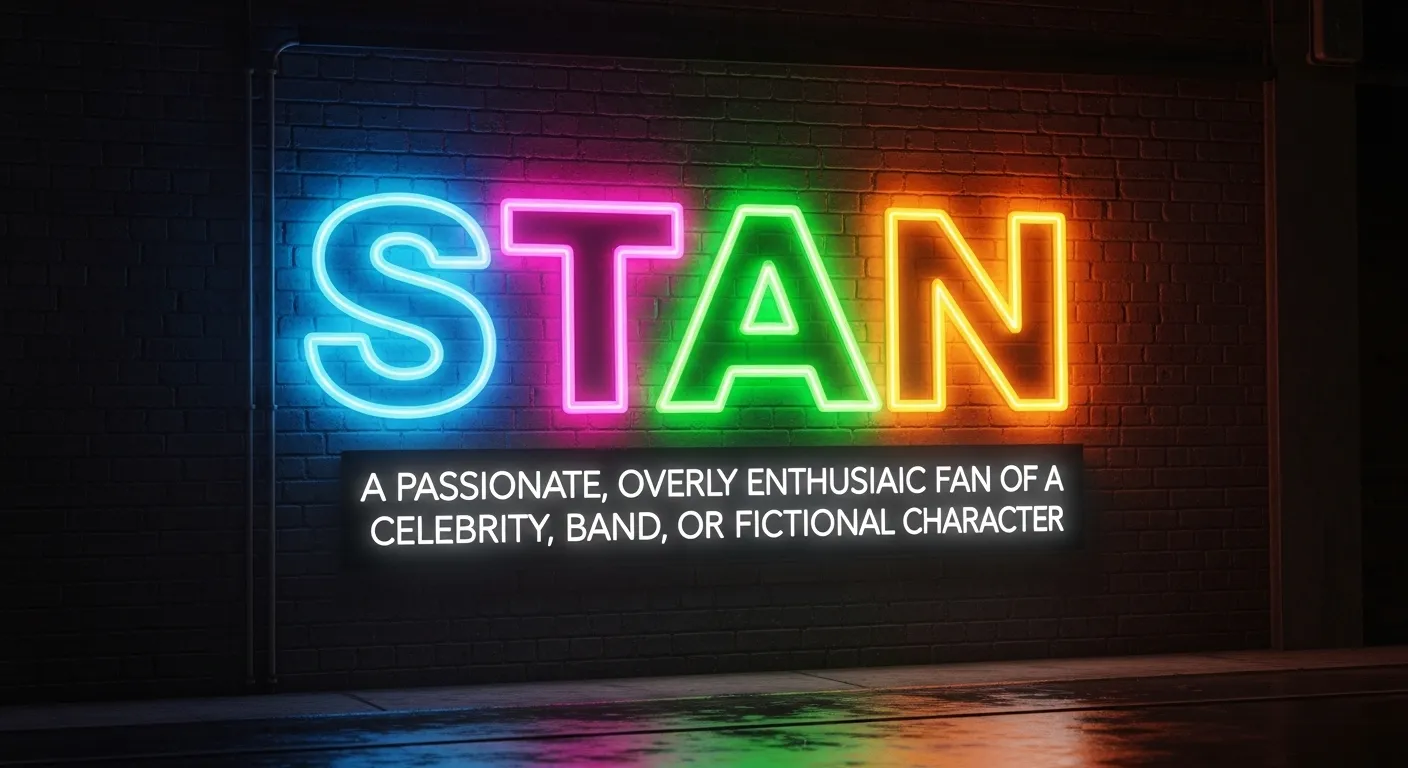
The word “stan” is internet slang used to describe someone who is an extremely devoted fan of a celebrity, artist, influencer, TV show, sports team, or public figure.
Simple Definition
Stan = A very loyal and enthusiastic fan
People use the term both as:
- A noun → “She’s a BTS stan.”
- A verb → “I stan this singer.”
- An adjective (sometimes) → “Stan culture”
In modern texting and social media, “stan” is usually meant in a fun, supportive, or enthusiastic way.
Examples of “Stan” in Text Messages
Here are some common ways people use the word online:
| Text or Comment | Meaning |
|---|---|
| “I stan her music so much.” | I absolutely love her music. |
| “He’s a Marvel stan.” | He’s a huge Marvel fan. |
| “We stan a confident queen.” | We strongly support and admire her. |
| “I’ve stanned this band since 2018.” | I’ve been a loyal fan for years. |
| “TikTok stans are wild.” | Dedicated online fans are intense. |
Origin of the Word “Stan”
To fully understand the stan meaning in text, it helps to know where the word came from.
The term originated from Eminem’s famous 2000 song “Stan.”
In the song:
- Stan is an obsessed fan of Eminem
- He becomes emotionally unstable
- His unhealthy obsession turns dangerous
The name “Stan” eventually became shorthand for:
An over-obsessed fan
Interestingly, the word is also often explained as a mix of:
- Stalker
- fan
Although this interpretation became popular later, the word primarily comes from Eminem’s song.
How “Stan” Changed Over Time
Originally, calling someone a “stan” suggested they were too obsessed with a celebrity.
But social media transformed the meaning.
Today, most people use “stan” in a lighter and more positive way.
Old Meaning vs Modern Meaning
| Old Meaning | Modern Meaning |
|---|---|
| Dangerous obsession | Passionate fan |
| Unhealthy admiration | Strong support |
| Extreme fandom | Loyal enthusiasm |
| Negative tone | Usually positive or playful |
Now, saying “I stan this actor” usually just means:
“I really love and support them.”
What Does “I Stan” Mean?
When someone says:
“I stan”
They mean:
- I strongly support this
- I love this person/content
- I approve enthusiastically
- I’m a huge fan
Examples
Social Media
- “I stan her confidence.”
- “We stan good fashion.”
- “I officially stan this new Netflix series.”
Texting
- “You bought your mom flowers? I stan.”
- “That comeback song is amazing. I stan.”
“Stan” Meaning on Social Media
The term exploded in popularity thanks to platforms like:
- TikTok
- Twitter/X
- Tumblr
- YouTube
Online fandom communities helped turn “stan” into mainstream internet slang.
Popular Examples
TikTok
“POV: You stan the wrong character.”
Twitter/X
“Swifties stan Taylor no matter what.”
“Stan your talented friend louder!”
What Is a “Stan Culture”?
Stan culture refers to highly active online fan communities that passionately support celebrities, creators, musicians, or influencers.
These groups often:
- Defend their favorite celebrity
- Promote music or content
- Create fan edits and memes
- Follow updates closely
- Organize online trends
Examples of Famous Stan Communities
| Celebrity | Fan Name |
|---|---|
| Taylor Swift | Swifties |
| BTS | ARMY |
| Beyoncé | BeyHive |
| Nicki Minaj | Barbz |
| Ariana Grande | Arianators |
These fandoms are often referred to as “stans.”
Difference Between a Fan and a Stan
Many people wonder:
Is a stan just a fan?
Not exactly.
Fan vs Stan
| Fan | Stan |
|---|---|
| Likes someone’s work | Extremely devoted |
| Casual support | Deep emotional investment |
| May follow occasionally | Constantly engaged |
| Less active online | Often active in fandom culture |
Example
- A fan might listen to an artist’s songs.
- A stan might:
- Stream every release
- Buy merchandise
- Defend the artist online
- Follow daily updates
Is “Stan” Positive or Negative?
The answer depends on context.
Positive Usage
Most modern uses are positive or playful.
Examples:
- “I stan your energy.”
- “We stan kindness.”
- “I stan this outfit.”
These mean admiration or support.
Negative Usage
Sometimes “stan” still carries a negative meaning when describing toxic fandom behavior.
Examples:
- Harassing critics online
- Obsessive behavior
- Defending celebrities no matter what
Example sentence:
“Some celebrity stans take things too far.”
How Gen Z Uses “Stan”
Gen Z helped popularize “stan” as a casual internet expression.
You’ll often see it used humorously or dramatically.
Common Gen Z Phrases
- “I stan.”
- “Stan behavior.”
- “We stan a legend.”
- “Hard stan.”
- “Instant stan.”
Example
“She rescued a puppy? We stan.”
Translation:
“We admire and support her.”
“We Stan” Meaning
The phrase “we stan” became especially popular on Twitter and TikTok.
It means:
“We collectively support or admire this.”
It creates a sense of community excitement.
Examples
- “We stan talented women.”
- “We stan healthy boundaries.”
- “We stan iconic fashion moments.”
This phrase is often humorous, supportive, or celebratory.
What Does “Hard Stan” Mean?
A hard stan is someone who is extremely dedicated to a celebrity or fandom.
They may:
- Know every detail about the celebrity
- Support every project
- Follow all updates
- Participate actively online
Example
“She’s a hard stan of that K-pop group.”
Can “Stan” Be Used for Things Other Than Celebrities?
Yes. Modern internet slang allows “stan” to apply to almost anything people strongly support.
Examples
People stan:
- TV shows
- Brands
- Pets
- Food
- Fashion trends
- Fictional characters
- Political ideas
- Internet memes
Example Sentences
- “I stan iced coffee.”
- “We stan cozy games.”
- “I totally stan this skincare brand.”
Popular Slang Related to “Stan”
Understanding related slang helps you better navigate social media conversations.
1. Fandom
A community of fans supporting the same thing.
Example:
“The fandom exploded after the trailer release.”
2. Bias
Common in K-pop culture.
It means your favorite member in a group.
Example:
“Jungkook is my bias.”
3. Simp
Someone showing excessive affection or attention toward another person.
Not exactly the same as “stan.”
4. Delulu
Short for “delusional.”
Often used jokingly in fandom spaces.
Example:
“I’m delulu enough to think they’ll notice me.”
5. Cancelled
When the internet collectively criticizes someone.
Stan communities often participate in cancel culture discussions.
Examples of “Stan” in Everyday Conversations
Here are realistic texting examples.
Example 1
Friend: “Did you hear Olivia Rodrigo’s new song?”
You: “Yes! I stan her so much.”
Meaning:
You’re a huge fan.
Example 2
Comment: “We stan confident women.”
Meaning:
We strongly support confident women.
Example 3
Friend: “Why are you watching every livestream?”
You: “Because I’m a stan.”
Meaning:
You’re a very dedicated fan.
Why “Stan” Became So Popular
Several reasons explain the rise of this slang term.
1. Social Media Communities
Platforms make it easy for fans to connect globally.
2. Meme Culture
Funny stan-related memes spread quickly online.
3. Celebrity Influence
Artists and influencers often acknowledge fandoms directly.
4. Short and Expressive
“Stan” quickly communicates intense admiration.
Common Misunderstandings About “Stan”
Myth 1: Stan Always Means confused Obsession
Not anymore.
Modern usage is usually casual and positive.
Myth 2: Only Teenagers Use It
While Gen Z popularized it, many age groups now use the term online.
Myth 3: Stan Only Refers to Celebrities
People now “stan” ideas, products, and even foods.
When NOT to Use “Stan”
Although common online, “stan” may sound too casual in professional settings.
Avoid It In:
- Formal emails
- Academic writing
- Business presentations
- Professional interviews
Instead Use:
- Support
- Admire
- Appreciate
- Recommend
Synonyms and Alternatives to “Stan”
Depending on context, you can also say:
| Word | Meaning |
|---|---|
| Fan | Someone who likes something |
| Supporter | Someone who supports |
| Admirer | Someone with admiration |
| Enthusiast | Passionate supporter |
| Devotee | Deeply dedicated fan |
“Stan” in Pop Culture
The term appears constantly in entertainment culture.
Music
Music fandoms are among the biggest users of “stan.”
Examples:
- K-pop stans
- Swifties
- Rap fandoms
TV and Movies
Fans often stan:
- Characters
- Ships (relationships)
- Actors
- Storylines
Example:
“Everyone stans that villain character now.”
Gaming
Gaming communities also use the term.
Example:
“People stan that streamer because he’s hilarious.”
Psychological Side of Stan Culture
Stan culture can create:
- Community
- Identity
- Shared interests
- Emotional connection
But excessive fandom can sometimes lead to:
- Toxic behavior
- Online harassment
- Unhealthy attachment
Healthy fandom means enjoying content while maintaining balance.
How Brands Use “Stan” in Marketing
Companies now use internet slang to connect with younger audiences.
Example Marketing Phrases
- “We stan affordable fashion.”
- “A skincare line worth stanning.”
- “The internet stans this product.”
This style helps brands sound trendy and relatable.
Is “Stan” Still Trending?
Yes. Even though internet slang changes rapidly, “stan” remains highly popular in:
- TikTok captions
- Meme culture
- Fan edits
- Online discussions
- Pop culture commentary
It has become a permanent part of internet vocabulary.
Quick Summary Table
| Term | Meaning |
|---|---|
| Stan | Extremely devoted fan |
| I stan | I strongly support or love |
| We stan | Collective admiration/support |
| Stan culture | Online fandom communities |
| Hard stan | Very intense fan |
FAQs About “Stan” Meaning in Text
1. What does “stan” mean in texting?
In texting, “stan” means being a very enthusiastic or loyal fan of someone or something.
2. Is “stan” a bad word?
Usually no. Modern usage is mostly positive or playful, though it can describe unhealthy obsession in some contexts.
3. Where did the word “stan” come from?
It originated from Eminem’s 2000 song “Stan,” about an obsessed fan.
4. What does “I stan” mean?
“I stan” means:
- I love this
- I support this
- I’m a huge fan
5. What is a “stan account”?
A social media account dedicated to supporting and posting about a celebrity, creator, or fandom.
6. What does “we stan” mean online?
“We stan” means a group collectively admires or supports someone or something.
7. What’s the difference between a fan and a stan?
A stan is generally more emotionally invested and active than a casual fan.
Final Thoughts on “Stan” Meaning in Text
The phrase “stan meaning in text” reflects how internet language constantly evolves. What once referred to obsessive fandom has transformed into a mainstream expression of admiration, loyalty, and excitement.
Today, people use “stan” everywhere:
- Text messages
- TikTok comments
- Twitter/X posts
- Instagram captions
- YouTube fandoms
In most cases, saying “I stan” simply means:
“I really love and support this.”
Still, context matters. While stan culture can build fun communities and shared enthusiasm, it’s important to keep fandom healthy and respectful.
The next time you see someone say:
“We stan!”
—you’ll know they’re expressing strong support, admiration, or excitement in modern internet slang.